

More news on this day
Japan’s post‑pandemic tourism boom is colliding with a rapidly evolving rail ecosystem, as a more expensive but more flexible Japan Rail Pass and a wave of regional passes change how international visitors move around the country.
Get the latest news straight to your inbox!
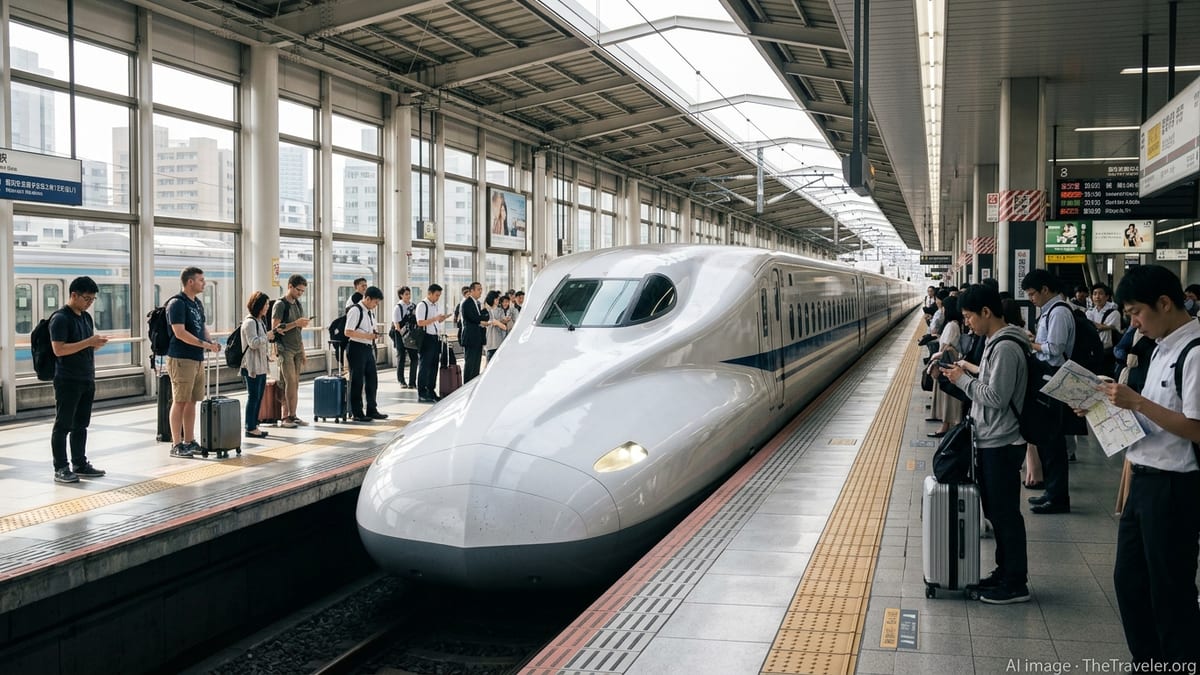
Image by Latest International Railway News, Global Rail Industry News
Record Tourism Meets a Transformed Rail Pass
Japan is entering a new tourism phase in which rail infrastructure and ticketing products are shaping travel patterns as much as destination marketing. Data released by the Japan National Tourism Organization and other public sources show that inbound arrivals surpassed pre‑pandemic records in 2024 and continued to grow into 2025, helped by a weak yen and expanded international air links. Analysts describe tourism as one of Japan’s most dynamic export earners, with travel spending more than recovering from the pandemic slump.
Against this backdrop, the nationwide Japan Rail Pass has undergone its most significant changes in decades. The JR Group implemented a steep price increase in October 2023, lifting typical pass prices by around two‑thirds. A seven‑day ordinary pass that once allowed economical, unlimited use of the shinkansen and major intercity lines now represents a premium purchase, especially for travelers focused on a single region.
Despite concerns that higher prices would dampen demand, industry commentary indicates that the pass continues to attract long‑haul visitors planning intensive rail itineraries. The combination of a cheaper yen and pent‑up demand has kept multi‑city trips appealing, and many travelers now view the pass less as a money‑saving tool and more as a way to unlock speed, flexibility and spontaneity.
At the same time, tourism researchers note that the price shock has pushed many visitors to scrutinize their itineraries more closely. For shorter trips or stays centered on one or two cities, publicly available guidance increasingly recommends a mix of regional rail passes, IC prepaid cards and individual tickets instead of the classic nationwide pass.
Faster, Easier Movement on the Shinkansen Network
The strategic value of the Japan Rail Pass is most evident on the shinkansen network, where ultra‑frequent bullet trains link Tokyo to regional cities in as little as a few hours. Reports from travel publishers and rail operators show that recent timetable revisions and new rolling stock continue to reduce journey times and increase capacity, particularly on the Tokaido, Sanyo and Kyushu shinkansen corridors.
One important shift tied to the 2023 pricing overhaul was broader access to premium shinkansen services within the pass framework. While certain fastest trains were historically excluded, recent iterations of the pass have integrated more of these services, subject to seat reservations and surcharges in some cases. The practical effect is that pass holders can traverse the country even more quickly, encouraging tightly packed multi‑city itineraries that would be impractical by air or car.
Infrastructure upgrades in regional Japan are also reinforcing this trend. Extensions of lines such as the Hokuriku Shinkansen, along with timetable improvements on conventional limited express services, are shortening travel times to secondary cities on the Sea of Japan coast and in the Chubu and Hokuriku regions. Travel industry analyses link these rail improvements to rising overnight stays in smaller hubs that historically saw fewer international guests.
For tourists, the combination of an easy‑to‑use nationwide pass and continually improving high‑speed rail means that day trips that once required slow overnight coaches can now be completed in a single daylight stretch. This has intensified same‑day travel between Tokyo and major regional destinations, contributing to both economic opportunities and fresh pressures on popular sites.
Regional Passes and IC Cards Push Travel Wider
As the headline price of the Japan Rail Pass has risen, regional products have taken on a larger role in shaping where and how visitors travel. JR East, JR West, JR Kyushu and other operators market area‑limited passes that cover specific shinkansen segments and local lines for several days at a lower cost than the nationwide option. Recent press materials from JR East, for example, outline modest price adjustments to passes serving Tohoku and Hokkaido while preserving relatively accessible entry points for overseas visitors.
These regional passes are increasingly positioned as tools to draw tourists beyond the Tokyo–Kyoto–Osaka corridor. Travel trade coverage notes that prefectures along the Hokuriku coast, in northern Tohoku and on Kyushu are promoting itineraries built around such passes, bundling rail access with local buses, ferries and sightseeing discounts. The result is a more distributed flow of visitors, with rail products acting as gateways to lesser‑known hot springs, heritage towns and national parks.
Parallel to this shift, contactless IC cards such as Suica and regional equivalents have become integral to everyday tourist mobility. After a period of supply constraints linked to semiconductor shortages, JR East resumed wider sales of regular Suica cards to foreign tourists in early 2024 at major Tokyo stations. Public information also points to the launch of mobile solutions and a “Welcome Suica” variant tailored to short‑term visitors, which can be used seamlessly across trains, subways and many buses.
The growing ubiquity of IC cards simplifies micro‑movements within cities and between nearby towns. Travelers can now pair a long‑distance rail pass with tap‑in, tap‑out access on local networks, reducing friction at ticket machines and making spontaneous detours more likely. This integration supports a more organic style of exploration that extends beyond heavily promoted landmarks.
Balancing Tourism Growth With Overtourism Concerns
Japan’s evolving rail pass ecosystem is unfolding against a complex backdrop of tourism policy debates. Government data and economic research highlight tourism as a key driver of regional revitalization, especially for rural areas facing depopulation. Yet widely reported crowding at sites such as Kyoto’s historic districts, Mount Fuji and popular urban neighborhoods has fueled domestic concern about overtourism.
Analysts note that the previous, lower‑priced Japan Rail Pass played an unintended role in concentrating foreign visitors in a relatively narrow set of destinations reachable within a one or two‑week itinerary. The steep price increase, along with recalibrated marketing, has coincided with a gradual shift toward more deliberate, longer stays and more regionally focused trips, though major hubs remain the primary beneficiaries of record arrival numbers.
Policy discussions increasingly frame rail ticketing as one tool among many to steer visitor flows. Some local governments have introduced new fees for access to heavily visited natural sites and shrines, while others are working with rail and bus operators to bundle transportation with time‑slotted attractions in less crowded areas. The goal is to preserve the economic upside of inbound tourism while easing pressure on local infrastructure and residents.
Experts in tourism planning point out that the same fast, convenient rail links that risk overloading iconic spots can also help disperse visitors if paired with targeted information and flexible fare products. In this view, the Japan Rail Pass and its regional counterparts are evolving from blunt instruments of mass access into more nuanced levers for managing where and when tourists travel.
What the New Landscape Means for Future Travelers
For prospective visitors, the changing role of the Japan Rail Pass means that pre‑trip planning is more important than in the era when the pass almost automatically represented good value. Travel advisories and consumer media now emphasize running basic fare simulations, comparing the cost of the nationwide pass with point‑to‑point shinkansen tickets and regional passes before committing.
At the same time, there is broader recognition that value is not purely financial. The ability to board frequent high‑speed trains with minimal friction, change plans at short notice and cover large distances in a single day remains a strong draw for many long‑haul travelers, particularly those visiting Japan for the first time or returning after a long absence. For this segment, the Japan Rail Pass continues to function as a symbol of freedom on the rails, even at a higher price point.
For Japan’s regions, the new mix of nationwide and regional passes, coupled with expanding IC card coverage, represents a chance to capture more of the tourism surge that has so far concentrated in a few major cities. Prefectures linked by new shinkansen segments or enhanced limited express services are likely to keep courting foreign visitors with rail‑based campaigns that spotlight local culture, cuisine and nature.
How effectively the country balances record arrivals with quality of life and environmental pressures will depend in part on how these rail products are designed and communicated. As the Japan Rail Pass drives faster, easier and increasingly wider tourist movement across the archipelago, its evolution has become a barometer of Japan’s broader transition from a country rediscovering tourism to a mature “tourism nation” managing success.