

More news on this day
Japan is moving to effectively double the years of residence required for citizenship from five to 10, a sweeping tightening of naturalization practice that has left many long-term foreign residents rushing to understand how the new standards will be applied in 2026 and beyond.
Get the latest news straight to your inbox!
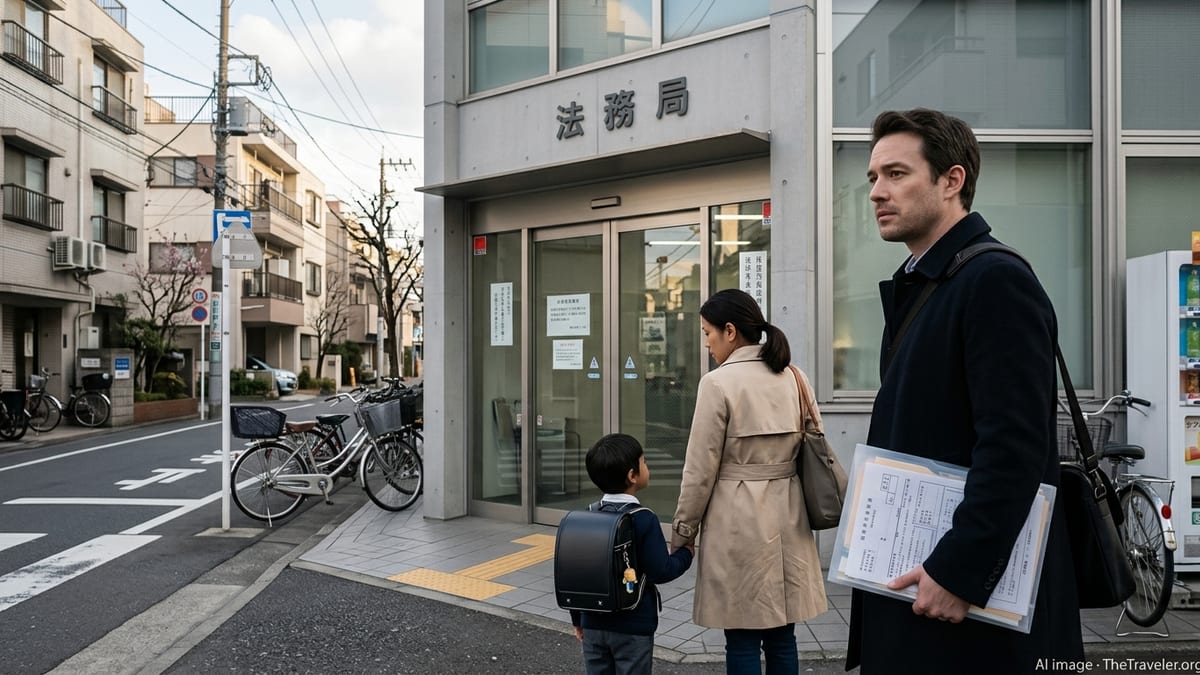
From Five Years on Paper to Ten Years in Practice
Under Japan’s Nationality Act, the written rule for most foreign nationals seeking citizenship has long been at least five years of continuous residence, alongside conditions such as financial stability and good conduct. Until recently, this lower threshold made naturalization appear more accessible than permanent residency, which already required, in principle, a decade of residence for most applicants.
Publicly available information from late 2025 and early 2026 shows that the government has now moved to close this gap by tightening how the five-year rule is interpreted, rather than immediately rewriting the law. Justice Ministry practice is being revised so that, in standard cases, applicants will be expected to have about 10 years of continuous residence before naturalization is approved, bringing the requirement in line with permanent residency rules.
Reports indicate that these changes are framed as administrative guidance and part of a broader “basic policy” on foreign nationals being compiled around January 2026. While the legal text of the Nationality Act may still state five years, naturalization exams and case handling are set to reflect the more stringent 10-year benchmark as early as April 2026, according to multiple specialist briefings and media summaries.
The shift means that, in practical terms, Japan is quietly moving from one of the shortest residency periods for citizenship in the G7 to one of the longest, especially given its long-standing prohibition on dual nationality for adults and the strict view of “continuous” residence that already applies.
Implementation Timeline and Who Is Affected First
Coverage in domestic media and specialist immigration commentary suggests that the new interpretation will be phased in through updated internal guidelines rather than a headline-grabbing law revision. The emerging timeline points to April 2026 as a key date, when regional Legal Affairs Bureaus that process naturalization applications begin applying the 10-year standard for new cases.
Accounts shared by immigration professionals and community groups indicate that some bureaus have already alerted prospective applicants that, from April, the usual requirement will be 10 years of continuous residence, with five years of documented tax payments and recent social insurance compliance forming part of the screening. People who have already filed naturalization applications under the old understanding may continue to be examined on the previous five-year basis, but anyone still only at the inquiry or document-preparation stage is likely to be assessed under the new practice.
The impact will be felt most clearly by foreign professionals, long-term workers and their families who entered Japan in the past decade with the expectation that five years of residence would be enough to pursue Japanese nationality. For those who had been planning to apply in 2026 or 2027 with between five and eight years in the country, the change could introduce a wait of several additional years, depending on how strictly each bureau interprets gaps in residence and short trips abroad.
At the same time, published outlines of the new policy package suggest that shorter residency paths will still exist for certain categories, including spouses of Japanese nationals and some family-based cases, which are governed by separate provisions. These groups may continue to qualify with reduced periods of residence, though they can expect closer scrutiny of the genuineness and stability of their circumstances.
New Focus on Tax, Social Insurance and Language Ability
Alongside the longer residency expectation, Japan is tightening other aspects of the citizenship pathway. Reports from legal experts and immigration-focused publications describe a clearer emphasis on full tax compliance and social insurance enrollment as non-negotiable conditions for naturalization. Applicants are expected to present evidence that income, resident and other relevant taxes have been correctly paid, often for at least the past five years, and that social insurance premiums have been settled for a recent multi-year period.
These requirements are not entirely new, but practitioners indicate that enforcement is being stepped up in parallel with the 10-year residency rule. Cases that might previously have been accepted after minor lapses or late payments are now more likely to attract additional questioning or rejection. The government’s stated ambition to ensure “appropriate management” of foreign nationals is being translated into closer inspection of financial records and household stability.
In addition, the same policy framework that extends the naturalization residency period also points to a stronger language expectation. For permanent residency, publicly available summaries of the new guidelines refer to an explicit Japanese language proficiency condition for the first time, with suggestions that a level comparable to intermediate proficiency could become the reference point. While the Nationality Act already assumes sufficient command of Japanese for daily life, the new environment is expected to bring more systematic checks through interviews and document reviews.
Taken together, the emerging rules indicate that Japan is reshaping citizenship not as a mid-term option after one stable work contract, but as the final step in a long period of demonstrable integration: a decade in the country, a clean compliance record and the ability to function independently in Japanese society.
Foreign Residents Scramble to Reassess Long-Term Plans
The policy shift has triggered concern, confusion and hurried reassessments among foreign residents who had anchored life decisions to the previous five-year standard. Online forums, community groups and advisory services have seen a surge of questions from people with six or seven years in Japan who suddenly find that their naturalization horizon may have moved several years into the future.
Some long-term residents are now weighing whether to focus on permanent residency instead of citizenship, especially those uncomfortable with Japan’s ban on dual nationality. Since permanent residency already assumed about 10 years of residence for many categories, for this group the practical change may lie more in the introduction of formal language benchmarks and clarifications around income and tax standards than in the residency count itself.
Others who had prioritized citizenship, for reasons ranging from voting rights to career prospects, are reassessing everything from housing plans to children’s schooling timelines. For applicants whose personal or professional circumstances make a further multi-year wait in Japan uncertain, the effective doubling of the residency requirement raises difficult questions about whether to stay on a temporary or work visa, pivot to another country, or accept a longer path to naturalization.
Immigration advisers generally encourage foreign residents to document their residence history carefully, track trips abroad and keep thorough records of taxes and insurance premiums. In the new environment, even residents who ultimately decide not to pursue citizenship may find that long-term options, including permanent residency, hinge on a clear paper trail showing uninterrupted residence and financial compliance.
Key Takeaways for Those Considering Japanese Citizenship
For foreigners contemplating Japanese citizenship in the coming years, the central message from the evolving rules is that planning must start earlier and be more deliberate. A realistic timeline now assumes about 10 continuous years in Japan for standard cases, with shorter tracks typically limited to narrowly defined family categories.
Prospective applicants are encouraged by specialist guidance to treat every year of residence as part of a long dossier: visas should be renewed promptly, periods of stay ideally upgraded to longer terms when possible, and extended trips abroad approached with caution because they can reset what counts as “continuous” residence in practice. Stable, documented income and timely payment of all taxes and social insurance premiums are becoming as important as the length of stay itself.
Public information also highlights the growing role of Japanese language ability. Even in the absence of a single, nationwide standardized test requirement for naturalization, applicants who can show intermediate or higher proficiency, through qualifications or daily-life evidence, are likely to be in a stronger position under the new scrutiny.
As Japan’s leadership pursues a broader recalibration of its approach to foreign nationals, the citizenship pathway is being clearly repositioned as an option for those ready to make a long-term, documented commitment to life in the country. For many foreign residents, the coming years will involve difficult calculations about whether the benefits of Japanese nationality justify the extended wait and intensified checks now moving into place.