

More news on this day
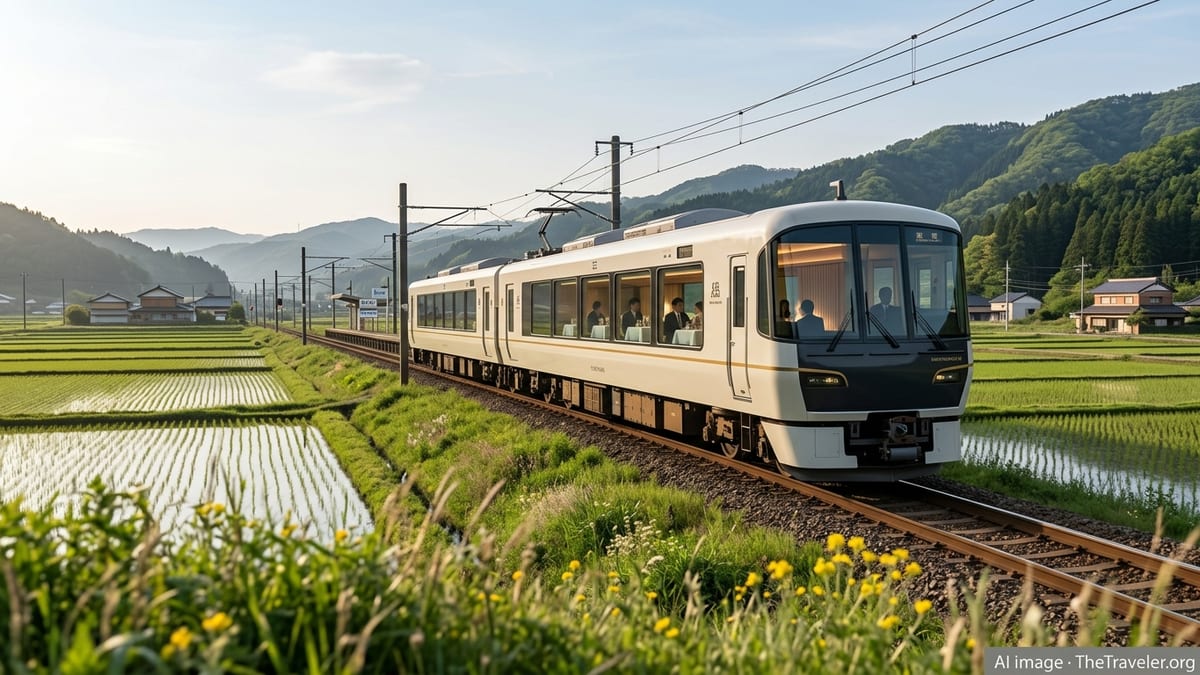
Japan is preparing to expand its reputation for high-end rail journeys with plans for the Vies fine dining train, an ultra-luxury service slated to begin operating in 2028 and positioned as a next-generation showcase of gourmet cuisine and scenic slow travel.
Get the latest news straight to your inbox!
A New Flagship for Japan’s Luxury Rail Scene
Publicly available information indicates that the Vies project is being developed as a dedicated fine dining train concept, distinct from existing overnight “cruise trains” that combine accommodation and sightseeing. Instead of sleeper suites, Vies is expected to focus on multi-course gastronomic experiences served over several hours while traveling through carefully selected landscapes.
The timing positions Vies within a broader expansion of premium rail products in Japan, where trains such as Seven Stars in Kyushu, Train Suite Shiki-shima and Twilight Express Mizukaze have helped elevate the country’s profile among luxury travelers. Those trains emphasize multi-day itineraries and all-inclusive packages, while Vies is described in early coverage as a more restaurant-focused journey, drawing comparisons to destination dining rather than traditional transport.
Reports suggest that the 2028 target aligns with wider tourism ambitions in the run-up to the end of the decade, as Japan continues promoting regional travel and higher-spend visitors. Vies is expected to cater to a small number of passengers per departure, with advance reservations and pricing at the upper end of the rail market.
Design Vision: Moving Restaurant Rather Than Train Car
Early descriptions portray Vies as a “moving restaurant” concept, with rail engineering serving the culinary experience rather than the other way around. Plans indicate that interior layouts will prioritize generous table spacing, wide windows and lighting schemes designed to mirror contemporary fine dining rooms more than conventional dining cars.
The train is expected to feature a limited number of carriages, each with a distinct role in the overall experience. A primary dining car would anchor the service, supported by a professional-grade kitchen car and lounge-style spaces for aperitifs, desserts or post-meal drinks. Seating is anticipated to be fixed and pre-assigned, with menus coordinated to the timing of the journey so that key courses align with specific views.
Design influences are likely to draw on recent Japanese luxury train projects that combine traditional craftsmanship with modern minimalism. Materials such as natural wood, textiles from regional artisans and subdued color palettes are expected to feature prominently, reinforcing a sense of understated luxury while keeping the landscape outside as the main visual focus.
Fine Dining at the Heart of the Journey
The culinary program on board Vies is being positioned as the central selling point. Reporting to date points to a menu concept built around seasonal Japanese ingredients interpreted through contemporary techniques, with an emphasis on regionally sourced produce and seafood along the chosen routes.
Service is expected to follow the rhythm of a high-end restaurant rather than a transport timetable. Multi-course menus would unfold over several hours, synchronized with changes in scenery and time of day, such as sunset departures or itineraries timed to coincide with cherry blossom or autumn foliage in specific regions.
Japan’s existing luxury trains already partner with notable chefs and highlight local specialties at each stage of their journeys. Vies appears set to refine that approach into a singular focus, creating an experience in which the rail journey frames the meal, and each departure functions as a one-off dining event rather than a routine scheduled train.
Routes, Market Positioning and Passenger Experience
Detailed route maps for Vies have not yet been finalized in public materials, but early commentary suggests a preference for scenic regional lines over high-speed corridors. Potential routes could include coastal sections, mountain foothills or corridors that pass near cultural attractions, allowing passengers to enjoy shifting vistas without the higher speeds of shinkansen services.
Vies is likely to target both affluent domestic travelers and international visitors who already view Japan as a destination for rail-centric vacations. The service is expected to operate with limited departures, creating scarcity and aligning with broader trends in experiential luxury travel in which exclusivity and narrative are key components.
Onboard, passengers can anticipate a curated environment from embarkation to disembarkation. Check-in procedures, pre-departure briefings, welcome drinks and post-meal relaxation time are all expected to be choreographed to reinforce the sense of occasion, with staff trained to deliver restaurant-quality service in a mobile setting.
Shaping the Future of Experiential Rail Tourism
The launch of Vies in 2028 would mark another step in the evolution of Japan’s approach to rail tourism, which has increasingly shifted from simple transport to immersive experience. By centering the concept on fine dining, the project taps into global interest in food-led travel while leveraging Japan’s strengths in both culinary culture and rail operations.
Observers note that Vies could also function as a platform for regional promotion, showcasing local ingredients, craft products and landscapes to a high-spend audience. Partnerships with local producers, tourism boards and cultural institutions are likely to play a role in shaping specific departures and seasonal themes.
As plans move toward the 2028 start date, further details on pricing, booking channels, exact routes and chef collaborations are expected to emerge. For now, the Vies fine dining train is being viewed as a signal that Japan intends to remain at the forefront of luxury rail innovation, using cuisine and design to redefine what a train journey can be.