

More news on this day
Japan’s inbound tourism has surged to record levels, sending hotel room rates and profits sharply higher and turning the country’s lodging sector into one of the standout winners of the post-pandemic travel rebound.
Get the latest news straight to your inbox!
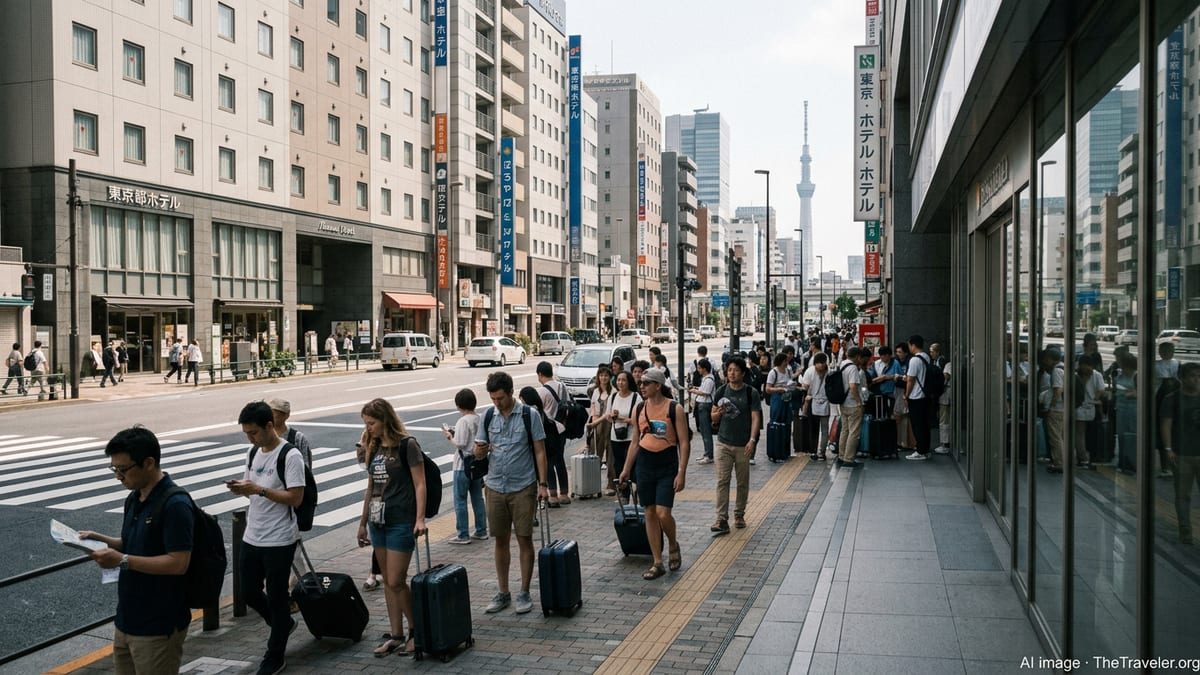
Record Arrivals and a Weak Yen Fuel a Hotel Windfall
Publicly available data from the Japan National Tourism Organization and other agencies indicate that Japan welcomed close to 37 million international visitors in 2024, surpassing its previous pre-pandemic peak and cementing tourism as one of the country’s most dynamic export earners. Visitor spending by foreign travelers reached roughly 8.1 trillion yen in 2024, according to recent government-based tallies, comfortably exceeding the previous record set in 2019 and helping to offset sluggish domestic consumption.
A persistently weak yen has been central to this tourism boom. The currency traded near multi-decade lows against the US dollar through 2024, making Japan feel significantly cheaper for many overseas visitors. Analysts note that this currency effect magnifies every dollar, euro or won spent in Japan when translated into hotel revenue in yen, giving operators a powerful tailwind as inbound demand climbs.
Industry and government statistics show that tourism now ranks just behind automobiles as one of Japan’s largest export categories by value. Inbound travel has contributed meaningfully to overall GDP growth since borders reopened, with hotel stays, dining and retail shopping accounting for an increasingly large share of that impact.
The influx of travelers has been broad-based, led by strong flows from South Korea, Taiwan, Southeast Asia and North America. Although Chinese visitor numbers have remained below pre-pandemic highs and more recently been affected by diplomatic frictions, other markets have more than filled the gap, keeping overall hotel demand exceptionally tight in major cities and key leisure destinations.
Hotel Metrics Hit Records in Tokyo, Kyoto and Beyond
Hotel performance metrics across Japan have climbed to historic highs. Sector reports compiled by research providers and hospitality consultancies show that average daily rates and revenue per available room, or RevPAR, both exceeded pre-2020 levels in 2024, with particularly strong gains in Tokyo, Osaka and Kyoto. One business travel analysis estimated that Tokyo business hotels achieved average daily rates above 22,000 yen and record RevPAR near 18,500 yen in 2024, underpinned by a combination of high occupancy and aggressive pricing.
Asset management updates from listed hotel vehicles and real estate investment trusts describe occupancy in prime Tokyo properties often above 80 percent through 2024, even as operators opened additional inventory. Similar patterns are visible in major leisure markets, where international guests increasingly dominate stay statistics. In Kyoto, for example, local tourism data have shown that foreign hotel guests recently surpassed domestic travelers for the first time, with overseas visitors spending several times more per person than Japanese guests.
Secondary destinations are feeling the surge as well. Regional cities and resort areas that historically depended heavily on domestic tourism are now seeing rapid growth in inbound stays, aided by improved air connectivity and the popularity of social media travel content. Research from international brokerages suggests that Japan’s national average hotel RevPAR rose sharply in 2023 and 2024, with continued growth projected into 2026 as more capacity is absorbed.
The result is a broad-based earnings rebound for hotel operators. Quarterly financial disclosures from major Japanese hospitality groups for 2024 show double-digit revenue growth and strong gains in operating profit, especially in luxury, upscale and full-service segments that cater to high-spending inbound guests.
What Travelers Can Expect on the Ground
For visitors, the combination of a weak yen and booming demand is producing a mixed experience. On one hand, travelers paying in dollars or euros often find that overall trip budgets go further than they did a decade ago, particularly for midrange hotels, dining and transport. On the other hand, headline room rates in high-demand districts have climbed sharply, and availability in peak periods can be limited unless booked well in advance.
Reports from tourism boards, local governments and travel media describe intense crowding at marquee sites such as central Tokyo, Kyoto’s historic districts and parts of Hokkaido during popular seasons. Local authorities in some areas are experimenting with higher ticket prices for foreign visitors, time-slot reservations and other crowd-management measures in response to overtourism concerns and pressure on local infrastructure.
Travel advisors increasingly recommend that visitors build flexibility into itineraries, avoid weekends and national holidays for city stays where possible, and consider emerging destinations beyond the classic Tokyo–Kyoto–Osaka corridor. Data from regional tourism offices show that lesser-known prefectures and rural areas are enjoying increased arrivals but still offer more moderate hotel pricing and a less congested experience.
Travelers should also anticipate more pronounced price differentiation in the hotel market. Industry commentary refers to a rise in “inbound pricing,” where international-grade properties and rooms with strong appeal to foreign guests carry significant premiums, while simpler business hotels or accommodations outside tourist hotspots remain relatively affordable, even after recent rate increases.
Why Investors Are Rushing Into Japan’s Hotel Sector
The strength of Japan’s tourism upturn has drawn growing interest from global real estate investors and listed market participants. Recent market commentaries on Japanese real estate securities highlight hotel-focused investment trusts as among the more favored segments, with management teams citing record RevPAR, rising cash flows and attractive acquisition pipelines backed by robust demand fundamentals.
Data compiled by industry research providers indicate that more than 180 new hotel projects are under construction or approved across Japan through the late 2020s, concentrated in the luxury and upper-upscale categories. Developers are targeting sites near major rail hubs, popular tourist districts and regional airports, betting that inbound travel will remain resilient even if the yen eventually strengthens from current levels.
For equity investors, the key themes include operating leverage to room-rate growth, the potential for value-add refurbishments in older stock, and the gradual shift toward branded, internationally recognizable properties. At the same time, analysts point out that listed Japanese hotel and tourism-related stocks have not always kept pace with the strength of underlying travel metrics, leaving some investors to view the sector as a relative value opportunity compared with other global hospitality markets.
Fixed-income and income-oriented investors are paying close attention to distributions from hotel-heavy real estate investment vehicles, where rising earnings have begun to translate into higher payouts. However, they also note sensitivities to interest-rate policy, refinancing costs and currency movements that could reshape return profiles if financial conditions tighten.
Key Risks: Overtourism, Currency Shifts and Geopolitics
Despite the buoyant backdrop, both travelers and investors face important risks. One is growing local unease over overtourism in certain neighborhoods, from Kyoto’s narrow lanes to popular urban nightlife districts. Policy responses may include higher visitor taxes, more restrictive zoning and stricter rules on short-term rentals, all of which could alter the economics of specific lodging segments and micro-markets.
Currency dynamics represent another major uncertainty. The same weak yen that has powered the tourism windfall could shift if Japan’s interest-rate environment normalizes or if global market sentiment turns. A stronger yen would make Japan more expensive for foreign visitors, potentially tempering growth in arrivals and reducing the translation benefit that has inflated hotel revenues in yen terms, even if occupancy remains high.
Geopolitical and regional factors are also in focus. Travel flows from China, historically Japan’s single largest source market by spending, have been slower to recover than from other Asian neighbors and have recently come under additional pressure from diplomatic tensions. Sector analysts suggest that Japan’s increasingly diversified visitor base offers some insulation, but major shocks affecting regional air capacity or cross-border sentiment could still ripple through hotel performance.
For now, forecasts from tourism agencies, economic institutes and real estate consultancies point to continued strength in inbound demand into 2026, supported by a full slate of international events, improving air connectivity and the enduring global appeal of Japanese culture, food and design. How policymakers balance that momentum with domestic concerns, and how the currency path evolves, will shape whether today’s hotel profit boom proves to be a long-term structural story or a particularly profitable chapter in a more cyclical narrative.