

More news on this day
Jazeera Airways has shifted much of its operation into neighboring Saudi Arabia after Kuwait’s extended airspace shutdown, creating a complex new reality for travelers trying to get in and out of the Gulf state.
Get the latest news straight to your inbox!
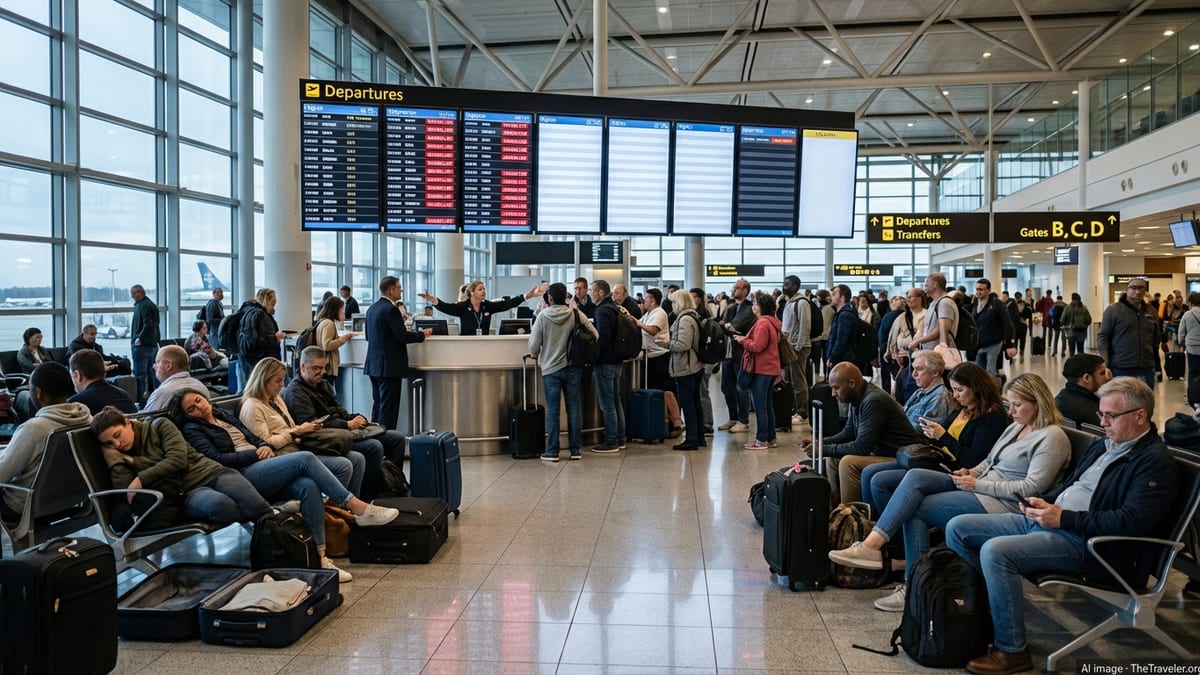
Why Kuwait’s Skies Closed and How Long Disruption May Last
Kuwait’s airspace has remained closed to regular civil traffic since February 28, following missile and drone strikes linked to the wider conflict involving Iran, the United States and Israel. Publicly available information shows that Kuwait International Airport sustained damage and that aviation authorities halted passenger operations as a security measure. The shutdown has now stretched for more than six weeks, with periodic short extensions rather than a firm reopening date.
Reports from regional aviation trackers indicate that the closure is part of a broader belt of restricted airspace across the northern Gulf, including Iran and Iraq, which has forced airlines to redraw routes between Europe, Asia and Africa. For Kuwait, which relies heavily on air links for expatriate travel and trade, the total halt to regular scheduled flights has been especially disruptive.
Recent updates from regional media suggest that authorities in Kuwait are maintaining a cautious stance, with temporary flight bans being rolled forward in 12 hour increments instead of providing a long term schedule. For passengers, that has translated into a prolonged period of uncertainty in which tickets are rebooked or cancelled at short notice and official timetable information often lags behind real world disruptions.
Industry analyses describe the situation as one of the most significant air travel interruptions to hit the Gulf since the pandemic period. While some neighboring hubs are slowly restoring partial operations, Kuwait remains effectively offline as a commercial gateway, prompting local carriers such as Jazeera Airways to adopt improvised solutions beyond the country’s borders.
Jazeera Airways’ Pivot to Saudi Arabian Gateways
In early March, Jazeera Airways announced that it would temporarily relocate its operations to airports in Saudi Arabia, notably Qaisumah Airport near Hafr al Batin and King Fahd International Airport in Dammam. According to published coverage, the carrier secured approvals from both Kuwaiti and Saudi aviation authorities to mount limited repatriation and onward services using these alternative gateways.
Industry publications report that the first phase of this plan focused on Qaisumah, a smaller regional airport in eastern Saudi Arabia located several hours’ drive from Kuwait. As the closure persisted and demand grew, operational data shows Jazeera supplementing Qaisumah with flights to and from Dammam, a larger international facility with better connectivity to major destinations such as Cairo, Istanbul and South Asian cities.
Aviation analysts note that the move effectively turns Saudi territory into a surrogate hub for Kuwait based passengers. Aircraft that would normally cycle through Kuwait International are instead operating point to point services within Saudi Arabia, with ground links used to bridge the gap across the land border. This has allowed Jazeera to preserve at least part of its network and aircraft utilization rather than grounding its fleet entirely.
However, the pivot comes with constraints. Qaisumah’s limited infrastructure restricts the number of daily movements and the size of aircraft that can operate efficiently, according to specialist aviation coverage. Dammam offers more capacity but is also hosting operations relocated from other Gulf carriers, meaning takeoff and landing slots are at a premium during peak hours.
What the Rerouting Means for Passenger Journeys
For travelers, Jazeera’s shift into Saudi Arabia has transformed what was once a straightforward flight from Kuwait into a multi step journey involving buses, border controls and additional fees. Publicly shared passenger accounts and airline advisories indicate that many customers are now required to travel by road from Kuwait to Saudi airports before boarding their flights.
Reports from travel forums describe Jazeera organizing shuttle buses from designated points near Kuwait City to Qaisumah or Dammam, sometimes using temporary check in facilities away from the closed airport. These road legs can take from one and a half to more than three hours depending on the route, traffic and processing times at the border. For families traveling with children or elderly passengers, the added ground segment can significantly increase fatigue and planning complexity.
The rerouting has also introduced additional documentation requirements. Since the journey now passes through Saudi territory, many passengers must secure a Saudi visa or appropriate transit permission in advance. Guidance shared by travel agents and regional travel advisories stresses that travelers should verify visa eligibility well before departure, as processing times and conditions can vary by nationality.
Beyond logistics, there are financial implications. Some passengers report paying supplemental fees for bus transfers or reissued tickets when their original Kuwait departures were cancelled. While airlines such as Jazeera have rolled out emergency policies that allow rebooking or partial refunds in certain cases, consumer feedback on social platforms suggests that outcomes can differ widely depending on fare class, booking channel and departure date.
Capacity Limits, Cancellations and Customer Frustration
As demand for outbound travel from Kuwait concentrates into a few Saudi airports, capacity has become a pressing constraint. Aviation data services show that Jazeera has mounted only a fraction of its pre crisis schedule from Qaisumah and Dammam, leading to sold out flights on popular routes and higher fares for remaining seats.
Local media and online forums are filled with accounts of passengers who have seen flights cancelled or repeatedly rescheduled. Some report that flights were withdrawn with only short notice as operational plans evolved or as coordination between ground transport and aircraft rotations proved difficult. This has been particularly challenging for travelers with tight onward connections or time sensitive obligations such as work contracts and school terms.
Analysts point out that, given the fluid security context, airlines have limited ability to provide guarantees. The continued closure of Kuwait’s airspace means that any escalation in regional tensions, or further restrictions in Saudi airspace, could force more last minute changes. As a result, travel planners are advising customers to build extra buffer time into their itineraries, avoid nonrefundable add ons where possible and closely monitor airline communication channels.
At the same time, some passengers report relatively smooth experiences when flights and buses operate as scheduled, noting that staff at temporary check in points and on transfer services are attempting to manage crowds and answer questions. The variability of these experiences highlights how uneven the travel landscape has become for those relying on Jazeera’s workaround routes.
How Travelers Can Navigate the New Reality
For would be passengers weighing whether to book with Jazeera during Kuwait’s airspace shutdown, travel specialists suggest approaching plans with flexibility and careful preparation. Publicly available guidance from airlines and travel risk consultancies emphasizes the importance of confirming not just flight times, but also ground transfer arrangements, border formalities and any curfew or security advisories along the road corridor to Saudi Arabia.
Travelers are encouraged to check that their passports and Saudi entry permissions are valid for the full duration of the trip, including return segments that may pass back through the same airports. Some advisory notices recommend carrying printed copies of bookings and bus vouchers to ease processing at checkpoints or in the event of connectivity issues.
Insurance coverage has also become a focal point. Given the elevated likelihood of cancellations or abrupt schedule changes, policies that explicitly cover war or conflict related disruption are attracting renewed attention. Experts note that standard travel insurance often excludes such events, so passengers may need to seek specialized coverage or accept a higher level of financial risk when booking during the current period.
Looking ahead, industry observers say the sustainability of Jazeera Airways’ Saudi rerouting strategy will largely depend on how long Kuwait’s airspace remains off limits and whether regional security conditions stabilize. Until clearer timelines emerge, passengers flying with the carrier should expect longer door to door journeys, evolving procedures and the need to remain closely informed right up to the day of travel.