

More news on this day
Travelers booking spring and summer trips in 2026 are beginning to encounter a new kind of sticker shock, as a sudden spike in jet fuel prices collides with already strong demand for flights and forces airlines on nearly every continent to nudge fares higher.
Get the latest news straight to your inbox!
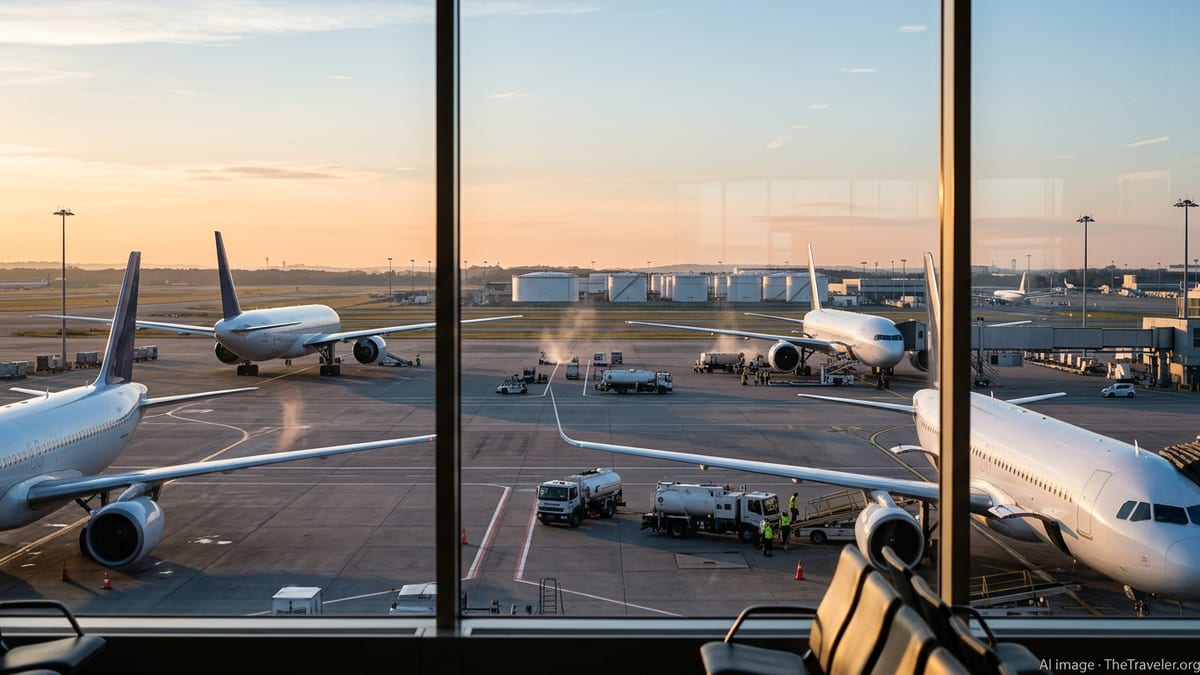
A Perfect Storm in the Global Fuel Supply
The sharp rise in ticket prices unfolding this year is rooted far from airport check-in desks. In late February 2026, the conflict involving Iran and Western allies intensified, triggering a near shutdown of tanker traffic through the Strait of Hormuz, one of the world’s most important oil and gas chokepoints. Publicly available coverage of the crisis indicates that the waterway typically carries around a fifth of global crude and liquefied natural gas trade, making any prolonged closure a direct shock to fuel markets.
Oil markets reacted quickly. International benchmarks such as Brent crude have climbed into territory not seen since mid 2024, while separate reporting shows crude briefly topping 100 dollars per barrel in early March as traders priced in a risk of extended supply disruption. Jet fuel, refined from the same barrel of oil, has followed suit, with industry analyses highlighting a rapid jump from pre-crisis levels and warning of heightened volatility in the weeks ahead.
Energy-focused research from industry groups and analytics firms points to particularly steep increases in Asia and Europe, where refineries and airports rely heavily on imported crude and refined products that normally pass through the Gulf. A recent note from one aviation-focused research provider cited Singapore jet fuel prices surging more than 70 percent as Middle East supply lines were disrupted, underlining how quickly regional markets can tighten when a single strategic corridor is choked.
At the same time, airlines and airport operators in Europe are tracking a steady climb in average jet fuel prices. A March 2026 overview from a major European air traffic data provider reported jet fuel at 2.45 dollars per gallon at the end of February, a seven percent rise in just two weeks and the highest level since July 2024. Analysts caution that these numbers reflect wholesale prices and could move even higher if the conflict drags on into the peak summer travel period.
From Fuel Tanks to Ticket Prices
For airlines, jet fuel is typically the single largest operating expense, often accounting for 20 to 25 percent of total costs in normal conditions. When prices jump as rapidly as they have in early 2026, even well-managed carriers can struggle to absorb the increase. Industry commentary from aviation finance specialists notes that global airlines were expected to post net profit margins of under 4 percent this year, leaving little room to absorb a sustained fuel shock without passing some of the burden to passengers.
Recent public statements and earnings updates from major carriers underline the pressure. In early March, coverage of a leading US airline’s investor event highlighted warnings that higher jet fuel prices were likely to feed through to airfares in the near term. Analysts quoted in business media have echoed that assessment, suggesting that unless oil and jet fuel retreat quickly, many airlines will need to raise base fares or add fuel-related surcharges to protect already thin margins.
Official statistics also point to rising costs. The United States Bureau of Transportation Statistics reported this month that average aviation fuel cost per gallon for US airlines rose in January 2026 compared with December 2025, even before the latest escalation in the Middle East. While some carriers hedge a portion of their fuel needs, locking in prices through financial contracts, those positions typically cover only part of their consumption and often roll off over time, limiting their ability to fully shield customers from market shocks.
Some airlines, particularly in Asia, are already adjusting surcharges. Japan Airlines, for example, announced higher international fuel surcharges for tickets issued between February and March 2026, citing benchmark price movements that pushed it into a higher surcharge band under its regulatory framework. Industry news outlets report that other carriers in the region are reviewing similar steps as fuel benchmarks climb.
Reroutes, Longer Flights and Hidden Costs for Travelers
The impact of the 2026 fuel shock is not limited to the price of jet fuel alone. Airspace restrictions and safety considerations linked to the Iran war have forced airlines to reroute many long-haul services, particularly flights connecting Europe with Asia and Oceania that would normally rely on shorter, more direct corridors. Publicly available route-tracking data and airline advisories show extended detours around closed or high-risk airspace across parts of the Middle East.
These revised routings add flight time and fuel burn. Aviation consultants cited in recent industry analyses estimate that detours of two to three hours can add several thousand dollars in extra operating costs per flight, depending on the aircraft type and load factor. For heavily traveled corridors, the cumulative impact across an entire schedule can quickly run into tens of millions of dollars, giving airlines another incentive to adjust fares.
There are also insurance and operational costs tied to conflict zones. Travel industry explainers published in recent days highlight how war-risk insurance premiums for flights operating near Iran and neighboring states have risen sharply or, in some cases, become difficult to secure at previous rates. Carriers that suspend services must also contend with revenue losses, while those that continue to operate on modified routings face higher crew and maintenance expenses linked to longer sector times.
For travelers, these factors can show up in ways that are not always obvious. Instead of a clearly labeled “fuel surcharge,” airlines may adjust the underlying base fare or reduce the number of promotional seats on popular routes. Some carriers may also trim frequencies or deploy smaller aircraft on marginally profitable routes to reduce exposure to high fuel costs, leading to fewer seats in the market and added upward pressure on prices.
Regional Differences: Who Feels the Pinch First?
Not all travelers will experience the fuel-driven price shock in the same way or at the same time. Aviation analysts point out that carriers with robust fuel hedging programs, diversified route networks and strong balance sheets may be able to delay or soften fare increases. Others, particularly smaller or heavily indebted airlines, may need to move faster to protect their finances.
Asia-Pacific passengers are among the most exposed. Economic research on the region repeatedly underscores its reliance on imported fuel that normally transits the Strait of Hormuz. Reports from regional energy centers note that when supplies tighten, wealthier economies often outbid poorer ones for limited cargoes, amplifying price spikes for smaller markets. Airlines in these countries face the dual challenge of higher input costs and customers who are more sensitive to even modest fare hikes.
In Europe, where demand for long-haul leisure and business travel has rebounded strongly since the pandemic, airlines already contend with environmental charges and sustainable aviation fuel mandates that add to total fuel bills. Trade publications covering the sector describe how compliance with emerging SAF requirements has introduced extra costs, as limited supplies command premium prices. When conventional jet fuel prices climb at the same time, the combined effect can be particularly acute for transatlantic and intra-European itineraries.
North American travelers may see a more gradual effect. While US airlines are not immune to global oil shocks, they benefit from access to large domestic energy markets and, in some cases, more extensive hedging programs. Nevertheless, with official US data already recording higher fuel costs per gallon in early 2026, consumer travel sites and fare trackers are beginning to flag upward trends on selected routes, especially for peak summer departure dates.
What Travelers Can Expect for 2026 Bookings
With uncertainty surrounding the duration of the Strait of Hormuz disruption and the broader Iran war, forecasting exact fare levels for the rest of 2026 is difficult. Energy analysts featured in financial and commodity market coverage describe a wide range of possible price paths for oil and jet fuel, depending on how quickly shipping lanes normalize and whether other major producers maintain or adjust planned output increases in the coming months.
Even so, most publicly available aviation and travel sector commentary points toward at least a near-term period of elevated airfares. Industry news reports suggest that airlines are planning targeted price increases on longer, fuel-intensive routes, such as intercontinental services linking Europe with Asia-Pacific and North America with the Middle East. Travelers looking at these itineraries for late spring and summer may face higher starting prices and fewer deep-discount deals than in 2025.
For cost-conscious passengers, travel advisors and consumer groups recommend a familiar mix of strategies: booking earlier for peak travel periods, remaining flexible on dates and airports, and considering one-stop itineraries where nonstops have become significantly more expensive. Monitoring fare trends with price alerts and being prepared to adjust travel plans if geopolitical conditions worsen can also help mitigate the impact.
What is increasingly clear is that the jet fuel crunch of early 2026 is reshaping the economics of global air travel in real time. Unless geopolitical tensions ease and shipping lanes reopen fully, the higher costs now rippling through refineries, fuel depots and airline balance sheets are likely to keep airfares elevated, turning the simple act of booking a flight into a more expensive proposition for millions of travelers worldwide.