

More news on this day
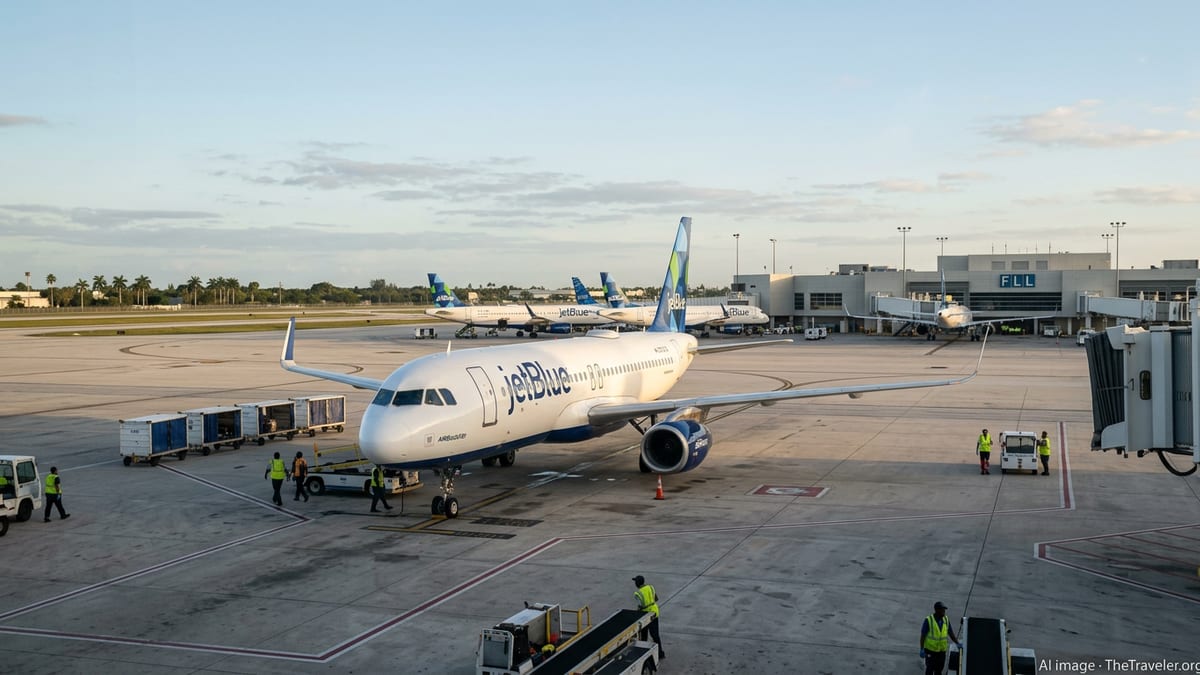
Fort Lauderdale-Hollywood International Airport is set to see a fresh wave of growth as JetBlue expands its footprint with new and expanded year-round service to Jacksonville, Cartagena, Dallas and Tampa, underscoring the carrier’s strategy to cement the South Florida gateway as one of its most important hubs.
Get the latest news straight to your inbox!
JetBlue Deepens Its Commitment to Fort Lauderdale
The latest additions to JetBlue’s network from Fort Lauderdale-Hollywood International Airport come as the airline steadily consolidates its role as the airport’s leading carrier by departures. Building on several seasons of incremental growth, the new and expanded year-round routes to Jacksonville, Cartagena, Dallas and Tampa reflect both rising traveler demand and JetBlue’s long-term bet on Broward County as a primary connecting hub.
Fort Lauderdale has emerged as a critical linking point in JetBlue’s system, offering convenient north–south connections between Florida, the U.S. Northeast, the Caribbean and Latin America. By anchoring more service here on a year-round basis rather than seasonal peaks, JetBlue is signaling confidence that both leisure and visiting-friends-and-relatives traffic will support steady demand throughout the calendar.
Airport officials have welcomed the strengthening partnership, noting that JetBlue’s growth is helping Fort Lauderdale-Hollywood diversify beyond its traditional image as a purely leisure gateway. With more business and cross-border traffic flowing through the terminals, the airport is increasingly positioning itself as a competitive alternative to Miami International for travelers who value lower fares and a less congested experience.
The airport, already one of the busiest low-cost hubs in the United States, benefits as larger aircraft and denser schedules feed more passengers into retail, food and beverage, and ground-transport services. The expanded JetBlue network is expected to support both direct aviation jobs and a broader tourism-driven employment base across Greater Fort Lauderdale.
Year-Round Lift to Jacksonville and Tampa
Within Florida, JetBlue’s decision to keep service between Fort Lauderdale and Jacksonville operating year-round formalizes what has become an increasingly important intrastate link. Jacksonville’s growing economy, coupled with strong family and leisure ties to South Florida, has turned the route into a reliable performer. Keeping it in the schedule throughout off-peak months ensures more predictable options for both business travelers and those connecting to Caribbean and Latin America flights via Fort Lauderdale.
Year-round service helps Jacksonville-area travelers tap into JetBlue’s wider network without backtracking through congested hub airports farther north. For Fort Lauderdale-based passengers, it offers a straightforward alternative to driving several hours up the interstate, particularly attractive for weekend trips, sporting events and university travel in North Florida.
To the west, Tampa’s status as one of Florida’s fastest-growing metropolitan areas makes it a natural candidate for permanent service. The year-round Fort Lauderdale–Tampa link puts two of the state’s major tourism and cruise gateways on the same JetBlue corridor, giving travelers more flexibility to pair itineraries that include both Gulf Coast and Atlantic Coast stays.
For JetBlue, the intra-Florida routes also help balance demand patterns. When transcontinental and transborder traffic softens, stronger local and regional flows between Florida cities can keep aircraft productively utilized, improving overall network efficiency while giving residents more choice.
International Reach Expands With Cartagena
On the international front, upgrading Cartagena to year-round status from Fort Lauderdale is a notable step in JetBlue’s Latin America strategy. The historic Colombian port city has evolved into one of the region’s most sought-after beach and culture destinations, drawing a mix of North American tourists and regional travelers.
By anchoring Cartagena service in Fort Lauderdale, JetBlue taps into a large Colombian diaspora in South Florida and gives them a direct, low-fare option that avoids a connection through larger, often pricier hubs. At the same time, U.S. vacationers gain easier access to Cartagena’s walled city, Caribbean beaches and growing roster of boutique hotels and restaurants.
Year-round flights also support business and governmental links between Florida and Colombia, which has become one of the state’s key trade partners. Regular frequencies across all seasons help foster confidence among corporate travelers and tour operators planning group trips or conferences in the city.
The Cartagena moves fit into a broader pattern of JetBlue strengthening its cross-Caribbean network from Florida, with Fort Lauderdale acting as a launchpad for destinations where the airline’s mix of low fares, seat-back entertainment and free Wi-Fi has proven especially popular.
Dallas Service Underscores Competitive Ambitions
Adding year-round service to the Dallas area from Fort Lauderdale elevates JetBlue’s competitive profile on one of the most strategically important corridors in the country. Dallas–Fort Worth is a powerhouse corporate and technology market, and linking it directly to South Florida gives JetBlue access to high-yield business traffic alongside steady leisure demand.
The Fort Lauderdale–Dallas route also creates new connection possibilities for travelers in both directions. South Floridians gain a one-stop JetBlue option to key markets in Texas and the central United States via Dallas, while North Texas residents tap into a convenient gateway for Caribbean and Latin America vacations without adding extra stops.
For Fort Lauderdale-Hollywood International Airport, the route strengthens its claim as a national-scale hub instead of purely a regional player. Having direct connectivity to Dallas, alongside established links to New York, Boston and other major cities, makes the airport more attractive to global airlines evaluating future codeshare and interline partnerships.
Industry analysts note that increased competition on Dallas–South Florida routes tends to benefit travelers with lower average fares and more schedule choice. JetBlue’s entry with year-round service could encourage rival carriers to defend market share with their own promotions and additional capacity.
Economic Tailwinds for Broward County and Beyond
The cumulative effect of JetBlue’s expanding year-round network from Fort Lauderdale is expected to ripple through Broward County’s economy. More nonstop destinations help support higher hotel occupancy, restaurant revenues and visitor spending across coastal communities from Hollywood to Pompano Beach.
Local tourism officials have emphasized that better connectivity within Florida is just as important as new out-of-state links. With easier air access to Jacksonville and Tampa, for example, regional visitors are more likely to consider multi-city itineraries that include time in Greater Fort Lauderdale, particularly during major sporting events, festivals and cruise departures.
At the airport itself, added JetBlue flights contribute to a stronger business case for ongoing terminal upgrades, improved ground transportation links and expanded concessions. Consistent year-round service levels reduce the extreme seasonal swings that can make planning and staffing more difficult for airport tenants.
For travelers, the practical impact is a busier but more connected hub that offers a wider range of nonstop options and one-stop connections. As JetBlue continues to grow its Fort Lauderdale operation, the airport’s role in the broader U.S.–Caribbean–Latin America travel ecosystem is likely to intensify, giving South Florida another powerful draw in an increasingly competitive aviation landscape.