

More news on this day
JetBlue flights across the United States were briefly grounded early Tuesday, March 10, 2026, after an internal system outage prompted the airline to ask federal regulators for a nationwide pause in departures, raising new questions about the vulnerability of air travel to technology failures.
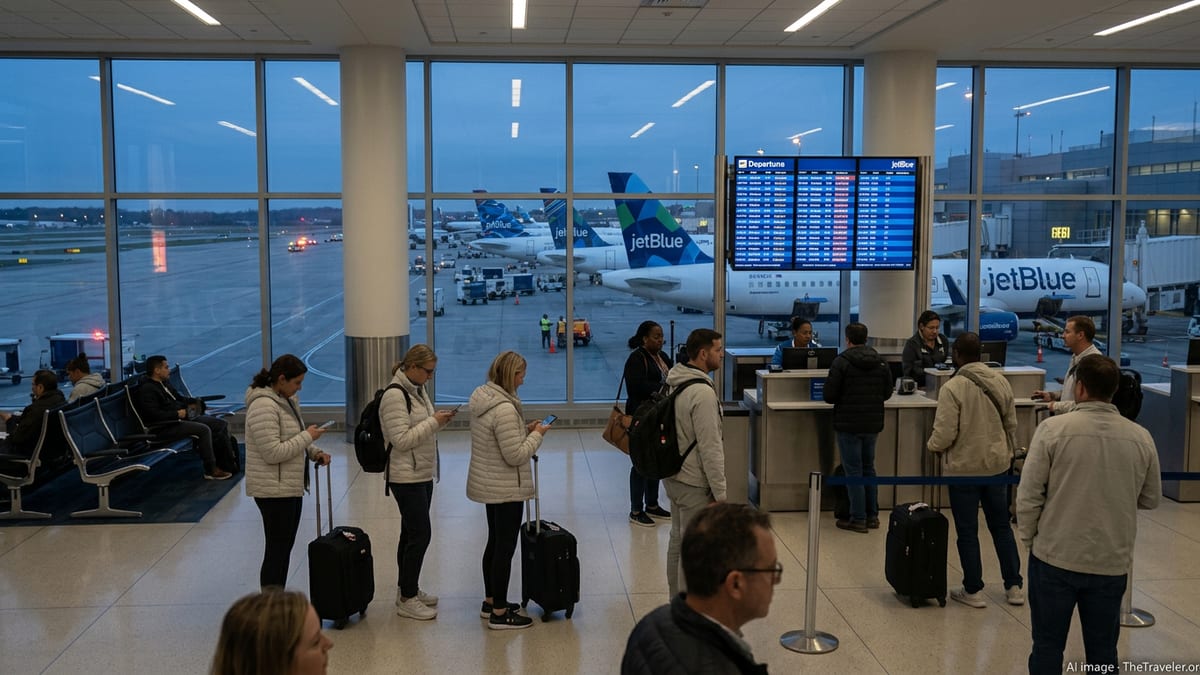
What Happened During JetBlue’s Nationwide Ground Stop
The Federal Aviation Administration confirmed it issued a nationwide ground stop for all JetBlue Airways flights in the early hours of Tuesday, acting on a request from the airline as it worked through a technical disruption in its internal systems. The pause applied to JetBlue departures across the country, while flights already in the air were allowed to continue to their destinations.
According to FAA advisories and airline statements, the ground stop began shortly after 12:30 a.m. Eastern Time and was lifted roughly 40 minutes to an hour later, with normal operations slowly resuming afterward. JetBlue described the root cause only as a “brief system outage,” without specifying which platforms were affected or whether the issue originated in dispatch, crew scheduling, communications, or broader IT infrastructure.
Flight-tracking data showed limited direct fallout compared with larger historical meltdowns, with a relatively small number of cancellations but more than a hundred delays on Monday rolling into the early hours of Tuesday at key JetBlue hubs. For travelers, the outage was most disruptive at major focus cities such as New York’s John F. Kennedy International Airport, Boston Logan International Airport, and Fort Lauderdale, where early-morning departures are heavily used by business and connecting passengers.
By midmorning Tuesday, both the FAA and JetBlue said operations had returned to normal, but the incident highlighted how even a short-lived IT fault can trigger nationwide regulatory action and ripple through the network for hours afterward.
How the Outage Affected U.S. Travelers
Because the ground stop occurred overnight and into the very early morning, the total number of passengers directly impacted was modest compared with a daytime disruption. Still, travelers with red-eye arrivals, early-morning departures, and tight connections bore the brunt of the delay. Some flights were held at gates awaiting new departure clearances, while others were pushed later in the morning as the carrier worked to reset its schedule.
Passengers reported gate holds without clear initial explanations, followed by announcements of a “system issue” affecting JetBlue operations nationwide. In many cases, aircraft remained at the gate with crews on board while dispatch and operations systems were restored, causing delays of 30 minutes to a few hours depending on the route and airport congestion once the pause lifted.
Even after the federal ground stop formally ended, downstream effects lingered. Crews timed out on some sequences, aircraft were out of position for later flights, and early delays compounded at busy East Coast airports. Travelers connecting through JetBlue hubs were most vulnerable, with some missing onward flights and having to be rebooked later in the day.
At the same time, there were no widespread reports of stranded passengers on the scale seen during major weather events or previous multi-day system collapses at other U.S. carriers. Most affected customers were accommodated on later same-day departures, highlighting that while the disruption was nationwide in scope, its duration helped keep the impact contained.
What JetBlue and the FAA Are Saying About the IT Failure
JetBlue has characterized the incident as the result of a short-lived internal outage, emphasizing that systems were restored and operations normalized within hours. The airline has not publicly detailed which part of its technology stack failed, nor whether the disruption involved a single critical application or a broader connectivity issue at its operations center.
The FAA described the pause as a ground stop issued at the airline’s request rather than a unilateral regulatory action. This distinction matters for carriers and passengers alike, because such requests typically mean the airline has identified operational risks that make it unsafe or impractical to continue normal departures until systems are stable.
Aviation analysts note that the decision to halt departures nationwide, rather than limit controls to one region or a handful of airports, suggests the failure touched core functions such as flight planning, dispatch releases, or operational communications between crews and the airline’s control center. Without reliable access to those tools, airlines often cannot legally or safely launch flights, even when aircraft and crews are ready.
Regulators are expected to review the outage as part of routine oversight, but there has been no indication so far of any broader security or cyber concerns. Instead, early information points to an internal IT problem specific to JetBlue, aligning it with a pattern of technology-driven disruptions that have affected several U.S. carriers in recent years.
Tips for Travelers Flying JetBlue in the Next Few Days
For travelers with upcoming JetBlue flights this week, schedules are currently operating close to normal, and no ongoing nationwide waivers have been announced solely in connection with the outage. However, minor residual delays can persist after any network disruption, particularly at busy hubs where aircraft and crews may still be repositioning.
Experts advise travelers to monitor their flight status frequently through airline channels on the day of departure, especially if they are connecting through New York, Boston, or other major JetBlue stations that experienced early-morning congestion on March 10. Arriving at the airport earlier than usual can provide extra buffer if security lines or rebooking desks are busy in the aftermath of the event.
Travelers with tight connections, separate tickets on other airlines, or important time-sensitive commitments such as cruises or business meetings should treat this week as a period to build in additional margin. Even when operations are formally “normal,” aircraft rotations may still be recovering, and a short delay could jeopardize onward plans.
Passengers who experienced significant delays on March 10 may be eligible for customer-service gestures such as travel credits or fee waivers, depending on JetBlue’s assessment of each case. While U.S. regulations do not mandate compensation for delays caused by internal IT issues, many airlines choose to offer goodwill accommodations, particularly for lengthy disruptions or missed connections.
What This Incident Signals About Airline Technology Risks
The JetBlue outage is the latest reminder that modern air travel is deeply dependent on complex, interconnected technology systems. From crew scheduling and maintenance records to flight planning and weight-and-balance calculations, critical steps that once relied on paper now flow through digital platforms that must perform flawlessly, around the clock.
Even a brief loss of connectivity at a carrier’s operations center can bring departures to a halt if pilots cannot obtain updated dispatch releases, fuel numbers, or safety-critical documentation. That appears to be what happened in this case, with JetBlue proactively requesting a pause on flights while it worked to restore internal tools rather than risking departures without full operational visibility.
For U.S. travelers, the episode underscores a growing reality: not all major disruptions are caused by storms or airspace congestion. IT failures, vendor outages, and software glitches have been behind several headline-making slowdowns in recent years, sometimes at peak holiday periods. While Tuesday’s JetBlue event was comparatively short, it adds to pressure on airlines to invest further in redundancy, backup systems, and incident response.
Industry observers expect carriers and regulators alike to scrutinize how quickly JetBlue identified the problem, restored its systems, and communicated with affected passengers. Those lessons will shape not just the airline’s internal procedures but also how the broader U.S. aviation system prepares for the next time technology troubles threaten to bring flights to a standstill.