

More news on this day
Days of rolling delays and cancellations at New York’s John F. Kennedy International Airport are complicating April 2026 travel plans, as spring storms, tight schedules and wider network disruptions converge at one of the United States’ busiest international gateways.
Get the latest news straight to your inbox!
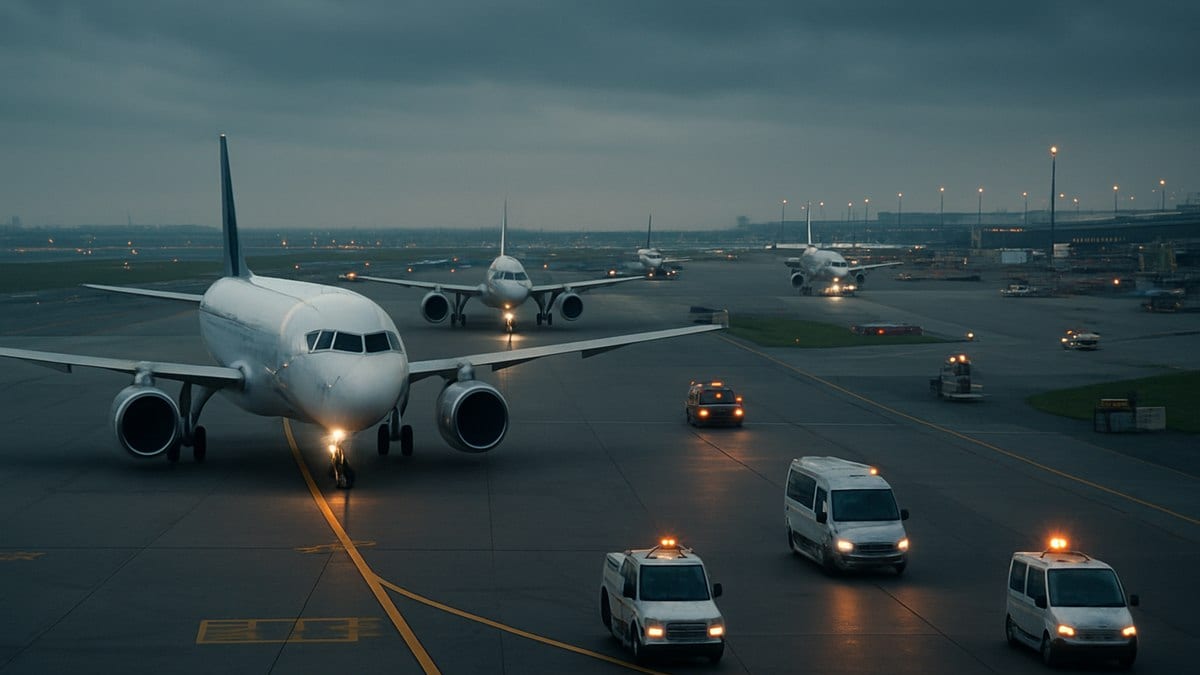
Spring Weather and Holiday Crowds Collide at JFK
Early April has brought an unsettled mix of low clouds, rain and thunderstorms along the U.S. East Coast, intersecting with Easter holiday travel and spring break demand. Publicly available tracking data for April 5 and April 6 shows thousands of delayed flights nationwide, with New York consistently appearing among the hardest hit metro areas. JFK, which typically operates near capacity during peak hours, has seen that combination translate into longer taxi times, gate holds and late-arriving aircraft.
On April 5, travel industry coverage highlighted roughly 90 delays and close to a dozen cancellations at JFK alone, affecting routes to Florida, the Midwest and long haul destinations such as Kuwait City. Those numbers sit within a broader national picture that saw hundreds of cancellations and several thousand delays as storms rippled across multiple regions.
By Easter Monday, April 6, aggregated data cited in aviation and travel reports pointed to more than 4,700 delayed flights and just over 300 cancellations across U.S. airports, with New York, Atlanta and Chicago among the primary pressure points. JFK’s role as a major hub meant that even modestly reduced arrival rates quickly cascaded into missed connections, tight rebooking windows and crowded customer service lines.
Although the Federal Aviation Administration’s most recent status updates for April 10 list no widespread ground stops or ground delay programs at JFK, the aftereffects of earlier storms and heavy traffic continue to echo through schedules. Travelers are finding that a flight listed as “on time” at check in can still board late if the inbound aircraft is held elsewhere due to weather or congestion.
Network Ripple Effects Extend Beyond New York
The disruption picture at JFK cannot be separated from a wider strain across the U.S. aviation network this spring. Travel-focused analyses describe a pattern in which stormy weather and localized air traffic control programs at one airport send aircraft and crews out of position across entire route maps. Carriers then face the challenge of restoring normal operations while balancing crew duty time limits, maintenance requirements and high seasonal demand.
In early April, that pattern has been visible across multiple hubs, including Atlanta, Chicago O’Hare, Dallas Fort Worth, Houston and Los Angeles, all of which have reported elevated delay and cancellation levels. When those airports slow down, knock-on effects often surface hours later on connecting flights at JFK, particularly for passengers traveling on multi-leg itineraries.
Reports from consumer advocacy organizations and travel media emphasize that New York’s three main airports share interconnected airspace. Ground stops and delay programs at LaGuardia or Newark can quickly force reroutes or holding patterns for JFK traffic. During the Easter weekend, a rolling ground stop at LaGuardia due to fog and thunderstorms underscored how a bottleneck at one field can add pressure at the others, even if JFK itself is open.
International routes have not been immune. Coverage focusing on Gulf and transatlantic services notes that long haul flights into JFK depend heavily on tight arrival and departure banks to keep aircraft and crews on schedule. When an aircraft arrives late after holding or diversion, the resulting delay often carries directly into its next outbound leg, magnifying the inconvenience for the next wave of passengers.
Airline Schedules and Construction Tighten Margins
Apart from weather and airspace constraints, attention is turning to how airline scheduling practices and airport infrastructure projects are influencing reliability. Airlines have gradually rebuilt capacity following the pandemic years, and some analysts argue that dense schedules relying on rapid aircraft turnarounds leave little slack when storms or ground delay programs strike.
At JFK, recent passenger accounts describe crowded early morning departure banks and busy evening international waves, where even minor hold-ups at security checkpoints, baggage drop or boarding can chip away at already narrow buffers. When those small delays stack on top of air traffic control restrictions, they can tip flights from minor late departures into missed connection territory for downline travelers.
Construction and modernization work at the airport is also a factor for some travelers. Renovations around certain terminals, including projects tied to the broader redevelopment of JFK, have generated advisories about altered traffic patterns and the potential for curbside congestion. While some recent traveler reports describe manageable conditions, advance messages from airlines and airport operators continue to recommend arriving earlier than usual, especially for morning international departures.
Regulatory documents and scheduling notices published in recent months highlight ongoing concerns about staffing in the New York airspace region. While these materials focus on the broader metroplex, they note that chronic controller shortages and complex traffic flows have historically contributed to elevated delay levels at JFK, LaGuardia and Newark compared with many other U.S. airports.
Travelers Face Tough Choices on Rebooking and Routing
For passengers caught up in this April’s disruptions at JFK, published guidance from consumer groups and airline policy summaries points to a familiar but often frustrating set of options. When a flight is significantly delayed or canceled, travelers may be able to request rebooking on a later service, switch to a different airport within the same metro area or, in some cases, obtain a refund if the airline is unable to provide a suitable alternative.
Travel commentary notes that during the recent disruption spikes, seats on remaining flights out of JFK have often filled quickly, particularly on routes to Florida, the Caribbean and other popular spring break destinations. Some advice columns suggest checking availability from LaGuardia or Newark when circumstances allow, though this can introduce its own logistical challenges with ground transport and baggage.
Passengers with fixed commitments, such as cruises, tours or onward international flights, face an especially narrow margin for error. Coverage of recent events stresses that even a delay of one or two hours at JFK can prove critical when connections are scheduled tightly. As a result, travel planners are encouraging clients to favor longer connection windows and earlier departure times where possible throughout April.
Airline mobile apps, airport departure boards and independent flight tracking tools remain key resources for those navigating the disruption. Travel writers observing the current situation at JFK note that travelers who closely monitor inbound aircraft status, rather than just scheduled departure times, often have more time to adjust plans or seek alternative routes.
Preparing for the Rest of April at New York’s Busiest International Gateway
Looking ahead to the remainder of April 2026, forecasters expect a continued mix of unsettled spring weather across parts of the United States, including the Northeast. While not every day will bring significant disruption, the experience of the first week of the month suggests that relatively modest storms can still trigger outsized impacts at tightly scheduled hubs like JFK.
Travel industry overviews recommend that anyone with upcoming flights through JFK in April build additional time into their itineraries, particularly when relying on connections or international departures. Choosing earlier flights in the day, traveling with carry-on luggage when practical and maintaining flexible plans for ground transportation into and out of the airport are recurring themes in published advice.
Observers also point out that April sits at the intersection of several trend lines for JFK: rising leisure demand, gradually expanding international service and ongoing infrastructure work that aims to modernize terminals and improve long term capacity. In the short term, however, those same factors can contribute to congestion and crowding when operations are stressed.
For now, the picture at JFK remains fluid. Some days will resemble a typical busy spring schedule, while others will see fresh waves of delays and cancellations driven by storms, airspace programs or equipment issues elsewhere in airline networks. For travelers, monitoring conditions closely and preparing for potential disruption may be the most reliable strategies as April unfolds.