

More news on this day
Flight delays at New York’s John F. Kennedy International Airport are rippling across the United States domestic network, as 127 disrupted departures and arrivals tighten aircraft rotations, squeeze crew schedules and trigger missed connections at major hubs.
Get the latest news straight to your inbox!
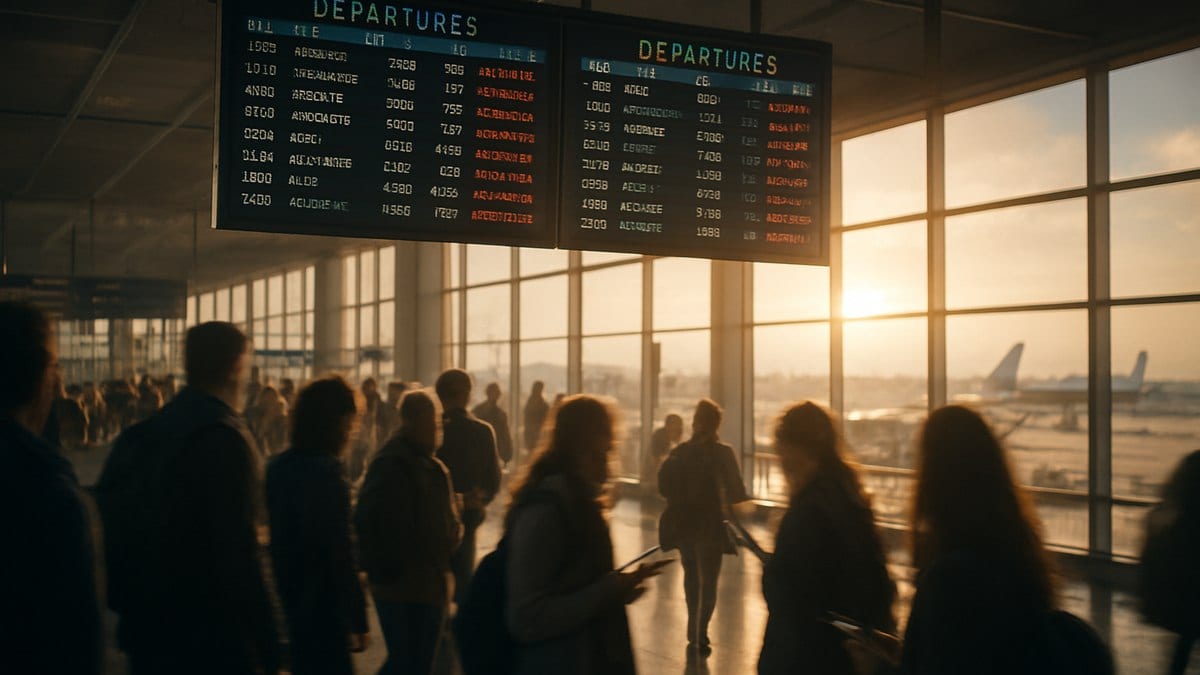
JFK Emerges as a Fresh Flashpoint in April Travel Turbulence
Publicly available tracking data for early April 2026 indicate that delays at JFK have intensified on already busy spring travel days, with 127 flights affected in a single operating window and more than 130 delays reported in some tallies. While outright cancellations at the New York hub remain limited, the concentration of late departures and arrivals is proving enough to unsettle the broader domestic network.
JFK’s role as both a long haul gateway and a key node for domestic connections means that even a modest spike in local disruption can have an outsized impact. Late arriving transcontinental and transborder flights compress ground times for aircraft and crews, narrowing the margin for on time turnarounds and increasing the risk that subsequent departures push past their scheduled slots.
Recent coverage of system wide performance shows that New York has been a recurring pressure point this month, alongside hubs in Atlanta, Orlando, Miami and Los Angeles. Reports indicate that when multiple major airports experience elevated delay levels on the same day, recovery becomes slower, with each new operational hiccup compounding earlier disruption.
Aviation analysts note that JFK’s heavy banked schedules, particularly in the morning and evening peaks, make the airport especially vulnerable when weather, air traffic control programs or staffing constraints reduce capacity for even a few hours. Once departure queues form, it can take much of the day for operations to stabilize, even if conditions improve.
Ripple Effects Across Domestic Hubs and Trunk Routes
The 127 flight delays at JFK are contributing to wider knock on issues across the U.S. domestic system, as aircraft and crews arrive late into downline airports. Routes linking JFK with other major hubs, including Atlanta, Chicago, Dallas Fort Worth and Miami, are particularly exposed because they function as high frequency trunk corridors feeding large numbers of onward connections.
Published network data and recent disruption summaries from travel industry outlets show that when New York operations slow, secondary effects frequently appear hours later at distant airports. Late arriving aircraft from JFK can force schedule adjustments or gate swaps in cities as far afield as Seattle, Phoenix or Denver, especially on days when spare capacity is already limited by heavy demand.
In early April, Atlanta’s Hartsfield Jackson Airport and Orlando International have both reported elevated delay volumes tied to system wide pressure, while Miami International recorded more than 260 delays on one recent day as returning spring break traffic collided with adverse weather. These hubs are closely interlinked with New York through dense domestic schedules, allowing disruption to cascade rapidly between regions.
For domestic travelers booked on multi leg itineraries, this means that even if their initial departure is not from New York, the performance of flights into and out of JFK can still determine whether connections hold. According to travel data providers, a single missed slot on a heavily used corridor can strand large numbers of passengers, especially when alternative flights are already running close to full.
Weather, Congestion and a Stretched Aviation System
Reports from flight status platforms and operational briefings suggest that the latest wave of disruption at JFK is rooted in a familiar mix of causes: changing spring weather patterns along the East Coast, congestion in crowded airspace and a system running with limited slack after several years of strong demand recovery.
On days when low clouds, storms or shifting winds reduce runway throughput, air traffic managers often introduce ground delay programs that slow departures into constrained airports. Even relatively modest restrictions at New York area fields can quickly translate into long queues, as dozens of carriers compete for reduced takeoff and landing capacity during peak hours.
At the same time, airlines have continued to schedule near pre pandemic traffic levels while juggling aircraft availability, maintenance requirements and crew duty limits. Industry observers point out that when schedules are built with tight turn times and limited spare aircraft, there is little room to absorb extended taxi times or en route holding without downstream consequences.
Recent disruptions at other major hubs, including significant delay waves reported at LaGuardia and sustained irregular operations in Orlando and Miami, underscore how a localized shock can spread through a tightly interconnected system. As with the latest issues at JFK, many of these events have not involved large numbers of cancellations but instead long strings of rolling delays that accumulate over the course of the day.
Impact on Passengers and Domestic Connectivity
For passengers, the practical consequences of 127 delays at a single hub can be substantial. Even when flights eventually depart, extended waits at the gate or on the taxiway lengthen travel days, increase the risk of missed connections and add pressure on airport services ranging from security to baggage handling.
Travel industry coverage highlights that domestic itineraries connecting through New York’s airports are especially vulnerable when delays pile up. Short connection times that might be manageable on a routine day can quickly become risky when departure banks slip, particularly for travelers moving between terminals or clearing customs and immigration before re entering the secure area.
Families traveling for spring holidays and business travelers on tight schedules face similar challenges as they attempt to rebook missed onward flights or secure last minute hotel rooms near congested hubs. With popular routes often fully booked, some affected passengers are forced to accept significant reroutes through alternative cities or overnight stays to complete their journeys.
Airlines have been encouraging travelers to monitor digital channels for real time updates and to make use of self service tools where possible, but elevated disruption volumes increase call center queues and lengthen lines at airport service desks. At peak times, the combined effect can leave terminals crowded with customers awaiting new flight arrangements.
How Travelers Can Navigate Ongoing Disruptions
Given the recent pattern of rolling delays at JFK and other major hubs, travel advisers are urging passengers to build more resilience into their plans. Guidance shared in public forums and consumer reports emphasizes booking longer connection windows, favoring earlier departures in the day and considering nonstop options on key domestic routes when available.
On days with active weather systems or published reports of widespread delays, passengers are also being encouraged to arrive at the airport earlier than usual, particularly at busy New York area terminals where security lines and check in counters can quickly become congested. Carry on bags can make rebooking easier if plans change abruptly, since travelers do not have to wait for checked luggage to be located and retagged.
Industry data show that disruption often clusters by time of day, with morning delays seeding larger problems into the afternoon and evening peaks. Travelers who can shift their flights to less congested times, or to secondary airports that are performing better on a given day, may be able to reduce their exposure to cascading delays triggered at hubs like JFK.
As April 2026 unfolds, publicly available performance metrics suggest that the U.S. domestic air travel system remains sensitive to shocks, from weather related capacity cuts to staffing constraints in key operational areas. The latest bout of 127 delays at JFK offers another reminder that, in such a tightly coupled network, disruption at a single airport rarely stays local for long.