

More news on this day
Fresh disruption at New York’s John F. Kennedy International Airport is rippling across the United States on April 9, as 127 domestic flight delays strain airline schedules and tighten capacity on already busy spring routes.
Get the latest news straight to your inbox!
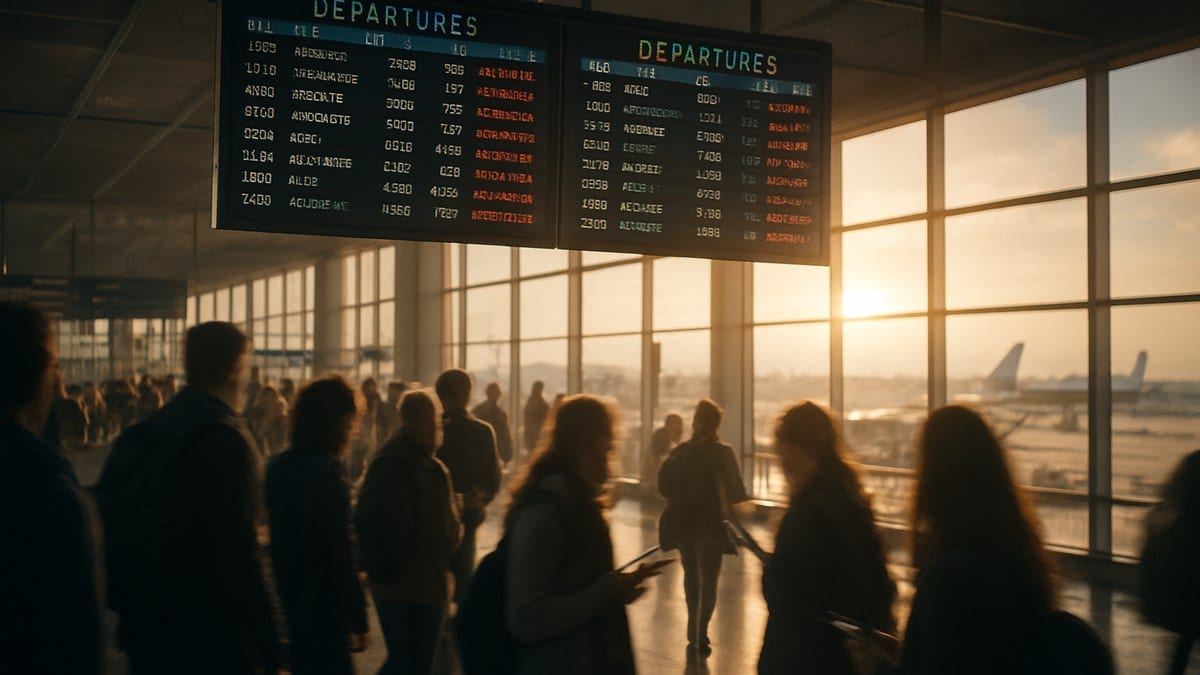
JFK Bottlenecks Spread Through Domestic Timetables
Operational data from flight-tracking platforms on April 9 indicate that JFK has recorded 127 delays affecting primarily U.S. domestic services, with additional knock-on effects on inbound and outbound international flights. While the total is modest compared with some previous nationwide meltdowns, the concentration of delays at one of the country’s most important coastal hubs is amplifying disruption for travelers with onward connections across the network.
New York has featured repeatedly among the hardest-hit U.S. airports during the early weeks of April. Recent tallies compiled by aviation news outlets show JFK and other New York area airports ranking near the top of national delay tables on multiple days, as storms, congestion and staffing constraints converge during the busy spring travel period. These patterns have left airlines juggling aircraft rotations and crew schedules with limited slack in the system.
Because JFK serves as both a major origin-and-destination airport and a transfer point for domestic passengers routing between the Northeast, the Midwest and the South, even relatively short ground holds can cascade into missed connections and extended rebookings. Publicly available delay logs show that services between New York and hubs such as Atlanta, Chicago and Miami have been particularly vulnerable when bottlenecks build at either end.
Analysts note that the latest round of disruption follows a winter and early spring marked by several severe weather events and recurring airspace and staffing challenges, leaving airlines with thinner margins for recovery. When operations at a node as central as JFK slow down, recovery windows narrow, and smaller secondary airports can experience late-night or early-morning knock-on delays as aircraft and crews struggle to return to schedule.
National Network Already Under Strain
The impact of JFK’s 127 domestic delays is magnified by broader stress across the U.S. system in April 2026. Nationwide statistics compiled this week point to thousands of delays and scores of cancellations on some days, with major hubs including Atlanta, Houston, Chicago, Orlando, Miami, Detroit and San Francisco all reporting elevated disruption. In several cases, delays at one large hub have coincided with issues at another, creating complex chains of missed slots and misaligned aircraft.
Published coverage focusing on Atlanta and Houston in recent days highlights how quickly local issues can graduate into national headaches. Ground delay programs at overburdened airports, air traffic control staffing constraints and security bottlenecks at screening checkpoints have all contributed to slower throughput. When combined with dense holiday and spring break schedules, these factors leave little room to absorb fresh shocks from weather cells or runway flow restrictions.
Academic research on the U.S. National Airspace System has previously identified a small number of days each year when clustered disruptions spread rapidly along the busiest corridors. Early April appears to be exhibiting some of those characteristics, with multiple hubs experiencing overlapping delays. In that context, additional disruption at JFK is adding to an already fragile balance, particularly on high-frequency business routes and leisure-heavy Florida services.
For passengers, the practical effect is that a single late departure from New York can now jeopardize same-day arrivals on domestic connections several time zones away. Industry observers point to reported missed onward flights in cities such as Dallas, Denver and Phoenix when late-arriving New York services miss their planned connection banks, forcing airlines to search for remaining seats on later departures that are already heavily booked.
Weather, Security and Scheduling Challenges Combine
Spring weather across the Eastern United States continues to be a key trigger for delays, including those currently affecting JFK. Thunderstorms, low clouds and occasional wind shifts can quickly reduce runway capacity, prompting air traffic managers to meter departures and arrivals. Even short-lived restrictions can generate long queues of aircraft awaiting takeoff clearance, particularly at peak morning and evening banks when schedules are densest.
Alongside meteorological factors, security and staffing constraints remain a recurring theme in disruption reports from major hubs. Accounts from travelers and local media in recent weeks describe long screening lines at key airports and occasional lane closures as security agencies manage staffing shortages and high passenger volumes. When screening throughput slows, departure queues build, and aircraft pushback times slip beyond their assigned slots, feeding additional airborne and ground delays.
On the airline side, tight crew scheduling rules and limited spare aircraft create further susceptibility to knock-on disruption. A late arriving aircraft into JFK in the early afternoon can require a subsequent rotation to be shortened, combined or reassigned to different equipment, extending delays into the evening. When crews approach duty time limits because of earlier holdups, carriers may be forced to cancel or significantly retime flights rather than risk regulatory violations.
Recent nationwide figures suggest that while airlines have reduced the proportion of outright cancellations compared with earlier pandemic-era turmoil, the volume of delayed flights remains high on busy travel days. That environment means that an incident such as today’s 127 delayed domestic departures and arrivals at JFK is less an isolated spike and more a symptom of structural congestion, where any extra friction translates quickly into schedule slippage.
Passenger Experience: Longer Connections and Tighter Options
For travelers passing through JFK on April 9, the disruption is manifesting in longer-than-planned connection times, crowded gate areas and scarcer same-day rebooking options. With many flights leaving late but still operating, passengers are often held in a limbo where services are neither canceled nor reliably on time, complicating decisions about alternative routing, hotel stays or changes to ground transport at their final destinations.
Recent guidance from consumer advocates and travel organizations emphasizes the importance of building larger connection buffers when routing through busy hubs such as JFK, Atlanta and Chicago during peak seasons. Recommendations commonly include selecting earlier flights in the day, favoring nonstop itineraries where possible and traveling with carry-on baggage to simplify last-minute rebookings. The current wave of delays at JFK reinforces the logic of that strategy, particularly for passengers headed to events with fixed start times.
Passengers on multi-leg domestic journeys are also encountering situations where late inbound aircraft force airlines to swap equipment or adjust boarding times at short notice. These changes may keep itineraries technically intact but increase stress at the gate, as departure times repeatedly slip in small increments. Anecdotal reports from recent disruption days indicate that some travelers have chosen to abandon tight connections altogether, overnighting in hub cities rather than risking missed final legs.
At the same time, data from flight status platforms shows that a significant proportion of delayed flights do still reach their destinations on the same day, often within a window of one to three hours after scheduled arrival. For some travelers, that margin may be manageable; for others, especially those with onward rail or bus connections, even a modest delay can trigger a chain reaction of missed links. The current disruptions at JFK illustrate how little slack remains in many domestic travel plans when national operations are stretched.
What Today’s Disruption Signals for the Months Ahead
Today’s wave of 127 domestic delays at JFK adds to a growing body of evidence that the U.S. aviation system is entering the busy summer build-up with limited resilience. After a winter marked by significant storms and a spring punctuated by repeated multi-hub disruptions, the underlying pressures of high demand, infrastructure constraints and staffing shortfalls remain in focus for analysts and industry watchers.
Performance snapshots from recent days, including reports of more than 3,000 delayed flights across the United States on some 24 hour periods, suggest that irregular operations are no longer confined to holiday weekends or major weather events. Instead, they are appearing on routine weekdays when high traffic, modest weather and local bottlenecks coincide. JFK’s current disruptions sit squarely within that pattern.
For airlines, the experience of April 2026 may encourage further schedule fine-tuning, with some carriers likely to trim marginal frequencies, pad block times or adjust connection banks to create more recovery space. Several major airlines have already promoted digital tools that push real-time rebooking options, gate changes and connection guidance to passengers during irregular operations, reflecting an acceptance that delays and disruptions are now a persistent feature of the landscape.
For travelers, the latest turbulence at JFK underlines the value of proactive planning. Monitoring flight status closely in the 24 hours before departure, considering alternate airports in multi-airport regions and budgeting extra time for security and connections are emerging as core strategies for navigating a domestic network that is operating close to its limits as the peak summer season approaches.