

More news on this day
John F. Kennedy International Airport’s multibillion-dollar redevelopment will take center stage in London as project partners prepare to showcase new passenger information centers for the airport’s forthcoming Terminal 6 and New Terminal One at a major passenger terminal expo.
Get the latest news straight to your inbox!
London Showcase Puts JFK’s Transformation in the Spotlight
The presentation in London is expected to focus on how JFK’s New Terminal 6 and New Terminal One will use integrated passenger information centers to streamline journeys through one of the world’s busiest international gateways. According to publicly available conference material, sessions linked to JFK’s redevelopment are scheduled to highlight how data, wayfinding and real-time communication tools are being rethought as construction advances toward key openings later this decade.
JFK is in the midst of a sweeping overhaul valued at close to 19 billion dollars, with Terminal 6 and the New Terminal One emerging as flagship projects on the airport’s north and south sides. Terminal 6, developed by the JFK Millennium Partners consortium, is projected to cost about 4.2 billion dollars and will add a 1.2 million square foot complex with ten gates, most of them widebody capable. The New Terminal One, being built on the sites of the current Terminal 1, the former Terminal 2 and the old Terminal 3, is planned as a 2.6 million square foot international hub opening in phases from 2026.
The London expo setting provides an opportunity for JFK project teams and technology partners to demonstrate how these terminals intend to compete with leading global hubs on passenger experience. Conference material for the Passenger Terminal Expo series indicates that JFK’s New Terminal One leadership will participate in sessions on airport operational data, signaling that digital information flows are a central pillar of the new designs.
Next-Generation Passenger Information Centers
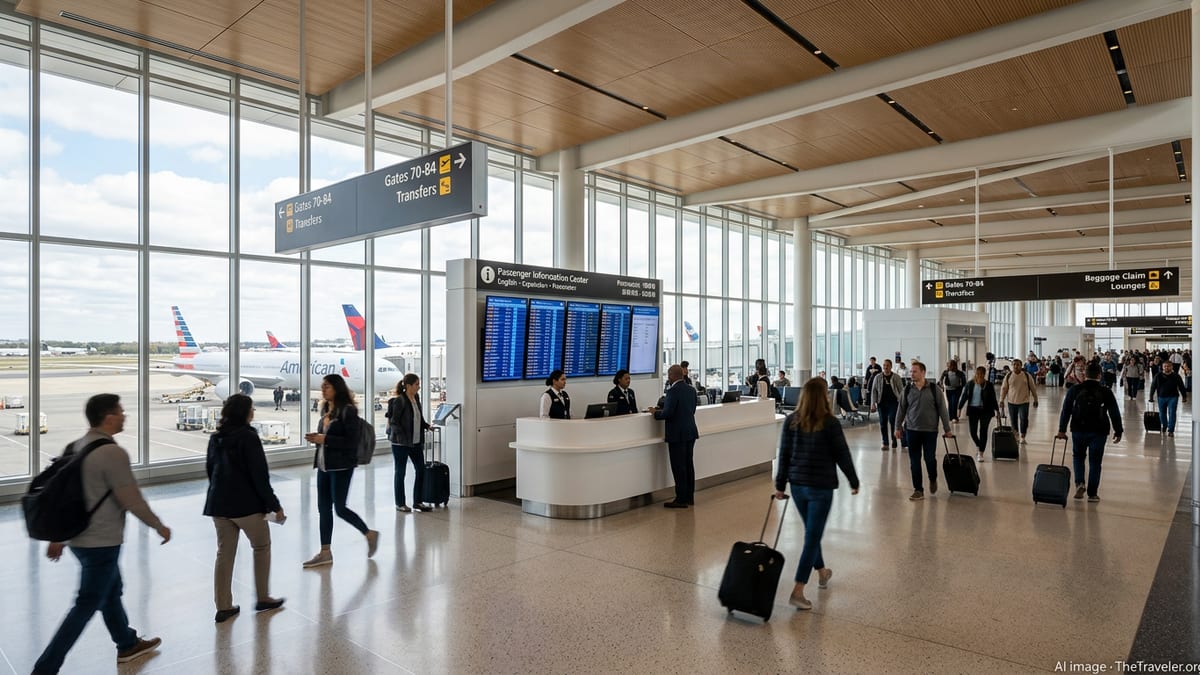
The new passenger information centers for Terminal 6 and the New Terminal One are being framed as more than traditional help desks. Based on published project overviews and industry coverage, the centers are expected to blend staffed assistance with a dense layer of digital touchpoints, including dynamic flight displays, wayfinding to gates and concessions, and context-aware messaging that adapts to real-time conditions.
In planning documents and public presentations on JFK’s redevelopment, technology and data integration are frequently highlighted as tools to relieve congestion and reduce traveler stress. The information centers are anticipated to connect to airport-wide operational databases, allowing staff and digital interfaces to provide consistent updates on gate changes, security wait times, baggage claim status and surface transport options.
Industry reporting on the New Terminal One indicates that its design includes expansive check-in halls, centralized security, and wide circulation areas, all of which rely on clear guidance for passengers moving between zones. Passenger information hubs, along with digital signage and mobile integration, are expected to anchor that guidance. For Terminal 6, material released by JFK Millennium Partners emphasizes a seamless experience between JetBlue’s existing Terminal 5 and the new facility, which will depend on coordinated wayfinding and shared information services.
Digital Wayfinding and Real-Time Operations
Information centers at the new JFK terminals are also expected to showcase the shift toward data-driven operations that many large airports are pursuing. According to conference session descriptions associated with the London expo, the New Terminal One team plans to outline how operational data platforms can translate behind-the-scenes metrics into passenger-facing updates that are accurate and timely.
That approach is in line with trends seen across major hub airports, where integrated control centers feed live information to public screens, airport apps and staffed desks. For JFK, the challenge is amplified by ongoing construction and a complex terminal layout, making robust wayfinding and clear communication particularly important during the transition period as airlines move from older facilities to the new terminals.
Observers of recent airport projects note that investments in digital signage, multilingual support and accessible information points are becoming as critical as physical upgrades to gates and concourses. The London showcase is expected to highlight how JFK’s information centers will incorporate these elements from the outset, rather than layering them on after construction.
Terminal 6: Boutique Experience with Big-Hub Capabilities
Terminal 6 is being promoted in industry coverage as a boutique-style facility with big-hub capabilities, combining widebody gates and international connectivity with a more intimate scale than some older terminals. The passenger information centers slated for Terminal 6 are expected to reflect that positioning, with a layout that keeps assistance points within easy reach of check-in, security and the gate piers.
Published material about Terminal 6 highlights its art and concessions program, which is designed to emphasize local Queens and New York businesses alongside global brands. In that context, information centers will also function as orientation points, directing passengers toward amenities, retail and food options while reinforcing the terminal’s local identity.
With the first phase of Terminal 6 targeted to open around 2026, hiring activity and community outreach linked to the project have already begun. Job fair notices describe a growing need for staff trained to support passengers in a highly digital environment, including roles that intersect with customer information services and technology-enabled assistance.
New Terminal One: Global Gateway for International Traffic
The New Terminal One is envisioned as JFK’s primary global gateway, handling long-haul services for a range of international carriers. According to publicly available redevelopment summaries, the first operating phase is planned to open in 2026, with subsequent stages adding more gates and expanded arrivals and departures halls.
Passenger information centers in the New Terminal One are expected to address the needs of a highly international customer base, with emphasis on multilingual communication, clear transfer guidance and coordination with border control processes. Conference information associated with the London event points to a focus on airport IT, digital innovation and the use of centralized data platforms to support both operations and customer-facing services.
As construction progresses, the New Terminal One’s information strategy is expected to evolve in tandem with its physical footprint. Industry observers note that the London expo offers an opportunity for the project team to present its latest thinking to a global audience of airport planners, technology providers and airlines, while gathering feedback from comparable projects worldwide.
Implications for Travelers and Global Hubs
The emphasis on passenger information centers at Terminal 6 and the New Terminal One underscores how critical communication has become to the competitive standing of major hubs. For travelers using JFK in the coming years, the changes being previewed in London are likely to translate into more prominent help points, more responsive digital signage and a closer integration between physical spaces and mobile information.
For the wider aviation industry, JFK’s showcase at the London expo offers a case study in how legacy airports can reimagine their information architecture while undertaking large-scale construction. The combination of new terminals, refreshed branding and upgraded data platforms is being closely watched by other airports contemplating similar overhauls of aging infrastructure.
As JFK moves toward the opening milestones for Terminal 6 and the New Terminal One, events such as the London expo provide an early view of how the airport’s future terminals will look and feel to passengers navigating one of the world’s busiest air corridors.