

More news on this day
At the edge of Chongqing’s urban sprawl, Jinlong Village in Jiangjin District has turned its sweeping “sea of cherry blossoms” into a seasonal festival that is drawing growing numbers of visitors and reshaping the local rural economy.
Get the latest news straight to your inbox!
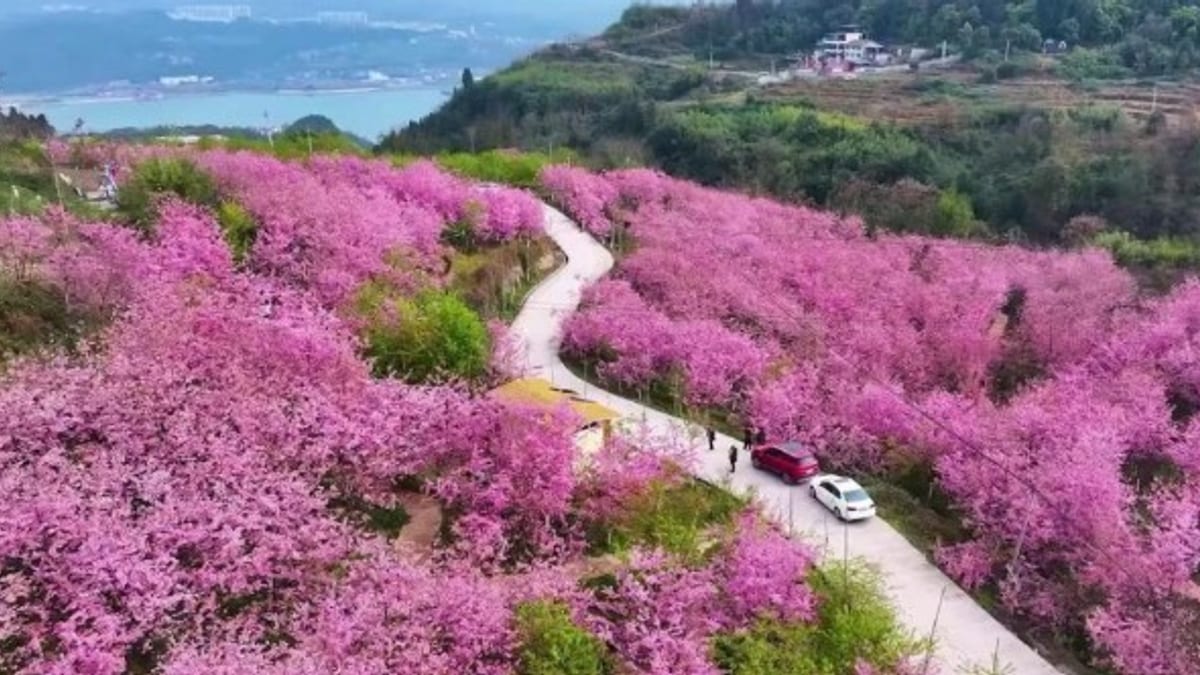
Image by Travel and Tour World – Tourism, Airline, Destination, MICE, Gobal Travel Market, Hotel news that you will find only over here.
From Quiet Farm Village to Springtime Hotspot
The cherry blossom scenic area in Jinlong Village, Shimen Town, Jiangjin District, has emerged as one of Chongqing’s most talked‑about spring attractions, according to recent travel guides and user‑generated travel content. Publicly available information describes tens of thousands of cherry trees planted on hillsides above the Yangtze River, forming a dense “flower sea” that peaks in late March and early April.
Travel platforms now promote Jinlong Village alongside other well‑known flower‑viewing destinations in Chongqing, positioning it as a day‑trip alternative to more urban parks and riverfront promenades. The combination of large‑scale blossoms, terraced farmland and distant mountain views has helped the village stand out in a crowded domestic market for spring tourism.
This year’s cherry blossom festival period overlaps with a broader surge in spring outings across China. Recent spring travel snapshots from major online platforms point to a sharp increase in demand for flower‑themed trips, with Chongqing listed among the country’s most popular destinations for such itineraries. Jinlong Village’s inclusion in updated cherry blossom and spring‑flower viewing recommendations indicates that the site is increasingly part of national rather than purely local travel planning.
Reports on visitor behavior suggest that the village attracts a mix of Chongqing residents, regional self‑drive tourists and organized tour groups, many of whom time their visits using real‑time blossom updates circulated on social media and travel forums.
Economic Vitalization Rooted in the Cherry Blossom “Sea”
The rise of Jinlong’s cherry blossom festival aligns with wider efforts in Chongqing and other provinces to use seasonal flower events as anchors for rural development. Policy documents on rural leisure tourism in the municipality emphasize “agriculture plus tourism” models in which specialty crops, scenic landscapes and village culture are packaged together to raise incomes and support small businesses.
Local media and open government information on Chongqing’s rural tourism plans highlight how such festivals are expected to stimulate spending in accommodation, catering, transport and cultural products. In Jinlong Village, this has translated into a growing network of small homestays, family‑run restaurants and fruit‑picking gardens clustered around the cherry blossom viewing area, particularly along access roads and village lanes leading to the core scenic zone.
Vendors are increasingly tailoring their offerings to blossom‑season demand, from simple farm lunches and tea to packaged local snacks and fresh produce. Observers note that villagers who once relied largely on bulk crop sales are experimenting with direct‑to‑visitor models, capturing higher margins through on‑site consumption and sales.
Case studies from other Chongqing districts with mature rural festivals suggest that this kind of model can significantly raise per capita disposable income in participating villages over a few years. Analysts view Jinlong’s cherry blossom festival as part of this trajectory, with the potential to anchor a more diversified rural economy beyond a single blooming period if visitors can be encouraged to return in other seasons.
Infrastructure Upgrades and Visitor Management
The influx of visitors has prompted incremental infrastructure upgrades in and around Jinlong Village. Publicly available planning documents and local coverage on spring tourism in Chongqing refer to expanded parking areas, improved village roads and clearer signage in key rural destinations, measures that are increasingly visible in new travel photography and user reviews from Jinlong’s cherry blossom area.
Travel guides now advise visitors on transport connections from central Chongqing, detailing road routes to Jiangjin District and onward links to Shimen Town and Jinlong Village. Ride‑hailing and chartered minivans are frequently mentioned options, reflecting how improved regional connectivity is helping urban residents access previously remote villages for short leisure trips.
Environmental messaging is also becoming more prominent. Visitor instructions circulated by travel platforms for Jinlong’s cherry blossom “sea” emphasize protecting the environment, avoiding trampling of flowerbeds and refraining from picking blossoms, echoing broader campaigns in scenic rural areas to balance tourism promotion with ecological protection.
Observers point out that effective visitor management is increasingly important as social media exposure drives sudden spikes in arrivals on peak bloom weekends. Recommended measures include timed entry during the busiest days, temporary traffic diversions near village gateways and the use of volunteers to guide visitor flows along designated paths through the orchards.
Part of a Wider Rural Tourism Push in Chongqing
Jinlong Village’s cherry blossom festival is not an isolated phenomenon. Chongqing’s official spring flower viewing maps released in recent years feature multiple rural districts where cherry blossoms, plum blossoms and rapeseed flowers form the backbone of seasonal tourism. Jiangjin is labeled as one of the municipality’s “cherry blossom dream” areas, underscoring the strategic role of such landscapes in the region’s tourism branding.
Other sites, including large cherry blossom gardens in counties such as Zhongxian, demonstrate the scale at which Chongqing is planting and marketing flowering trees. Coverage of these projects describes hundreds of hectares of cherry groves with dozens of varieties, designed to extend the blooming window and create differentiated experiences across the municipality.
National rural revitalization policies encourage this turn toward experiential agriculture and landscape‑based tourism. Research on Chinese village festivals shows that recurring flower events can help villages attract investment, upgrade infrastructure and build local brands that support everything from e‑commerce to specialty agricultural exports.
Analysts note that Jinlong Village benefits from being part of a broader cluster of spring attractions in the upper Yangtze region, making it easier to package into multi‑stop itineraries that include urban night views, river cruises and visits to other countryside destinations.
Outlook: Beyond Seasonal Blossoms
Looking ahead, commentators see opportunities and challenges for Jinlong Village as it seeks to translate cherry blossom fame into lasting rural revitalization. Sustained growth will likely depend on diversifying attractions beyond a single festival period, improving year‑round services and ensuring that tourism incomes are widely shared among residents.
Some rural case studies in western China show villages leveraging flower festivals as gateways into broader offerings such as cultural performances, handicraft workshops and off‑season agritourism. Observers suggest that Jinlong could follow similar paths, using its visibility to promote autumn harvest experiences, winter rural homestays or educational programs centered on ecological farming.
At the same time, there is growing recognition that rapid visitor growth can strain small villages if not carefully managed, from traffic congestion on narrow roads to pressure on waste management systems during peak weekends. Planning documents on rural tourism in Chongqing emphasize the need for infrastructure investment, professionalized management and community participation to maintain both visitor satisfaction and local quality of life.
For now, the cherry blossom festival remains the focal point of Jinlong’s transformation, signaling how a single seasonal landscape can reshape economic prospects in China’s countryside. As more travelers seek out rural experiences each spring, Jinlong Village’s flowering hillsides illustrate how tourism and agriculture are being woven together in the latest phase of Chongqing’s rural development story.