

More news on this day
Kashmir’s Indira Gandhi Memorial Tulip Garden in Srinagar is opening earlier than recent years for the 2026 season, with warmer spring weather bringing forward the valley’s celebrated tulip bloom and giving a fresh boost to tourism in the region.
Get the latest news straight to your inbox!
Early Opening Marks a Shift in Kashmir’s Spring Calendar
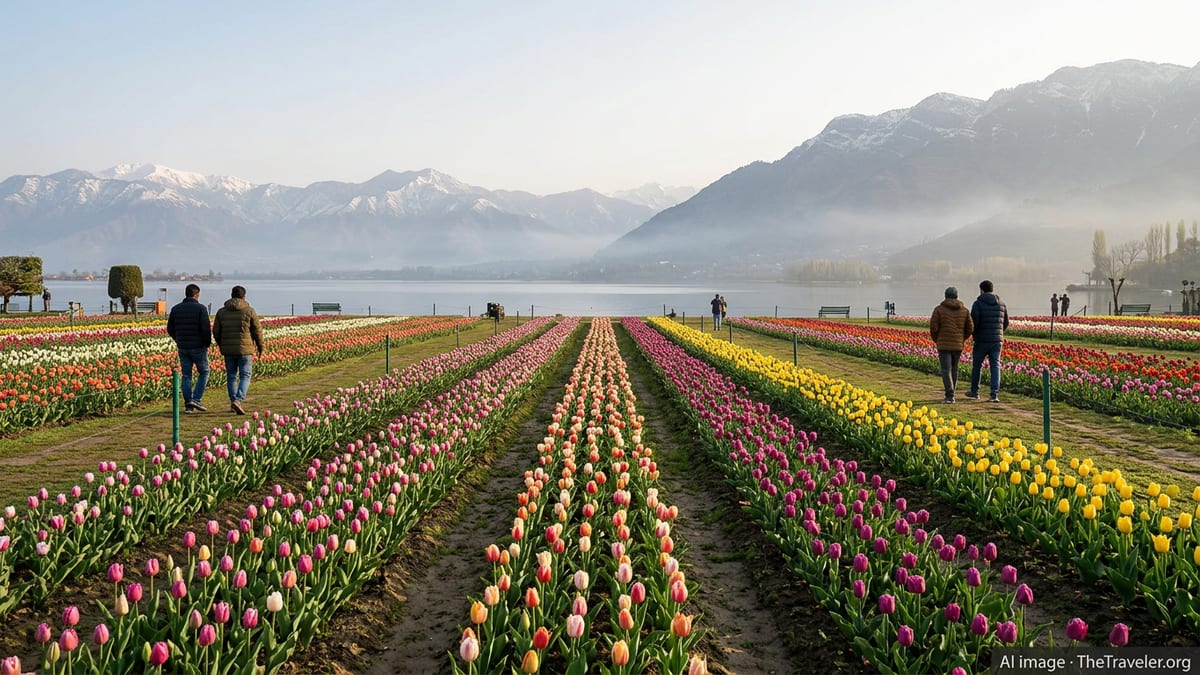
Publicly available information from regional news outlets and travel advisories indicates that the Indira Gandhi Memorial Tulip Garden, overlooking Dal Lake at the foothills of the Zabarwan Range, is welcoming visitors from March 16 for the 2026 season. The date is earlier than several recent editions of the popular tulip festival, when the garden typically opened in the last week of March, reflecting how an unusually mild winter and rising temperatures in February advanced this year’s bloom cycle.
Coverage in Indian media describes how the garden, widely cited as Asia’s largest tulip garden, has become a springtime barometer for the Kashmir Valley. The earlier opening is being framed as a symbolic start to the tourism season, with local hotels, houseboats and tour operators tailoring spring packages around the new dates. Travel-focused platforms report that demand has picked up notably for late March and early April itineraries tied to the tulip display.
Reports note that this adjustment in the spring calendar follows a record-setting 2025 season for the garden, when visitor numbers reached new highs and reinforced the tulip festival’s status as a key driver of early season footfall into Kashmir. The earlier 2026 opening is widely expected to extend the window for visitors, particularly those planning trips to combine snow in the higher reaches with blossoms in Srinagar’s gardens.
1.8 Million Tulips and Dozens of Varieties on Display
Recent coverage of the 2026 preparations highlights an expansive floral plan, with around 1.8 million tulip bulbs planted across the garden’s terraced slopes facing Dal Lake. Reports indicate that more than 70 varieties have been readied for the season, ranging from classic red and yellow blooms to striped, frilled and double-petaled cultivars that create dense ribbons of color across the lawns.
Travel guides and tourism updates describe how the garden has been laid out in carefully designed blocks to stagger the flowering period. This phased approach is intended to preserve visual impact for several weeks, even as early plantings begin to fade. Visitors arriving in mid to late March are expected to encounter strong early color, while those targeting early April are likely to see broad swathes of peak bloom, depending on weather conditions.
Photographic features circulating on tourism blogs emphasize the garden’s setting as much as its floriculture. Wide views from within the tulip beds take in the shimmering surface of Dal Lake below and the still snow-dusted Pir Panjal peaks on the horizon, positioning the site as both a botanical attraction and a panoramic vantage point over Srinagar’s landscape.
Tourism Revival Builds on Record Footfall and New Services
Data shared in government tourism summaries for 2025 and reported in national media point to robust growth in visitor arrivals to Jammu and Kashmir, with domestic tourism in particular showing strong momentum. The tulip garden has played a visible role in that story. Previous seasons saw daily records broken for garden entries, and analysts have linked those numbers to higher occupancy in Srinagar’s hotels and houseboats during a period that once counted as shoulder season.
For 2026, travel operators quoted across multiple travel portals signal optimism that the earlier garden opening will lengthen the spring tourism window. Package itineraries marketed for March and April now frequently feature the tulip garden as an anchor attraction alongside Gulmarg, Pahalgam and Sonamarg, encouraging visitors to spend additional nights in Srinagar rather than bypassing the city en route to the mountains.
Public information also points to incremental service upgrades designed to make visits smoother. Regional outlets report that online ticketing and digital payment options have been expanded for the tulip season, allowing travelers to secure entry passes in advance and helping ease congestion at the gates during peak days. Local transport providers are promoting shuttle services and curated day tours that bundle the garden with nearby Mughal-era sites.
Cultural Performances and Heritage Sites Enrich the Experience
Alongside the floral spectacle, the 2026 tulip season in Srinagar is being framed as a broader cultural moment. Tourism calendars shared on event and travel platforms indicate a program of folk music, traditional dance and handicraft showcases scheduled through the main weeks of the festival period. Many of these activities are planned in venues across the city, encouraging visitors to explore beyond the garden itself.
Guides and destination features highlight how travelers can combine a morning at the tulip garden with afternoon visits to Srinagar’s historic Mughal gardens, including Shalimar Bagh and Nishat Bagh, as well as the almond blossoms of Badamwari Park when still in season. These layered experiences are presented as a way to trace the evolution of garden design in the valley, from Mughal-era terraces and water channels to contemporary mass tulip plantings.
Artisanal markets, saffron-themed experiences and Kashmiri cuisine trails are also being promoted by local businesses during the tulip window, according to travel trade reports. The aim, as expressed through publicly shared tourism campaigns, is to encourage longer stays and higher local spending by positioning the tulip festival as the centerpiece of a wider cultural and culinary circuit.
Travel Planning: Weather, Crowds and Best Viewing Times
Weather advisories and destination guides for Srinagar in March and April suggest that daytime temperatures during tulip season generally range from the low teens to low twenties Celsius, with chilly nights and the possibility of light rain. This pattern makes layered clothing, waterproof footwear and some cold-weather gear advisable, particularly for early morning or late evening garden visits.
Travel writing focused on the 2026 edition recommends that visitors seeking ample bloom with comparatively fewer crowds consider targeting weekdays in the last week of March or first days of April, when many of the planted varieties are expected to be open but before visitor numbers typically surge around weekends and holiday periods. Early morning entry is widely cited as the best time for photography, with softer light, thinner crowds and clearer views of the surrounding mountains.
Given the garden’s popularity and the narrower paths between beds, several planning guides advise pre-booking tickets where possible and arranging transport that allows flexibility in case of weather shifts. With the garden’s 2026 opening brought forward, the consensus across current reports is that travelers who plan around this earlier window will stand a strong chance of catching Kashmir’s signature tapestry of tulips against a backdrop of late-season snow on the high ridges.