

More news on this day
A sightseeing helicopter carrying five people crashed into the ocean just off Kauaʻi’s Kalalau Beach on Thursday, leaving three dead and two injured in one of Hawaii’s most remote and dramatic coastal areas, according to multiple news reports and official public statements.
Get the latest news straight to your inbox!
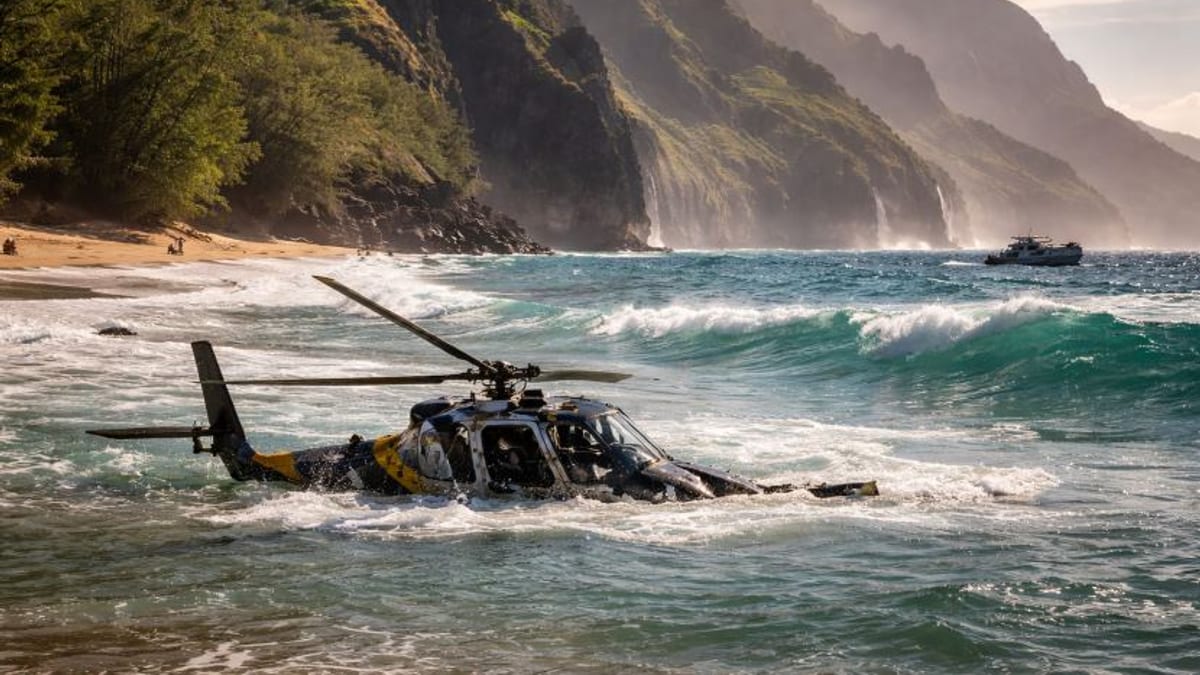
Image by Global Travel Alerts, Advisories, International Travel Alerts
Crash Near Remote Stretch of the Nāpali Coast
Publicly available information indicates the helicopter went down on the afternoon of March 26, 2026, about 100 yards off Kalalau Beach along Kauaʻi’s famed Nāpali Coast. The rugged shoreline, defined by sheer cliffs and narrow valleys, is reachable only by boat, air, or a strenuous hike, complicating any emergency response.
Reports indicate the aircraft was a tour helicopter operating a scenic flight when it crashed into the water near the shoreline. Initial dispatch summaries and local coverage describe a rapid response by county rescue crews using helicopters, rescue watercraft, and ocean safety personnel to reach the scene as beachgoers and campers attempted to help the injured.
Images and bystander accounts shared in local media and on social platforms show debris in the surf and first responders treating people on the sand, underscoring how close the aircraft came to the heavily used camping and hiking area at Kalalau.
Subsequent updates from news outlets with access to county information state that five people were aboard: one pilot and four passengers. Three did not survive, while two were rescued from the crash site and taken for medical care.
Victims Identified as Kauaʻi Reckons With Loss
According to Associated Press coverage and regional reporting that draw on information released by county agencies, two of the three people who died were visitors from Massachusetts, identified as 65-year-old Margaret Rimmler and 59-year-old Patrick Haskell. The name of the third person killed had not yet been released pending notification of relatives.
The conditions of the two survivors have not been detailed in depth in public reporting, beyond confirmation that both were injured and transported from the remote coastline for treatment. Local outlets describe campers on the beach and nearby hikers assisting with efforts to stabilize victims before they could be evacuated.
The crash has sent shockwaves through Kauaʻi’s close-knit communities and the broader visitor industry. Social media posts from residents and travelers over the weekend reflect a mix of grief, sympathy for those affected, and renewed debate about the risks and rewards of helicopter sightseeing in one of the world’s most photographed island landscapes.
Reports indicate that the tour operator involved, Airborne Aviation, has temporarily suspended flights and issued a public statement expressing condolences to the families of those killed and support for the survivors, while pledging to cooperate with ongoing investigations.
Investigators Focus on Conditions and Wreckage
Coverage from national and Hawaii-based news outlets states that the National Transportation Safety Board has opened an investigation into the crash, which involved a Hughes/MD 500-series helicopter. The aircraft came to rest in shallow water near Kalalau Beach, where ocean conditions and reef structure may complicate efforts to remove the wreckage intact for detailed examination.
The investigative process typically looks at a broad range of factors including maintenance records, pilot experience, recent flight history, weather patterns along the Nāpali Coast, and any recovered on-board data or communications. In this case, the steep coastal topography and fast-changing weather that characterize the area are likely to receive particular scrutiny, based on patterns seen in earlier Hawaii tour helicopter investigations.
Reports summarizing previous findings from the NTSB and Federal Aviation Administration have repeatedly highlighted the challenges of low-altitude sightseeing flights in Hawaii’s microclimates, where clouds, rain, turbulence, and visibility can shift rapidly along cliff-lined shorelines. Investigators are expected to publish a preliminary report within weeks, with a final determination on probable cause likely to take many months.
In the meantime, public information from county agencies notes that local crews and federal partners are working together to secure the site, remove the aircraft from the water when conditions allow, and document physical evidence before wave action and corrosion further degrade the wreckage.
Long-Running Concerns Over Hawaii Tour Helicopter Safety
The Kalalau Beach tragedy is the latest in a series of fatal and serious helicopter incidents in Hawaii’s air-tour sector. National wire service reporting notes that at least 16 people have died in helicopter crashes in the state over the past seven years, including multiple accidents on Kauaʻi’s north shore.
In 2019, a tour flight crashed in steep terrain near the Nāpali Coast, killing all seven people on board. Other high-profile crashes have occurred on Oʻahu and Maui, drawing scrutiny from members of Congress, the NTSB, and community groups concerned about both noise and safety.
In response to prior accidents and recommendations, the Federal Aviation Administration has implemented a specialized framework for Hawaii air tours, including enhanced safety management plans, equipment recommendations, and additional review for operators seeking to fly at lower altitudes in complex terrain. Industry representatives have argued that helicopter sightseeing is an essential part of Hawaii’s tourism economy, while critics contend that the risk profile remains too high.
Travelers weighing a flight along the Nāpali Coast often confront these mixed messages. Tourism-focused guides frequently describe helicopter tours as the most dramatic way to view hidden valleys and waterfalls, yet publicly accessible safety records, lawsuits, and government reports paint a more complicated picture of an industry still working to overcome its accident history.
Impacts for Visitors and the Future of Nāpali Coast Tours
In the immediate aftermath of the Kalalau crash, news outlets and online travel communities report that some visitors have been canceling or reconsidering upcoming helicopter bookings on Kauaʻi. Others express a desire to support local businesses while asking more pointed questions about safety procedures, pilot training, and weather decision-making.
The Nāpali Coast is a cornerstone of Kauaʻi’s tourism brand, drawing hikers to the Kalalau Trail, campers to the beach, and boaters and kayakers to the sea caves and cliffs. Helicopter tours have long shared that airspace, offering sweeping aerial views of an area that remains largely inaccessible by road.
Public documents and local planning discussions over the past several years show ongoing tension between preserving the wilderness character of the Nāpali Coast, managing visitor numbers on the ground, and regulating the dense web of commercial flights overhead. The latest crash appears likely to feed into renewed calls from some residents and advocacy groups for stricter limits or additional oversight of tour operations in the region.
For travelers with upcoming trips, widely available guidance from safety advocates emphasizes doing careful research before booking any air tour in Hawaii, reviewing operators’ histories, understanding the type of aircraft used, and being mindful that even scenic flights in clear weather involve inherent risks. As Kauaʻi mourns those lost off Kalalau Beach, the island faces yet another reckoning over how to balance its spectacular scenery, economic dependence on tourism, and the safety of those who come to experience it from the air.