

More news on this day
Kazakhstan is reopening the door to Egypt as a prime holiday destination after earlier security-related restrictions, but the latest guidance still urges travelers to exercise increased caution or avoid nonessential trips to several parts of the Middle East amid continuing regional instability.
Get the latest news straight to your inbox!
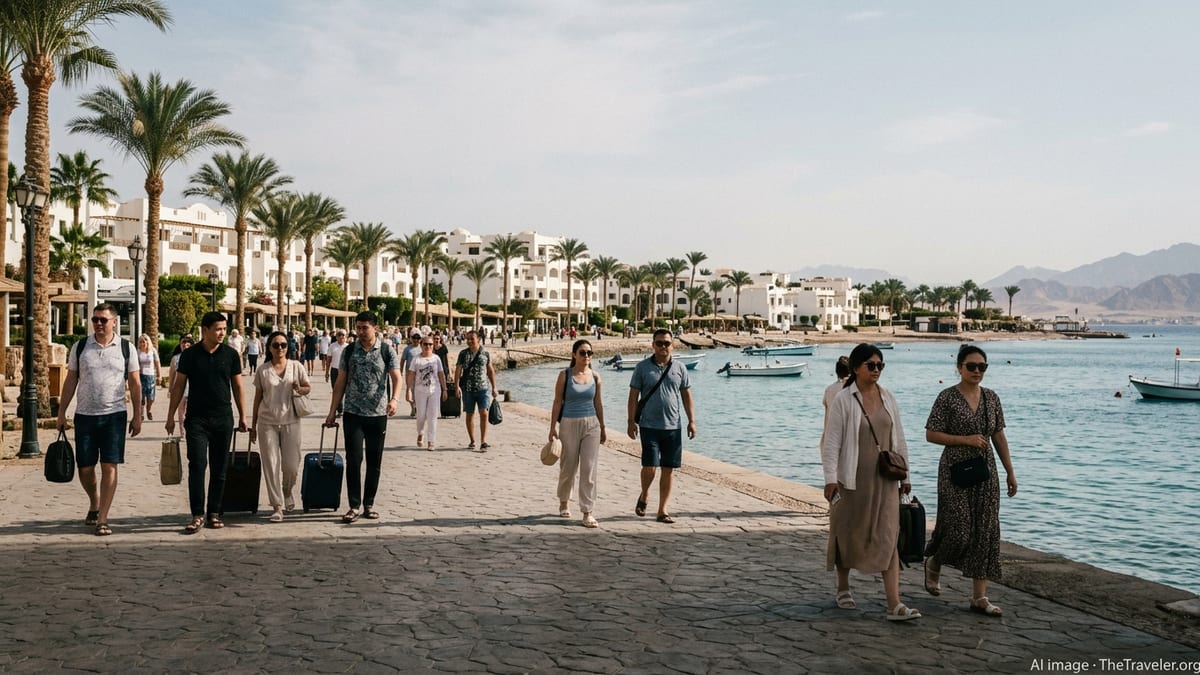
Egypt Back on the Map for Kazakh Tourists
Recent updates to Kazakhstan’s travel recommendations indicate that Egypt is once again being treated as an accessible tourism market, even as broader Middle East risks remain in focus. Publicly available information shows that Kazakh tour operators and airlines are ramping up capacity to Egypt’s Red Sea resorts, reflecting sustained demand from travelers seeking affordable beach holidays within a relatively short flight from Central Asia.
Charter programs from Kazakhstan to Sharm el Sheikh and Hurghada have expanded for the 2025–2026 winter and summer seasons, with low-cost and leisure carriers marketing Egypt as a leading mass-market destination. Industry schedules circulated for the current season highlight increased frequencies from cities such as Almaty, Astana and Atyrau to Sharm el Sheikh, underscoring confidence that organized, resort-focused travel can go ahead under controlled conditions.
Reports from aviation and tourism outlets also note that Kazakh citizens benefit from a simplified short-stay regime in parts of Egypt, particularly in designated Red Sea resort areas, which supports the rebound in package tourism. At the same time, travelers arriving independently or visiting major cities such as Cairo may face stricter paperwork and screening, as Egyptian authorities continue to adjust entry rules in response to security and migration considerations.
Against this backdrop, Kazakhstan’s decision to no longer single out Egypt for blanket avoidance language marks a shift from earlier, more restrictive messaging. However, the evolving situation across the wider Middle East means that the country’s foreign policy and consular services continue to frame Egypt’s reopening within a broader narrative of caution.
New Entry Rules and Costs Kazakh Travelers Must Watch
Even as Egypt becomes more accessible again, Kazakh travelers are contending with a series of regulatory and cost changes that affect how and where they can enter the country. Coverage in regional news media explains that Egypt introduced revised visa and entry rules for Kazakhstan citizens from October 1, 2025, with particular focus on younger travelers and specific resort areas.
According to these reports, Kazakh tourists visiting Sharm el Sheikh on charter packages may continue to rely on simplified procedures tied to the Sinai-only regime, while those heading to Cairo, Hurghada or other cities are generally required to obtain visas in advance from Egyptian consular offices. The rules also tighten independent travel by younger citizens: travelers under a set age threshold are not allowed to enter certain resort zones without accompanying adults, a measure presented by Egyptian authorities as a response to both safety and migration concerns.
Additional guidance circulating through consular and tourism channels highlights stricter enforcement of currency declaration rules, limits on the import and export of goods, and requirements for proof of accommodation. Travelers who fail to comply risk delays at the border, fines or, in some cases, refusal of entry, prompting tour companies in Kazakhstan to step up pre-departure briefings for their customers.
Cost is another factor reshaping the Egypt market. Reports from regional business media in early 2026 describe newly approved increases in Egyptian visa fees for foreign nationals, including citizens of Kazakhstan, with higher tariffs due to take effect on March 1, 2026. Tour operators are already warning that package prices and independent trip budgets may rise accordingly, even if Egypt remains comparatively affordable versus some Mediterranean and Gulf destinations.
Middle East Security Picture Keeps Risk Levels Elevated
While Egypt is being reopened to tourism from Kazakhstan, the broader security picture across the Middle East remains unsettled, and this is reflected in Astana’s travel messaging as of March 2026. Public advisories reproduced in national press over recent weeks describe a complex environment shaped by military flare-ups, regional rivalries and intermittent airspace disruptions.
Reports indicate that Kazakhstan’s Ministry of Foreign Affairs has, at various points over the past two years, issued or updated warnings linked to escalating tensions involving Israel, Lebanon and surrounding territories. Earlier notices urged Kazakh citizens to temporarily refrain from visiting Israel and Lebanon during periods of cross-border exchanges of fire, citing concerns about terrorism, civil unrest and the unpredictable risk of armed clashes near major urban centers and transport hubs.
More recently, renewed hostilities and wider concerns about a conflict involving Iran and other regional actors have prompted a fresh wave of global travel advisories from a range of countries. International media coverage details how periodic missile strikes, retaliatory attacks and shifting front lines have led to temporary airspace closures, flight diversions and ad hoc evacuation arrangements across several Middle Eastern corridors. For Kazakhstan-based travelers, these dynamics translate into heightened uncertainty for itineraries that involve overflying or transiting the region, even when their final destination is considered relatively low risk.
Kazakh citizens are therefore being encouraged, through publicly available channels, to monitor regional security developments closely and to factor in potential last-minute changes to schedules, routings and insurance coverage. The reclassification of Egypt as a viable tourism destination takes place against this backdrop of continued volatility in neighboring states.
Countries Where Caution or Avoidance Still Applies
Despite Egypt’s improved status, Kazakhstan-linked reporting makes it clear that several Middle Eastern countries remain subject to strong caution or effective avoidance guidance. Prior travel warnings and current regional assessments emphasize heightened risks in states directly affected by conflict or instability, including Syria and Yemen, where the security environment is widely described as highly volatile and dangerous for foreign visitors.
Published coverage also highlights enduring concerns about Israel and Lebanon, where episodes of armed confrontation have periodically impacted major cities, border areas and critical infrastructure such as airports and ports. In such contexts, security incidents can occur with limited or no warning, and consular support may be constrained by local conditions, making nonessential tourism particularly risky.
Other states in the Gulf and wider region, such as Iraq and Iran, have at times been associated with elevated terrorism and civil unrest risks as catalogued by international travel advisory systems. Even where day-to-day life continues relatively normally in key urban centers, the combination of political tensions, sporadic demonstrations and the potential for targeted attacks leads many governments and airlines to review routes, staffing and contingency plans on a regular basis.
For Kazakhstan’s outbound market, the practical effect is a tiered landscape: resort-focused travel to Egypt is gradually normalizing, while journeys to or through countries at the center of ongoing conflicts remain subject to strong restrictions, complex insurance conditions or outright suspension by mainstream tour operators.
Practical Guidance for Kazakhstanis Planning Trips to Egypt
Given the shifting mix of opportunity and risk, Kazakhstan-based travelers considering Egypt in 2026 are being urged, through open-source guidance, to prepare more carefully than in previous years. This begins with confirming the latest entry rules and visa fees for their specific itinerary, including whether they are traveling on a tour package to a Red Sea resort or independently to Cairo or other cities.
Travelers are also advised to pay close attention to age-related restrictions, documentation requirements and any recent changes to Egyptian regulations on currency, electronics and personal goods. Tour operators and airlines often provide updated checklists, but independent travelers may need to review the most recent advisories issued by both countries and cross-check information with their chosen carrier before departure.
From a safety perspective, risk experts recommend that travelers focus their stays in well-established tourist areas, remain alert in crowded public places and transport hubs, and follow guidance from local security personnel. While major Egyptian resorts and key urban districts continue to host large numbers of international visitors, the broader regional context means that situational awareness and flexibility remain important.
Finally, with airspace adjustments and reroutings still a feature of Middle Eastern aviation, Kazakh tourists are encouraged to build extra time into connections, ensure that their contact details are up to date with airlines and tour companies, and consider travel insurance policies that explicitly cover disruptions linked to regional instability. In this environment, Egypt can once again serve as a favored sun-and-sea escape for Kazakhstanis, but only for those prepared to navigate a more complex advisory landscape than before.