


More news on this day
Kenya Airways is accelerating a multi-year fleet renewal and growth strategy, with the Boeing 737-800 emerging as the backbone of its regional expansion across Africa and key medium-haul routes.
Get the latest news straight to your inbox!
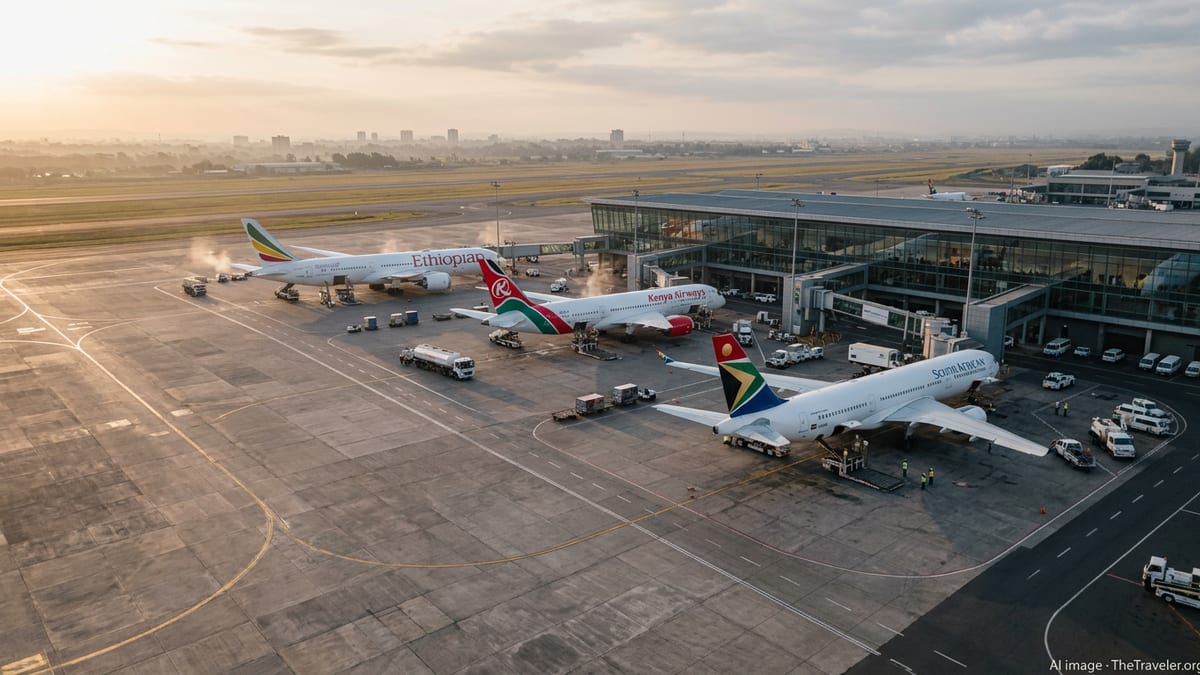
737-800 Additions Anchor a Larger Narrowbody Fleet
Publicly available information shows that Kenya Airways has been steadily rebuilding and enlarging its narrowbody fleet, with the Boeing 737-800 at the center of that plan. In February 2025 the carrier added a 170-seat 737-800 on lease from Dubai Aerospace Enterprise, a move that lifted its total fleet to 35 aircraft at the time and restored capacity lost during earlier restructuring and pandemic-related cuts.
Subsequent fleet disclosures indicate that Kenya Airways continued to bring aircraft back into service through 2025, including additional 737-800 and Embraer E190 units that had been grounded during spare-parts shortages. Industry data compiled by CAPA and recent investor briefings point to a fleet of around 41 to 42 aircraft in 2025, with 737-800s making up a growing share of the short and medium-haul operation as the airline pursues higher utilization and improved unit costs.
The 737-800s sit alongside Boeing 787-8 Dreamliners and Embraer E190s, giving the Nairobi-based airline a three-type structure that management has characterized as optimal for matching capacity to varying demand profiles. Sustainability reporting for 2024 already highlighted 39 aircraft in operation, and the subsequent arrival and reactivation of additional 737-800s have reinforced that upward trajectory in 2025.
Kenya Airways’ current 737-800 passenger aircraft complement its 737-800 converted freighters, which entered service from late 2023 and early 2024. While these freighters target cargo flows to destinations such as Mumbai and the Middle East, the passenger variants are being used to intensify frequencies on key African and medium-haul routes, aligning fleet deployment with the airline’s focus on regional connectivity.
Network Growth Across Africa Driven by Narrowbody Capacity
Kenya Airways’ renewed focus on the Boeing 737-800 coincides with a broader reshaping of its regional network. The carrier has restored flights to several African cities and increased frequencies on existing routes, with Nairobi positioned as a hub for travel within East, Central and Southern Africa as well as for connections to Europe, the Middle East and Asia. Network updates released in 2024 and 2025 highlight more services to destinations such as Paris and the resumption or strengthening of services to markets like Maputo, Mogadishu and Eldoret.
Reports indicate that the additional 737-800 capacity is being used to thicken high-demand regional routes where frequency is more important than sheer aircraft size. The type’s seating density and range make it suitable for sectors of three to six hours from Nairobi, which encompass much of sub-Saharan Africa and selected Middle Eastern points. That enables Kenya Airways to schedule multiple daily departures on trunk routes while preserving connectivity for smaller cities via Embraer jets.
Domestic and near-regional markets are a particular focus. The airline’s return to Eldoret and other secondary Kenyan cities, supported by narrowbody aircraft, is framed by government communications and airline statements as part of a broader effort to stimulate trade, tourism and agricultural exports. The increased lift offered by 737-800s supports this strategy by allowing higher payloads and more consistent schedules, especially during seasonal peaks.
Seasonal schedule adjustments published in mid-2024 also show how the carrier is using its 737-800 fleet to respond flexibly to demand. Kenya Airways has added capacity on high-performing routes while trimming or suspending weaker ones, reallocating aircraft to markets where yields and load factors are strongest. That approach aligns with the broader industry trend of using mid-size narrowbodies as a tactical tool to protect profitability.
Five-Year, $400 Million Plan Puts Narrowbodies at the Core
Kenya Airways has set out a five-year fleet plan valued at up to 400 million US dollars, according to business and investor reporting, with the aim of expanding its fleet from the mid-30s to more than 50 aircraft by the end of the decade. The blueprint includes potential orders or leases for additional 737-family narrowbodies, alongside evaluations of new-generation Embraer E2 regional jets and additional Boeing 777 freighters for cargo.
Industry coverage of the plan indicates that Boeing 737 MAX deliveries, once expected earlier, have been pushed back to around 2027 as the airline balances capital expenditure with efforts to return to sustained profitability. In the interim, the 737-800 continues to provide the mainstay of medium-haul capacity, allowing Kenya Airways to grow seat supply and adjust schedules without committing immediately to large numbers of new-build aircraft.
The airline’s integrated reports for 2024 and 2025 underscore how the 737-800 strategy fits into a broader return-to-growth narrative. After several loss-making years, Kenya Airways reported a marked improvement in financial performance in 2024, supported by a rebound to more than 5 million passengers and stronger regional traffic. The combination of higher utilization, reactivated aircraft and carefully targeted fleet additions has been portrayed as central to that turnaround.
Analysts following African aviation describe Kenya Airways’ approach as a measured expansion that seeks to leverage Nairobi’s geographic position and existing partnerships, rather than a rapid capacity splurge. By leaning on a known and widely supported aircraft type, the airline reduces operational risk and can focus investment on network development, digital services and customer experience enhancements.
Partnerships and Regional Cooperation Amplify Fleet Gains
Kenya Airways’ 737-800 strategy is unfolding alongside a wider push for regional cooperation. In July 2025, the airline signed a memorandum of understanding with Air Tanzania, aimed at strengthening ties between the two carriers and boosting connectivity across East and Southern Africa. The agreement, according to published coverage, seeks to explore areas such as codeshare arrangements, maintenance collaboration and coordinated schedules.
Additional partnerships and alliances complement this approach, with Kenya Airways already participating in the SkyTeam alliance and working with regional and intercontinental partners to expand its virtual network beyond the reach of its own aircraft. Extra 737-800 capacity strengthens the airline’s role within such partnerships by enabling more feed into long-haul services and more options for connecting passengers.
Regional tourism and trade bodies have emphasized the importance of improved intra-African connectivity in supporting the African Continental Free Trade Area and various bilateral agreements. Kenya Airways’ decision to expand narrowbody capacity and add frequencies on intra-African routes aligns with this macroeconomic agenda, potentially positioning Nairobi as a preferred gateway for both business and leisure travel within the continent.
The airline’s cargo operations, which include dedicated 737-800 freighters, further reinforce this role by linking African producers to markets in the Middle East, India and beyond. Passenger 737-800s complement these services with belly cargo capacity, particularly on routes where dedicated freighters are not economically viable but demand for high-value or time-sensitive shipments remains strong.
Balancing Older Types with Next-Generation Options
Kenya Airways’ reliance on the 737-800 reflects a pragmatic balance between proven technology and future fleet ambitions. While the type is not the newest narrowbody on the market, its widespread use, established maintenance ecosystem and compatibility with existing crews make it an efficient bridge to the next generation of aircraft.
According to industry reports, the airline is evaluating Embraer E2 regional jets and has kept options open for additional Boeing 737-family aircraft, including potential 737 MAX orders whose delivery timelines have been adjusted. That mix would allow Kenya Airways to tailor capacity more precisely to individual markets, pairing smaller-gauge regional jets with higher-capacity 737-800s and eventual MAX variants.
At the same time, the carrier is working to resolve technical issues affecting some of its 787-8 widebodies and considering the reintegration of a leased 777-300ER, moves that are aimed at strengthening long-haul connectivity. In this context, the 737-800 fleet provides the crucial middle link, feeding long-haul departures and sustaining the core African network while widebody availability is optimized.
As Kenya Airways advances its 400 million dollar fleet program, the performance of its 737-800 operation will be a key indicator of how effectively the airline can translate aircraft investment into sustainable growth. For now, available data suggest that the type is enabling the carrier to rebuild scale, sharpen its regional offering and position itself for the arrival of newer-generation jets later in the decade.
Kenya Airways expands its passenger fleet with a Boeing 737-800
Kenya Airways expands fleet to 41 aircraft in 2025