


More news on this day
Lufthansa has launched its first passenger flight equipped with Starlink-powered Wi-Fi between Frankfurt and Rome, introducing free high-speed connectivity on a key European route and signaling a new era for in-flight internet in the region.
Get the latest news straight to your inbox!
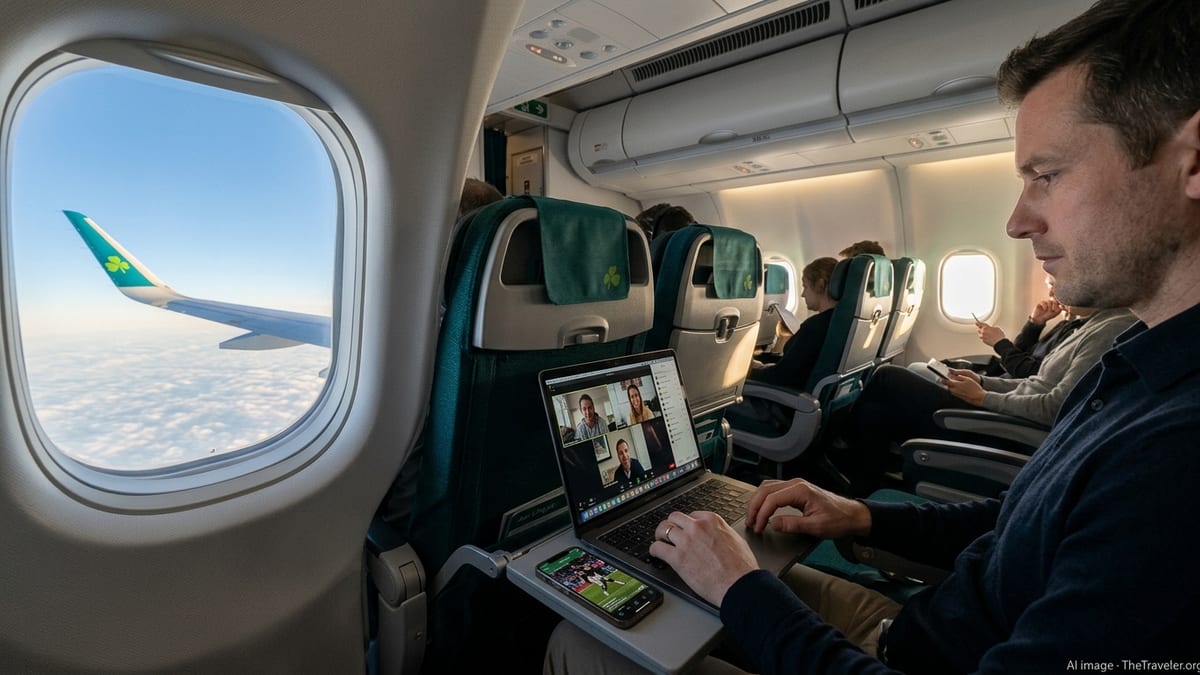
A Milestone Flight on the Frankfurt–Rome Route
On August 19, 2026, a Lufthansa Airbus A320neo operating between Frankfurt and Rome became the airline’s first commercial flight to use Starlink satellite technology for onboard internet, according to specialist aviation coverage. Reports identify the aircraft as D-AINM, the initial Lufthansa jet to receive the new broadband system, making this particular rotation a testbed for the group’s next-generation connectivity strategy.
The Frankfurt–Rome connection is a high-profile choice for the debut. Frankfurt Airport serves as Lufthansa’s primary long-haul hub, while Rome Fiumicino is an increasingly important node within the Lufthansa Group network and a major gateway for Italy. Published schedule and network information show the route as a core link between the German and Italian markets, ensuring the new service is tested on a busy, business-heavy and leisure-heavy corridor.
Industry observers note that earlier iterations of Lufthansa’s short-haul connectivity either offered limited coverage or no Wi-Fi at all on many A320neo-family aircraft. By selecting a flagship European trunk route for the first Starlink-equipped flight, the airline group is able to showcase a visible upgrade in passenger experience on a service that already carries significant connecting traffic.
What Lufthansa’s Starlink Rollout Actually Delivers
Publicly available information from Lufthansa describes the new product as “Lufthansa Group Wi-Fi powered by Starlink,” a complimentary high-speed internet service available across all travel classes. The carrier states that passengers can browse, stream, send messages, and work in the cloud at speeds designed to resemble home broadband, provided they log in with a free Lufthansa Travel ID or Miles & More account.
According to the airline’s dedicated onboard Wi-Fi pages, the first A320neo entered service with Starlink connectivity in mid-August, with the rest of the fleet to follow progressively over the coming years. The service is positioned alongside, and ultimately as the successor to, the existing FlyNet offering on many long-haul aircraft, which uses different satellite technology and typically requires payment for full internet access.
Lufthansa Group corporate communications further indicate that around 850 aircraft across group airlines are slated to receive Starlink by 2029. This includes Lufthansa mainline along with SWISS, Austrian Airlines, Brussels Airlines, Eurowings and other subsidiaries, making it one of the largest single in-flight connectivity programs of its kind in Europe. For travelers regularly using the group’s hubs at Frankfurt, Munich, Zurich and Vienna, the shift promises a far more consistent online experience across airlines and routes.
Why the Technology Matters for Travelers
Starlink relies on a dense constellation of low Earth orbit satellites, designed to reduce latency and increase bandwidth compared with many traditional geostationary satellite systems. Technical documentation and independent industry analyses highlight that these low-altitude satellites can deliver higher speeds and more responsive connections, enabling activities that were previously difficult at cruise altitude, such as high-quality video streaming, real-time collaboration tools, and large file transfers.
For passengers on the Frankfurt–Rome flight and subsequent services, this translates into practical benefits. Business travelers can participate in video conferences, access cloud-based work platforms and synchronize corporate data with fewer interruptions. Leisure travelers can stream films and music from mainstream platforms without relying solely on pre-downloaded content. Families can keep children entertained with online games and videos, all while staying in contact via messaging apps throughout the flight.
Reports from early Starlink airline deployments on other carriers suggest that performance remains relatively stable even when many users connect simultaneously, a common pain point on older in-flight Wi-Fi systems. With Lufthansa installing dual Starlink terminals on each A320neo, as outlined in its own explanatory materials, the airline aims to ensure adequate capacity to support high-demand usage patterns on short- and medium-haul routes.
Free Connectivity and Changing Passenger Expectations
The decision to make Starlink-powered Wi-Fi free of charge for Travel ID and Miles & More users marks a significant shift in Lufthansa’s digital strategy. Industry comparison tables compiled by aviation technology analysts show that, until now, many European carriers either charged for full internet access or restricted free use to basic messaging tiers. By offering full high-speed connectivity at no additional cost, Lufthansa aligns itself with emerging global trends toward free onboard Wi-Fi on key routes.
For frequent travelers, the requirement to log in via a Travel ID or loyalty account also connects in-flight connectivity with the broader digital ecosystem of the airline. Using a single profile, passengers can manage bookings, store payment details, and now access Wi-Fi across multiple Lufthansa Group airlines. This creates an incentive to enroll in the airline’s digital platforms even for occasional flyers, potentially influencing future airline choice when routes or prices are similar.
From a competitive perspective, the move places pressure on other European network carriers to accelerate their own connectivity upgrades. Market overviews show that several global airlines are exploring low Earth orbit satellite partnerships but are at varying stages of deployment. Launching a high-visibility inaugural flight on a major intra-European route highlights Lufthansa’s intent to reposition its onboard connectivity after years in which passengers often reported uneven Wi-Fi performance.
What Comes Next for the Frankfurt–Rome Corridor
The inaugural Starlink-equipped Frankfurt–Rome flight is only the beginning of a multi-year rollout. Lufthansa’s group-level announcement from February 2026 outlines a phased program, with the first Starlink flights entering service in the second half of 2026 and the majority of the fleet to follow through 2029. As more aircraft are retrofitted, travelers can expect to see Starlink-branded connectivity gradually appearing on additional European and intercontinental routes.
For the Frankfurt–Rome corridor specifically, the route’s role as a link between a leading German hub and a growing Italian hub suggests it will remain a key showcase for the technology. Network maps and planning documents position both cities as central connection points for long-haul travel to North America, Asia and the Middle East. As a result, passengers flying long-haul sectors via Frankfurt or Rome may experience Starlink on both their feeder and onward flights once a critical mass of aircraft have been modified.
In parallel, Lufthansa highlights that the Starlink rollout is part of a broader investment in “premium travel experience,” ranging from new cabin products to upgraded digital services. For travelers, the inaugural Frankfurt–Rome Starlink flight serves as an early indicator of how European short-haul flying may look in the coming years: more connected, more integrated with ground-based digital life, and increasingly influenced by the quality and reliability of onboard internet as a deciding factor when choosing an airline.
Aviation.Direct: Lufthansa begins fleet conversion to Starlink satellite internet
Lufthansa: Lufthansa Group Wi-Fi powered by Starlink
Lufthansa Group: Starlink high-speed internet program overview