

More news on this day
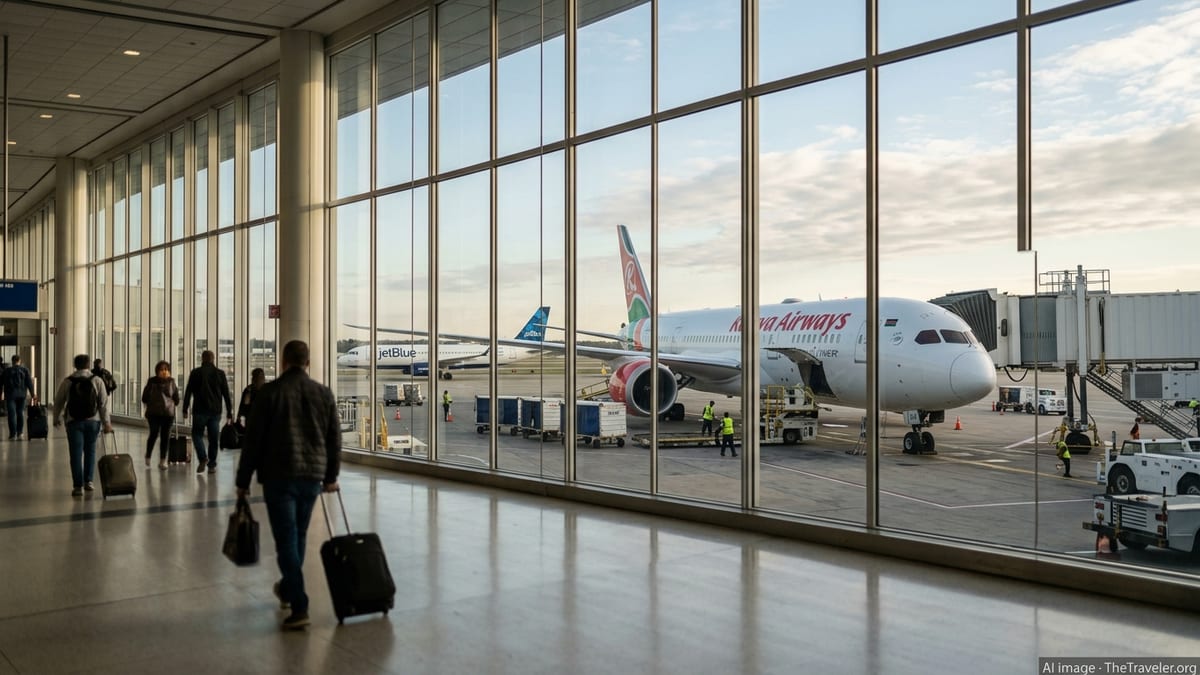
Kenya Airways has launched a new codeshare partnership with US carrier JetBlue, creating smoother one-ticket connections between East Africa and a wider network of American cities via New York.
Get the latest news straight to your inbox!
New Partnership Broadens Transatlantic Connectivity
Publicly available information shows that Kenya Airways has entered a unilateral codeshare agreement with JetBlue focused on domestic services from New York’s John F. Kennedy International Airport. Reports indicate that Kenya Airways will place its "KQ" designator code on selected JetBlue-operated flights, enabling passengers from Nairobi and other East African gateways to connect more easily to destinations across the United States.
Coverage in regional business outlets describes the arrangement as a significant step in Kenya Airways’ ongoing strategy to deepen its presence in North America by building on its existing nonstop service between Nairobi and New York. Under the new deal, travelers flying on Kenya Airways’ Nairobi–JFK route will gain streamlined access to additional US cities on a single itinerary, with through-ticketing and coordinated schedules designed to reduce connection times.
According to published coverage, the codeshare initially centers on JetBlue-operated routes radiating from JFK, which already serves as a key transatlantic gateway for Kenya Airways. By leveraging JetBlue’s established domestic footprint, the Kenyan carrier aims to improve itineraries for both leisure and business travelers heading beyond New York to secondary US markets that would otherwise require complex multi-airline bookings.
Expanded US Network From New York JFK
Reports from aviation and financial news platforms indicate that the codeshare will cover JetBlue services from New York JFK to major hubs including Los Angeles, San Francisco, Chicago, Orlando, Atlanta, and Fort Lauderdale. With Kenya Airways’ code appearing on these routes, customers will be able to search and book journeys from Nairobi and other East African cities to these US destinations as one continuous trip.
Industry analysis notes that this kind of network extension is especially important for travelers originating in Kenya, Uganda, Tanzania, Rwanda, and other nearby markets who use Nairobi as a regional hub. For such passengers, the new partnership reduces the need for separate bookings on US domestic flights, lowers the risk of missed connections due to fragmented itineraries, and simplifies baggage handling across the journey.
Travel trade reporting also highlights that the cooperation strengthens JFK’s role as Kenya Airways’ primary North American gateway. While the carrier already offers connections into the United States through a longstanding codeshare with Delta Air Lines, the additional options on JetBlue give passengers more flexibility in terms of schedules, routings, and fare combinations when planning trips between East Africa and the United States.
Boost for Tourism and Business Travel Between East Africa and the US
Tourism analysts cited in regional media describe the new codeshare as timely, given sustained demand for safari, beach, and cultural travel to East Africa from the US market. Easier connectivity from US cities such as Los Angeles and Chicago into Nairobi is expected to support growth in visitor numbers to Kenya’s key destinations, including the Maasai Mara, the Kenyan coast, and emerging city-break tourism in Nairobi itself.
According to commentary from aviation data providers, the arrangement also has implications for business travel. Nairobi is a growing hub for regional headquarters, tech start-ups, development organizations, and financial services firms that maintain close links with counterparts in American cities. The ability to access a broader spread of US destinations on a single Kenya Airways ticket, via JFK and JetBlue, is likely to appeal to corporate and NGO travelers seeking predictable travel times and simplified expense management.
Observers note that Kenya has pursued an active strategy of improving air access as part of its broader economic agenda, and the JetBlue codeshare aligns with that approach. By adding another layer of connectivity into the US market, the partnership supports sectors such as conferences and events, higher education travel, and diaspora visits, all of which rely on frequent transatlantic journeys.
Strategic Move in a Competitive Partnerships Landscape
Aviation sector reporting places the JetBlue agreement within a wider pattern of partnerships pursued by Kenya Airways in recent years. The airline has expanded its codeshare portfolio with carriers in Europe, the Middle East, Asia, and other parts of Africa, and has also strengthened existing cooperation with US-based Delta Air Lines. Analysts suggest that the JetBlue deal enhances Kenya Airways’ negotiating position by diversifying its connectivity options in North America.
Industry commentary indicates that JetBlue, for its part, continues to use targeted partnerships to extend its reach beyond the United States without operating its own long-haul network to Africa. By adding Kenya Airways to its portfolio of international partners, JetBlue gains access to a niche but growing transatlantic flow between East Africa and mid-sized US cities, without the costs of launching its own services across the Atlantic.
Some aviation analysts also note that the agreement comes at a time of heightened competition for African traffic among US and European carriers. In that context, the Kenya Airways–JetBlue partnership is viewed as a tactical response that helps both airlines tap into demand while managing capacity and risk. For travelers, the most immediate outcome is a wider menu of schedule and routing choices between East Africa and an expanded list of US destinations.
What Passengers Can Expect From the New Codeshare
Based on publicly available details, the codeshare is described as unilateral, meaning that Kenya Airways places its code on JetBlue-operated flights rather than both airlines marketing each other’s services. For passengers, this typically translates into the ability to book combined itineraries through Kenya Airways’ own sales channels, with a single ticket covering travel from East Africa through New York and onward to selected US cities.
Travel industry reports emphasize that customers can generally expect coordinated flight times for smoother minimum connection windows at JFK, along with through-checking of baggage from origin to final destination. While each airline will continue to apply its own onboard product and service standards on respective flight segments, the journey is marketed as a cohesive itinerary, which can simplify rebooking processes in the event of delays or disruptions.
Specialists in airline distribution note that the addition of JetBlue-coded segments to Kenya Airways’ inventory should gradually appear across global distribution systems used by travel agencies and online booking platforms. As this integration progresses, the new options are expected to become more visible to travelers planning multi-city trips that include both East African and US destinations.