

More news on this day
Kenya is moving to link its world-famous safari circuit with its Indian Ocean coastline through a new tourism incentive that offers a 30 percent cruise discount to travelers who also visit selected national parks, according to recent industry updates and publicly available policy documents.
Get the latest news straight to your inbox!
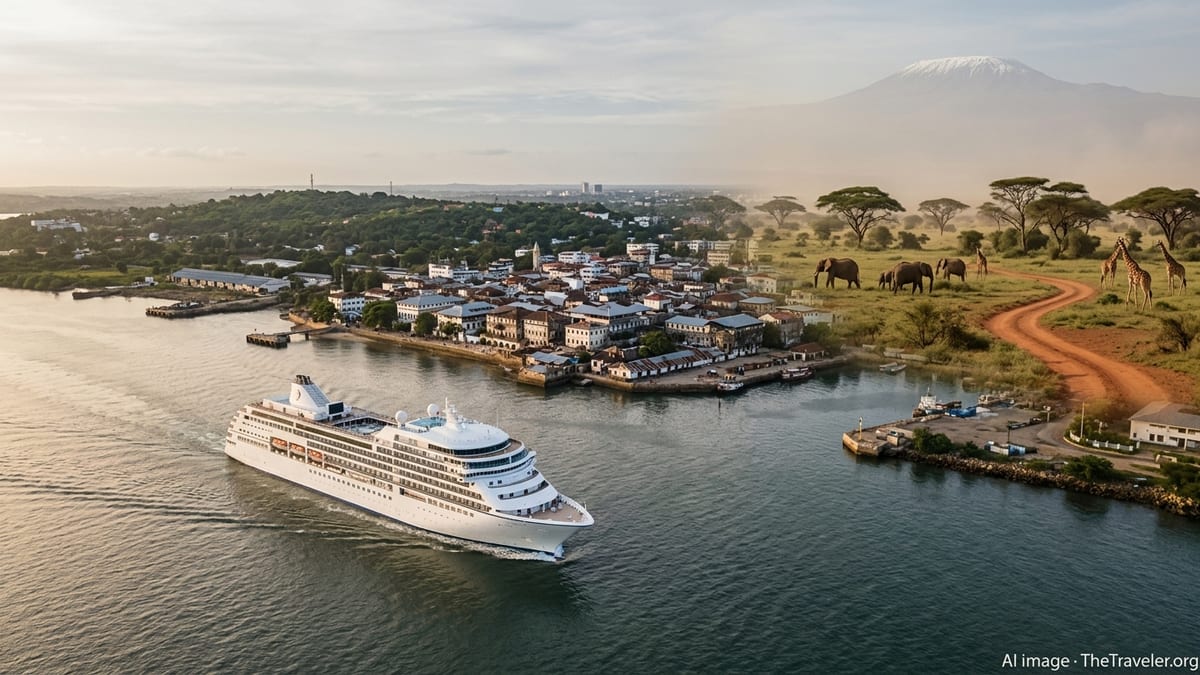
A New Push to Connect Safari and Coast
Published coverage of Kenya’s latest tourism measures indicates that the country is seeking to package wildlife, coastal, and cruise experiences more tightly, with the 30 percent cruise discount framed as a reward for travelers who include national parks in their itineraries. The move comes as Kenya adjusts conservation fees and park pricing, aiming to maintain revenue while remaining competitive in a crowded global safari market.
Travel trade analyses point to a broader strategy of encouraging longer multi-stop trips that combine flagship wildlife destinations such as Maasai Mara, Amboseli, and Tsavo with beach stays around Mombasa, Diani, and the Lamu archipelago. The discount is being presented as one way to offset higher conservation fees while channeling visitors toward lesser-known experiences, including marine parks and coastal cultural excursions.
Regional tourism reporting suggests that cruise itineraries calling at Mombasa and other Kenyan ports are expected to benefit from this policy by becoming more appealing to visitors who may otherwise view an Indian Ocean cruise and an inland safari as two separate, costly trips. By tying a significant rate reduction to proof of a national park visit, the government is effectively nudging travelers to consider Kenya as a single integrated destination.
For Kenya, the policy also supports a long-running objective of spreading tourism spending beyond traditional safari hubs, with the cruise segment seen as a growth area that can complement overland tours. Industry commentary notes that cruise passengers who add a park component often spend more on excursions, guiding, and local services than those who remain within port cities.
How the 30 Percent Cruise Discount Works
Publicly available tourism circulars and fee schedules describe the 30 percent discount as applying to eligible cruise products when passengers can demonstrate that they have visited, or will visit, a participating Kenyan national park within a specified travel window. In practice, this generally means showing evidence of a valid park conservation ticket or booking that corresponds with the cruise dates.
Early information from tour operators indicates that the reduction typically applies to the cruise fare portion arranged through participating Kenyan-registered travel companies or cruise partners, rather than to taxes, port fees, or independent on-board purchases. Travelers planning to book through foreign agencies may need to ensure that the operator has opted into the Kenyan incentive scheme for the discount to be honored.
The 30 percent figure aligns with existing group and event-related discounts already used within Kenya’s national park pricing system, where large meetings or incentive groups may receive reductions of 5 to 30 percent on conservation fees depending on size. Recent conservation fee schedules show that a 30 percent relief tier is already recognized in other contexts, which tourism analysts interpret as a sign that authorities are embedding the same percentage into cruise-linked promotional offers.
While exact implementation terms can vary by cruise partner, most current descriptions emphasize that the discount is not automatic. Travelers are being advised in industry briefings to keep digital or printed copies of their park tickets or booking confirmations, as operators may require these records before applying the reduced rate.
Eligibility, Park Visits, and Practical Requirements
Reports on Kenya’s evolving entry rules highlight several practical steps for visitors looking to use the cruise discount. Since 2024, foreign nationals have been required to obtain an electronic travel authorization rather than a traditional visa, which must be secured online before arrival. The new cruise incentive sits alongside this framework and does not replace any immigration or health requirements.
Conservation fee documents for 2025 and 2026 list multiple traveler categories, including East African citizens, Kenyan residents, African citizens from outside the region, and non-residents, each with distinct day rates for premium and standard parks. The cruise discount does not alter those park fees but is positioned as a separate benefit applied to cruise pricing when a valid park visit is part of the same journey.
Industry sources describe a verification process in which park visits are confirmed through electronic tickets purchased via the national digital payments platform used for most park entries. In many cases, park gates do not accept cash, so visitors are already encouraged to buy tickets online or through accredited agents, which in turn creates a digital trail that can be referenced for cruise discount eligibility.
Travel specialists also note that the incentive is intended to support a wide range of itineraries, from short overland safaris before boarding a coastal cruise, to longer journeys where passengers disembark in Mombasa after a cruise and then travel inland to the parks. What matters for eligibility, according to published guidance, is that the safari component clearly falls within the time frame specified by the participating cruise or tour operator.
Impact on Costs and Travel Planning
The 30 percent cruise discount is being introduced amid a period of higher park conservation fees, particularly in marquee destinations where daily rates for non-residents have risen sharply in recent years. Travel cost breakdowns show that conservation fees can account for a substantial share of a safari budget, often sitting alongside accommodation and transport as major line items.
By reducing cruise fares for travelers who also visit parks, Kenya’s tourism planners appear to be trying to keep end-to-end trip costs within reach for long-haul visitors, especially those from North America and Europe. Analysts suggest that the discount may partly compensate for the perception of rising safari prices, encouraging visitors who might otherwise choose competing destinations in southern Africa or the Indian Ocean.
Financial modeling shared in trade publications argues that the strategy could still boost overall revenue per visitor. A traveler who combines a several-day park stay with a discounted cruise is likely to contribute more overall in conservation fees, accommodation spending, and local purchases than a cruise-only visitor who never ventures inland.
Travel planners are advising prospective visitors to look closely at bundled offers that package park stays and cruises together, rather than treating each component as a separate purchase. In some cases, combining a park stay with the cruise discount and existing group or shoulder-season reductions may result in total savings that exceed the headline 30 percent figure on the cruise alone.
Key Considerations for International Travelers
For travelers interested in taking advantage of the discount, publicly available travel advisories emphasize the importance of timing and documentation. Park conservation tickets are typically issued on a per-day basis and tied to specific travel dates, so visitors should coordinate safari stays and cruise departures carefully to ensure that proof of a valid or recently used ticket is available when needed.
Because Kenya’s park fees and tourism incentives are periodically reviewed, observers recommend checking the latest fee schedules and operator terms shortly before booking. Conservation fee tables for 2025 and 2026 show that individual park rates and seasonal pricing can change, and similar adjustments may eventually affect the list of cruises and itineraries eligible for the 30 percent reduction.
Travel industry commentary further highlights the importance of clarifying what is and is not included in a “cruise discount” offer. Port charges, fuel surcharges, and some onboard services may remain payable at full price even when the base cruise fare is reduced. Prospective passengers are encouraged to review booking confirmations and invoices to see precisely where the discount has been applied.
Despite these caveats, early reactions from tour operators and destination marketers portray the initiative as a notable attempt to protect Kenya’s competitiveness as park fees increase and neighboring countries introduce their own tourism levies. By tying a substantial cruise discount to national park visits, the policy reinforces Kenya’s image as a safari-first destination while inviting visitors to spend more time along its coastline.