

More news on this day
KLM is stepping firmly into the spotlight of European aviation, joining a powerful lineup of carriers including Turkish Airlines, Lufthansa, SWISS, British Airways, Air France, Austrian Airlines, easyJet and Vueling as they race to offer travelers more routes, more comfort and more seamless journeys across the continent and beyond.
Get the latest news straight to your inbox!
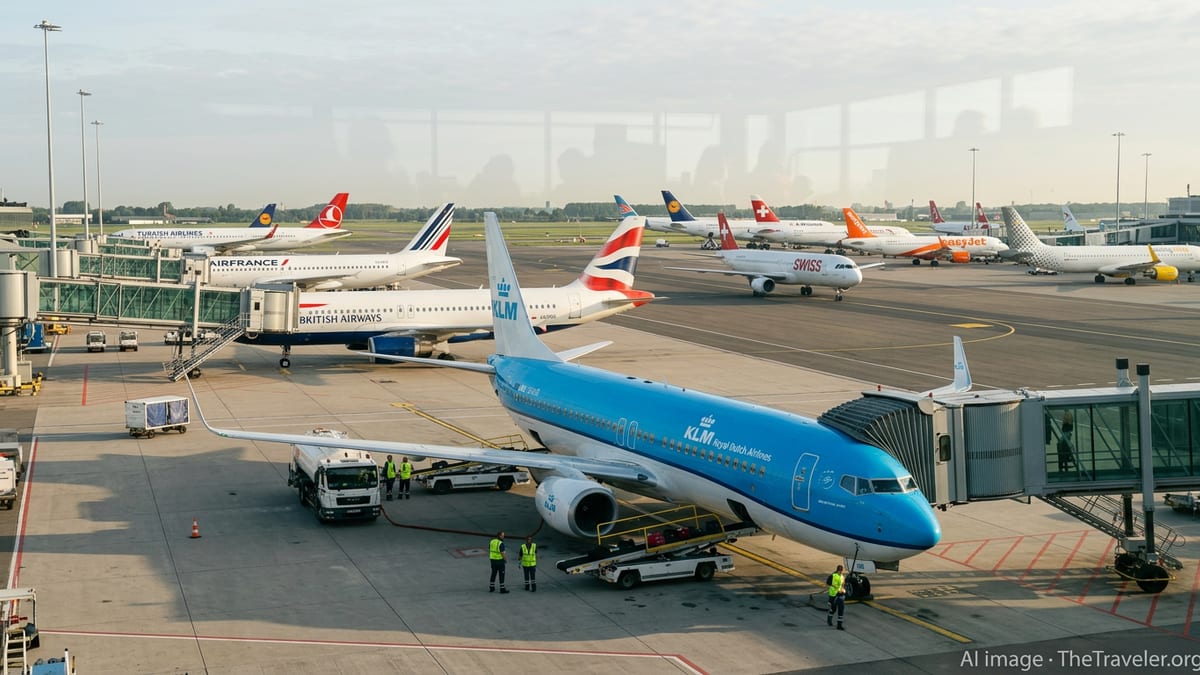
KLM Expands Summer 2026 Network Across Europe
KLM Royal Dutch Airlines is preparing for one of its most ambitious summer seasons yet, with plans to operate 164 destinations during the summer 2026 schedule, including 96 within Europe. The airline is increasing overall seat capacity by around 5 percent compared with the previous year, signaling renewed confidence in leisure and business demand across the region.
At the heart of this growth is a stronger short-haul network from Amsterdam Schiphol, where KLM is adding European cities such as Jersey, Santiago de Compostela and Oviedo. These new routes broaden access to smaller but fast-growing markets, offering travelers fresh options for beach escapes, city breaks and religious or cultural tourism while feeding long haul connections to the Americas, Africa and Asia.
KLM’s broader strategy focuses on reinforcing Amsterdam as a reliable transfer hub, even as capacity constraints and environmental rules remain central policy concerns in the Netherlands. By fine tuning its schedule and leveraging partnerships within the Air France KLM Group and the SkyTeam alliance, the carrier aims to maintain high connectivity while improving operational resilience for connecting passengers.
Fleet investments are also reshaping the passenger experience on European routes. New-generation aircraft, including Airbus A321neo jets on the short haul network and the upcoming arrival of the A350-900, are expected to bring quieter cabins, lower emissions per seat and more consistent onboard products as KLM competes directly with major European rivals.
Big Network Carriers Race to Deepen European Connectivity
Across the continent, full service giants are moving in the same direction as KLM, sharpening their European networks to support global growth. Lufthansa Group is using its hubs in Frankfurt and Munich to expand connections across Europe, while simultaneously rolling out its Allegris long haul cabin concept and integrating regional subsidiaries such as Lufthansa City Airlines to thicken feeder traffic.
SWISS is pursuing a similar strategy from Zurich and Geneva, preparing to introduce Airbus A350 aircraft and deploying them selectively on high demand European routes during the rollout phase. For travelers, this means the chance to experience widebody comfort on shorter sectors, as well as smoother onward links to North America, Asia and Africa.
Air France, working closely with KLM, continues to reinforce Paris Charles de Gaulle as a central gateway. Its European schedule is increasingly coordinated with Amsterdam to reduce overlap and improve choice, giving passengers more departure times and routing options between major cities and secondary markets.
Austrian Airlines remains a key part of this landscape from Vienna, where it connects Central and Eastern Europe to the wider Lufthansa Group network. Together, these legacy carriers form a dense mesh of routes that support corporate travel, government and diplomatic movements, and a thriving conference and events sector from Dublin and London to Bucharest and Sofia.
Turkish Airlines and British Airways Extend Europe’s Global Reach
Turkish Airlines continues to act as a bridge between Europe and the rest of the world, leveraging its mega hub at Istanbul Airport. With plans to carry around 100 million passengers in 2026 and a steady increase in long haul capacity, the airline is using its extensive European network to funnel travelers onward to destinations across Asia, Africa, the Middle East and the Americas.
Recent moves, such as the launch of new services between Istanbul and Yerevan and added frequencies to key Asian destinations, further cement Istanbul’s role as a transfer point for travelers coming from smaller European cities. For many passengers, this combination of broad coverage and competitive pricing makes Turkish Airlines a compelling alternative to traditional Western European hubs.
In the west, British Airways is rebuilding and refining its European network from London Heathrow and London Gatwick, with a focus on reliability, premium cabins and strong connections to its long haul portfolio in North America and emerging markets. While the airline faces intense competition from low cost carriers and Gulf rivals, it remains a central player for business travelers and high yielding leisure customers looking for flexible schedules and frequent flyer benefits.
Together with KLM and its continental peers, these two carriers expand the effective reach of European aviation. Travelers departing from mid sized regional airports now benefit from an array of one stop options to far flung destinations, choosing between Amsterdam, Paris, London, Istanbul, Frankfurt, Munich, Zurich or Vienna as their preferred gateway.
Low Cost Champions EasyJet and Vueling Reshape Short Haul Travel
While the traditional flag carriers focus on hub connectivity and premium products, low cost airlines such as easyJet and Vueling are rewriting the rules of point to point travel within Europe. EasyJet has consolidated its position as a key operator at airports like London Gatwick, Milan Malpensa, Geneva and Berlin, offering dense frequencies on popular routes and seasonal boosts to Mediterranean destinations.
Vueling, backed by the IAG group, continues to focus on southern Europe from bases in Barcelona, Rome, Paris Orly and other leisure driven markets. Its schedule is particularly attractive to weekend city breakers and budget conscious families, linking secondary airports with high demand holiday regions in Spain, Italy, France and Greece.
For travelers, the presence of these low cost champions alongside the likes of KLM, Air France and British Airways translates into more competition and sharper pricing. Many passengers now mix and match: flying a low cost carrier on one leg and a full service airline on another, or using budget flights to reach a major hub before connecting on long haul services with a global alliance partner.
The growing overlap between full service and low cost networks also encourages better coordination at airports, from improved transfer options at shared terminals to investments in automated bag drops, biometric boarding and digital wayfinding tools. As a result, Europe’s short haul experience is gradually becoming smoother and more predictable, even during peak holiday periods.
A New Era of Choice, Comfort and Sustainability Across Europe
As KLM joins Turkish Airlines, Lufthansa, SWISS, British Airways, Air France, Austrian Airlines, easyJet and Vueling in stepping up its game, the overall effect for travelers is a surge in choice. More destinations, higher frequencies and improved aircraft types give passengers greater control over how they travel, whether they prioritize price, time, comfort or loyalty benefits.
At the same time, airlines are under pressure to reduce emissions and respond to environmental regulation and consumer expectations. Fleet renewal programs featuring more fuel efficient aircraft, investments in sustainable aviation fuel and the redesign of route networks to minimize unnecessary detours are becoming standard across Europe’s major carriers.
For many travelers, this means that the search for the “ultimate” European travel experience is no longer about choosing a single airline. Instead, it is about navigating a rich ecosystem of carriers and hubs, with KLM’s expanded network now firmly embedded among the continent’s most influential players. The result is a more competitive, more connected and increasingly sustainable European sky, just as demand for cross border travel continues to rise.