


More news on this day
KLM has joined Air France, Wizz Air and Lufthansa in scaling back services to Tel Aviv and parts of the Middle East after European regulators extended conflict-zone airspace advisories, prompting many travelers from the United States, United Kingdom, France and India to reconsider summer holiday plans.
Get the latest news straight to your inbox!
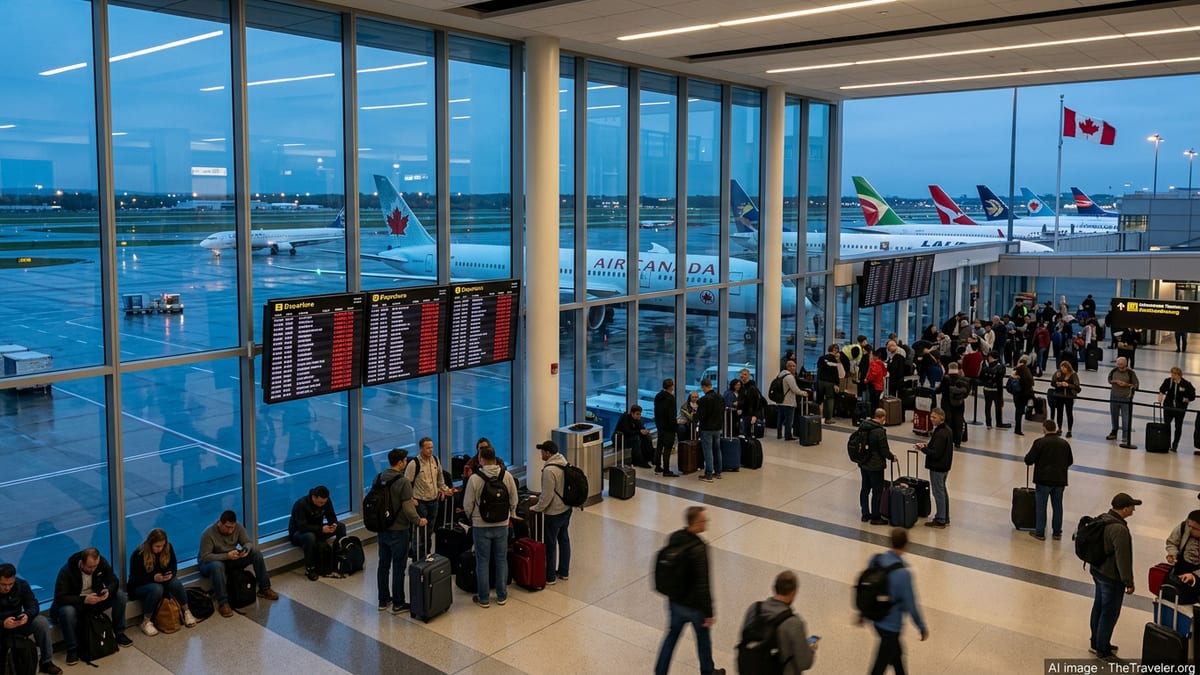
EASA Extends Middle East Airspace Risk Guidance to Late May
Publicly available information from the European Union Aviation Safety Agency shows that its conflict-zone guidance for sections of Middle Eastern and eastern Mediterranean airspace now stretches at least through May 27, signaling sustained concern about overflight risks and missile or drone activity along key corridors between Europe, the Gulf and South Asia.
The agency’s Conflict Zone Information Bulletins are advisory rather than binding, but they play an important role in how European and UK airlines plan routes. Current bulletins covering Israel and neighboring states highlight the potential for sudden changes in the security environment and recommend that operators carefully assess any flight that would cross contested airspace or approach high-risk airports.
As a result, many carriers are continuing to avoid direct routings over Israel, Iran and parts of Iraq, while some have opted to suspend flights entirely to destinations considered most exposed. Industry analysis indicates that the latest extension has encouraged airlines to keep contingency timetables in place well into the early summer season instead of reverting to pre-crisis schedules.
For long-haul travelers, this means that journeys between Europe and Asia or Africa may involve longer flight times, late-notice reroutes, or changes of aircraft type, even when their tickets do not explicitly list a Middle Eastern stop.
KLM Aligns With Air France, Wizz Air and Lufthansa on Tel Aviv Cuts
KLM’s most recent travel alerts state that the airline is not operating through the airspace of Israel and several neighboring countries, and that flights to, from or via Tel Aviv are disrupted for departures booked from late February into early June. Passengers with affected tickets are being offered rebooking or refund options within specified travel windows.
These measures place KLM broadly in line with sister carrier Air France, which has intermittently suspended Tel Aviv services since the escalation of regional tensions, as well as with Lufthansa Group and low-cost operator Wizz Air, both of which have maintained extended pauses on most or all Israel routes while reviewing the risk environment.
Schedule data and public airline statements suggest that Lufthansa has largely suspended Tel Aviv operations and trimmed services to other Middle Eastern cities, while warning of rolling cancellations and limited rebooking options as summer approaches. Wizz Air, which had aggressively expanded in Israel in recent years, has removed many Tel Aviv flights from sale and continues to offer credits or refunds for canceled services linked to the security situation.
Although some regional and non-European carriers have cautiously resumed Tel Aviv flights on a limited basis, the combined pullback by KLM, Air France, Lufthansa and Wizz Air underscores the degree of uncertainty still surrounding European operations into Israel and nearby airspace.
Transatlantic and European Travelers Rethink Israel and Gulf Itineraries
The extended advisories and airline suspensions are reshaping how tourists from North America and Europe plan their trips. Travel forums and booking data point to a notable drop in new leisure reservations to Tel Aviv for late May and early June, particularly from the United States and United Kingdom, where many travelers had been considering combining Israel with Greek islands, Turkey or Jordan in multi-stop itineraries.
Instead, some US and UK travelers who had planned to transit major Gulf hubs such as Dubai, Doha or Abu Dhabi on the way to Asia are opting for itineraries through southern Europe, Central Asia or direct transpacific routes to avoid potential airspace bottlenecks. Reports indicate that itineraries connecting through western Mediterranean or Central European hubs have gained share as passengers seek to minimize exposure to conflict-adjacent corridors.
France-origin passengers are being directly affected by the adjustments at Air France and KLM, as reduced frequencies and aircraft changes make it harder to secure seats on remaining regional flights. Many French leisure travelers appear to be swapping planned Israel or Lebanon trips for destinations such as Morocco, Spain and Italy, which can be reached without flying near restricted airspace.
In the UK market, uncertainty around schedules to Tel Aviv, Amman and Gulf destinations is feeding demand for package holidays within Europe, with some tour operators promoting “no overfly” options that explicitly avoid conflict-zone routings.
Indian Holidaymakers and Diaspora Travellers Shift Routes
Travel patterns from India are also adjusting as the regional situation unfolds. For years, many Indian travelers bound for Europe or North America have relied on one-stop connections via Gulf mega-hubs. With EASA warnings and national advisories highlighting elevated risks in parts of the Middle East, some of these passengers are now choosing to connect through European gateways instead, even when this adds cost or travel time.
Published coverage of airline network changes shows that carriers operating India to Europe services are reshaping routings to avoid sensitive airspace segments, occasionally lengthening flights by up to several hours. This has a knock-on effect for Indian tourists headed onwards to the United States, Canada or the UK, who may face tighter connections or overnight layovers in European cities as schedules are restructured.
For Indian leisure travelers specifically interested in visiting Israel or undertaking multi-country pilgrimages encompassing Jordan, Lebanon or the Palestinian territories, the current wave of cancellations is prompting postponements. Travel agents report increased interest in alternative itineraries focused on southern Europe, the Balkans and Central Asia, where flight operations are perceived as more predictable in the short term.
At the same time, Indian diaspora travelers who typically split trips between Europe, the Gulf and Israel are paying closer attention to airline advisories and foreign ministry guidance, often waiting until the last possible moment before locking in nonrefundable tickets.
Broader Regional Tourism Faces an Uncertain Early Summer
The extended EASA advisories and continued caution from major European airline groups are feeding into a wider sense of uncertainty across Middle Eastern tourism. While core hubs such as Dubai and Doha remain open and are still handling substantial traffic, their roles as default connection points between Europe, Africa and Asia are under closer scrutiny from risk-conscious travelers.
Destinations that rely on onward links from Tel Aviv, including resort areas and religious sites in neighboring territories, are experiencing a second-order impact as travelers hesitate to book itineraries that depend on short-haul connections in or out of Israel. Even where airports are open and functioning normally, the possibility of short-notice airline decisions is forcing tour operators to build more flexible cancellation and rerouting policies into their offers.
For now, publicly available data suggests that major European carriers are adopting a “wait and see” approach, holding back capacity to Tel Aviv and select Middle Eastern destinations until there is greater clarity on airspace risks beyond late May. Travelers from the United States, United Kingdom, France and India who are considering trips through the region in the coming weeks are being advised by airlines and travel intermediaries to monitor booking tools closely, keep itineraries flexible and be prepared for longer or more circuitous routes than they might have expected a year ago.