

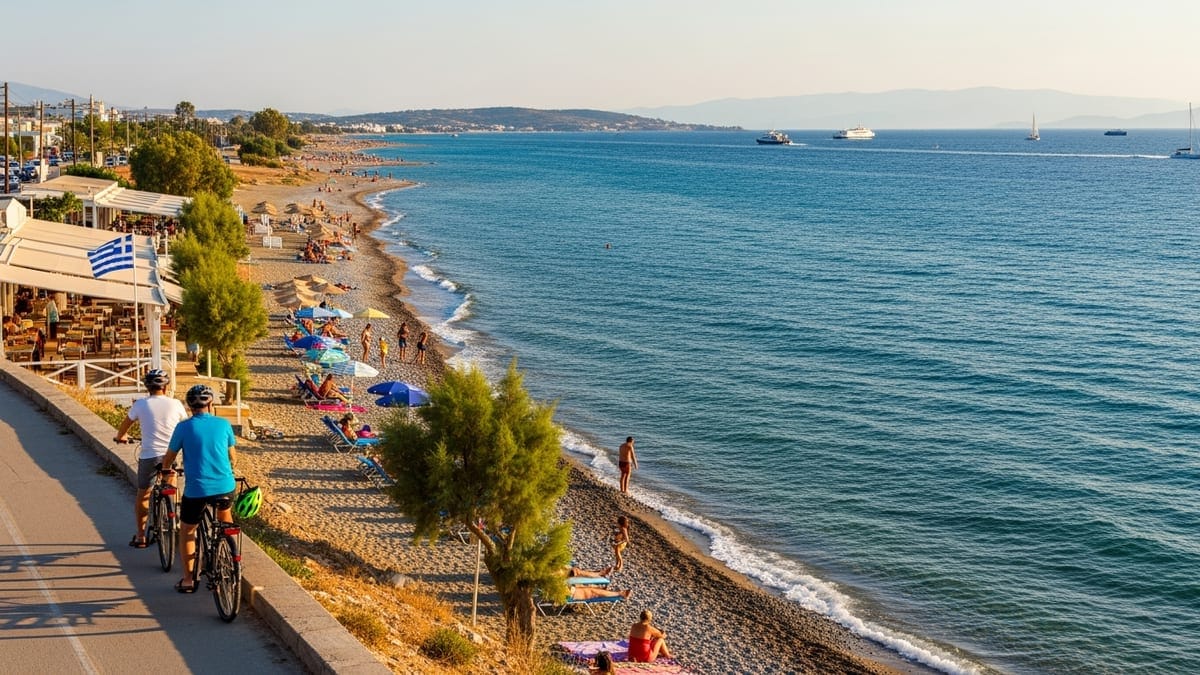
Kos Town faces a generous curve of coastline where long sweeps of sand and pebble fan out in both directions. Within a short walk or bike ride you can reach some of the island’s liveliest and most convenient beaches, including Lambi and Psalidi, plus quieter stretches where hot springs bubble into the sea and pebbly coves look toward Turkey.
Orientation: Kos Town and Its Coastline
Kos Town sits roughly in the center of the island’s east coast, with beaches fanning out north toward Lambi and south past Psalidi to Agios Fokas and the Therma hot springs. A dedicated coastal cycle path and frequent buses make it remarkably easy to hop between several very different seaside settings in a single day without renting a car.
To the north, the shore tends to be sandier and shallower, with Lambi merging into the long north-coast beaches that eventually reach Tigaki and Marmari. To the south, pebbles become more common, the seabed drops off more quickly, and coastal cliffs and headlands give the water a deeper blue color. Understanding this simple geography makes planning your beach days from Kos Town straightforward and efficient.
How Far Are the Main Beaches from Kos Town?
If you are staying in or around the harbor, you can think of the Kos Town beaches in three convenient clusters:
- Lambi and the north-coast strip: about 2.5 to 4 kilometers from the center
- Psalidi and the resort belt: roughly 3 to 5 kilometers southeast
- Agios Fokas and Therma: from about 8 to 12 kilometers southeast
These distances translate into 10 to 30 minutes by bike, or short bus and taxi rides, which means you can treat almost the entire east-coast arc as a single, varied waterfront neighborhood.
Lambi Beach: lively, accessible and versatile
Lambi is the closest substantial beach area to Kos Town on the north side and has become one of the island’s most popular stretches of sand. Close enough to walk or cycle, yet large enough to spread out crowds, it offers an easy blend of comfort, social energy and simple seaside pleasures. It is an obvious first stop if you arrive in town and want to hit the water without any logistics.
Setting and Atmosphere
Lambi begins just beyond the harbor and runs for more than a kilometer, eventually merging into the broader north-coast beaches. The shoreline here is thick, slightly coarse sand mixed with small pebbles, with a seabed that can be rocky in places. Many swimmers appreciate the clear, deep water that starts not far from shore, though water shoes can be useful if you have sensitive feet.
During summer, sections of Lambi feel like a social promenade on sand. Music drifts from beach bars, volleyball courts fill in the late afternoon, and people stroll along the waterfront between cafés and loungers. Away from the main hubs, however, there are still pockets of relatively quiet sand backed by tamarisk trees where independent travelers spread towels and read in the shade.
Facilities, Food and Beach Clubs
Lambi ranks among the best-equipped beaches near Kos Town. Organized segments provide rows of sunbeds and umbrellas, outdoor showers and changing cabins. Many operators follow the familiar system where buying a drink or snack at the associated beach bar grants use of loungers for the day, though in busier periods you may be asked for a modest rental fee.
Behind the sand you will find a continuous ribbon of cafés, casual tavernas and more upbeat beach bars that stay open into the evening. Snack menus cover beach standards such as salads, gyros and grilled fish, while some venues lean toward modern Mediterranean plates and cocktails. This easy access to food and drink makes Lambi particularly practical for families and for travelers who do not want to move far once they have settled in.
Activities and Water Sports
Lambi caters well to active beachgoers. Conditions often suit moderate water sports, and depending on the operator you can find:
- Stand up paddleboards and kayaks
- Banana boat rides and inflatables aimed at groups and families
- Jet ski rental in peak season
- Occasional windsurfing and sailing options with local clubs
The local nautical club, based in the area, offers swimming and sailing lessons for different age groups, which can be a good option if you are visiting with children or want a short, structured activity between lazing on the sand.
Getting to and from Lambi
Lambi is around 3 kilometers from the center of Kos Town, and the coastal cycle lane makes the trip especially pleasant in the cooler hours of the day. Many visitors rent bikes specifically for this daily commute between hotel and beach. Walking from the port area is also straightforward, gradually transitioning from town promenade to beachfront strip.
Buses and taxis run along the main road behind the beach, but in practice most visitors rely on walking and cycling for such a short distance. If you plan to stay late at a beach bar, taxis are easy to find for a short ride back to town or to larger hotels scattered along the north coast.
Who Lambi Suits Best
Lambi is a natural choice if you are looking for a friendly, social beach that you can reach without planning. It works well for:
- First-time visitors who want a simple introduction to the island’s coast
- Families who value easy access to snacks, shade and facilities
- Couples who enjoy sunset drinks and a bit of nightlife on the sand
- Travelers without a car who want to rely on bikes or walking
If you prefer completely quiet coves or undeveloped shorelines, you may want to treat Lambi as a convenient base for a swim before moving on to more remote spots later in your trip.
Psalidi Beach: resort strip and water sports hub
Southeast of Kos Town, the coastline transitions into the resort-heavy area of Psalidi. Here, large hotels line much of the waterfront, fronting a shore of pebbles and mixed sand. This is a favorite area for travelers who like structured holidays with on-site facilities, and a reliable choice for water sports enthusiasts who want easy access to equipment and instruction.
Beach Character and Landscape
Psalidi runs along a long, slightly curving bay that forms part of a protected natural zone. The beach itself is mostly pebbly with patches of sand, especially toward the back of the shore where hotel sunbed decks and organized sections sit above the high-tide line. The water is typically clear and can become deep quite quickly, which many swimmers appreciate in midsummer when temperatures rise sharply.
Looking seaward, you often see the Turkish coast and passing ferries, while inland, low hills and wetlands provide a softer, green background. Compared with Lambi, Psalidi usually feels slightly more spacious and less urban, although the presence of resorts is never far from view.
Resorts, Taverns and Practicalities
Many of the largest accommodation complexes near Kos Town sit along the Psalidi strip, and a significant portion of the beach is effectively shared between hotel guests and day visitors. Non-residents can still access the shoreline, but organized sections are sometimes managed by specific properties, which may charge for outside guests to use sunbeds and umbrellas.
Beyond the hotels you will find independent fish tavernas and casual restaurants serving local seafood, meze plates and simple Greek dishes. These can be particularly pleasant in the evening, when the heat fades and the bay takes on soft colors. Beachfront kiosks and cafes supply essentials such as cold drinks, ice creams and light lunches throughout the day.
Water Sports and Outdoor Activities
Psalidi is one of the island’s most established water sports hubs. Along this stretch you can often arrange:
- Windsurfing and kitesurfing sessions, especially when the north winds pick up
- Waterskiing and wakeboarding with tow boats
- Jet ski rental and high-speed inflatable rides
- Stand up paddleboarding and kayaking on calmer days
- Introductory scuba diving experiences with local dive centers
Because many providers are linked to hotels, it is worth comparing prices and included services, especially if you are not staying on-site. Early morning and late afternoon tend to be the most comfortable times for active pursuits in high summer.
Nature and the Psalidi Wetland
Behind parts of Psalidi beach you will find a small wetland and reed bed that has been designated as a protected nature reserve. In spring and autumn, migratory birds including herons and occasionally flamingos pass through the area. Even in summer, it can be a peaceful diversion from the busier resort front, and a reminder that much of Kos retains a wilder side beyond the main tourism zones.
Access from Kos Town
Psalidi lies roughly 3 to 5 kilometers from Kos Town, depending on the exact point you are heading for, and is well served by the coastal cycle path that starts near the harbor. Many visitors rent bikes for the duration of their stay and use them as a primary means of transport to and from the beach.
Public buses run regularly along the main road and are timed to serve both local commuters and resort guests. Taxis are widely available and the journey from the harbor area is short, making Psalidi an uncomplicated option even if you arrive on a day trip from another island.
Agios Fokas: quieter stretches and deep blue water
Continue south along the same coast and you reach Agios Fokas, where the shore becomes more rugged, the sand darker and the atmosphere markedly calmer. Although it remains close to Kos Town in practical terms, this area feels more removed from the urban bustle and is popular with visitors who prefer simpler settings and fewer crowds.
Beach and Seabed
Agios Fokas is a broad sweep of mixed dark sand and pebbles, with patches of smoother shingle. The seabed slopes more steeply than at Lambi and tends to be rockier, which contributes to the intense blue color of the water just offshore. Swimming here can feel more like being in open sea, especially on days when the breeze lifts a low swell.
Because of the pebbly entry, some visitors bring water shoes, and families with very small children may prefer the shallower beaches closer to town. For confident swimmers and adults, however, the combination of clear water and relatively low development is a strong draw.
Facilities and Ambience
Compared with Lambi and Psalidi, Agios Fokas is less heavily built-up. A few organized beach bars and tavernas provide sunbeds, umbrellas and drinks, but long segments of the shore remain simple, with only natural shade and the open sea. This mix allows you to choose between serviced comfort and quieter, self-sufficient spots a short walk away.
Views from Agios Fokas extend across the strait to the Bodrum peninsula, and sunsets can be particularly memorable on clear evenings when the sky glows behind the distant hills. Even in peak season, there is usually enough space to feel uncrowded, especially if you walk along the shore away from the access points and parking areas.
Getting There
Agios Fokas lies around 8 to 9 kilometers from Kos Town. Buses run in that direction from the main terminal, often continuing onward toward Therma. Many visitors also reach the area by rental car or scooter, which allows flexibility to stop at different access points until they find a suitable patch of beach.
For cyclists, the journey is manageable but more demanding than the flat route to Lambi or Psalidi, particularly in the heat of midday. Starting early or returning after sunset can make the ride significantly more comfortable.
Therma (Embros Thermi): hot springs by the sea
South of Agios Fokas, the coastline grows steeper and more dramatic, culminating at Therma, also known as Embros Thermi. Here, naturally heated mineral water flows from the hillside into a rock pool at the sea’s edge, creating a rare combination of hot springs and open-water swimming. The site draws a constant trickle of visitors willing to make the journey for a soak in the warm, sulfur-scented water.
The Thermal Pool Experience
The main feature of Therma is a semi-enclosed pool formed by rocks on the shoreline. Hot water from the hillside mixes with cold seawater, and the temperature can feel quite high near the inflow, cooling as you move toward the open sea. Some visitors alternate between the hot pool and a plunge in the adjacent sea, which can be particularly refreshing at sunset or on a breezy day.
The smell of sulfur is noticeable but usually manageable, and many people regard it as part of the experience rather than a drawback. The minerals in the water sometimes leave a light residue on swimsuits, so it is sensible to avoid wearing your most delicate fabrics.
Beach, Access and Facilities
Therma itself is a relatively small strip of dark shingle backed by steep, volcanic-looking cliffs. Access typically involves a descent on a path from a parking area above, which can feel hot and exposed under the sun. Sturdy sandals or trainers are more comfortable on the uneven ground than thin flip-flops.
Simple beachside canteens or kiosks often operate in the main season, providing refreshments and basic snacks, but the range is limited compared with Lambi or Psalidi. There are usually some loungers and umbrellas available for rent, though space is constrained by the geography of the cove. Because of this, it is worth arriving earlier in the day if you want a more peaceful soak.
Is Therma Right for You?
Therma attracts a mix of curious day-trippers, repeat visitors who appreciate the hot water and a few locals. It is an excellent side trip if you are staying in Kos Town and want to experience something different from the island’s standard beach days.
However, those with mobility issues or who dislike steep paths and rocky entries might find the approach challenging. In that case, enjoying the sea at Psalidi or Agios Fokas may be more comfortable, leaving Therma as an optional excursion rather than a core part of your beach plan.
Beyond Lambi and Psalidi: nearby beaches worth a half-day trip
While Lambi, Psalidi, Agios Fokas and Therma offer plenty of variety within easy reach of Kos Town, several other beaches lie within a short drive or bus ride and can make excellent half-day outings. These typically offer broader sands, slightly different wind and wave conditions, and a mix of low-key resorts and quieter stretches that appeal to returning visitors.
Tigaki: long sands and shallow water
About 11 kilometers west of Kos Town on the north coast, Tigaki is known for its long, white-sand shoreline and shallow, clear water. Families in particular value the gradual entry into the sea, which allows children to wade and play close to shore with relative ease, although standard beach safety still applies.
The beach is large enough that even in peak season it rarely feels overwhelmed. Organized sections with loungers and umbrellas alternate with more open spaces where you can spread a towel. Low-key beach bars, tavernas and small hotels line parts of the shore, but the overall feeling is more relaxed than in some of the denser resort zones.
Marmari: dunes, breezes and a mellower feel
Further along the same coastline, around 14 to 15 kilometers from Kos Town, Marmari offers wide, soft sands backed by low dunes and a modest strip of development. Breezes here can be stronger than in the sheltered bays near Kos Town, which makes Marmari appealing to windsurfers and kitesurfers when conditions are right.
Despite its popularity, Marmari often maintains a laid-back atmosphere, with space to walk, jog or simply sit on the sand and watch the changing light. Basic facilities such as sunbeds, umbrellas and a few tavernas are available, but beyond the central access points the coastline feels relatively open and unstructured.
North-Coast Coves and Wetlands
Between Lambi and Tigaki the shoreline includes smaller stretches that are less developed, along with salt marshes and wetlands where birdlife can sometimes be seen, particularly outside the hottest months. These areas are worth exploring by bike or car if you have time and prefer more natural surroundings without going to the far ends of the island.
As always in such environments, it is important to respect signage, avoid disturbing wildlife and carry any rubbish back with you, since facilities may be minimal.
Planning your beach days: practical tips
Because the beaches near Kos Town spread along a single accessible coastline, the main decision is not how to reach them, but how to combine them into satisfying days that match the weather, your energy levels and the kind of experience you want from the sea. A few simple planning steps can help you make the most of your time.
Choosing the Right Base
If you are still deciding where to stay, your accommodation choice will influence your daily patterns. Consider the following general tendencies:
- Kos Town center: Best for variety and flexibility, with easy access in both directions to Lambi and Psalidi, plus evening restaurants and cultural sites.
- Lambi area: Ideal if beach time, casual nightlife and walking access to town are your main priorities.
- Psalidi strip: Suits those who prefer resort-style stays with on-site facilities and package-style convenience.
Wherever you base yourself, buses, bikes and taxis keep the rest of the coastline within reach, so you are not locked into a single beach for your entire stay unless you want to be.
Transport and Timing
Coastal cycling is one of the great advantages of Kos Town. Well-used bike rental shops offer simple city bikes and e-bikes, and the mostly flat route to Lambi and Psalidi makes cycling feasible for a wide range of visitors. Just remember to carry water, apply sunscreen and avoid the hottest hours for longer rides.
Public buses operate between the town terminal and major beach areas, including Psalidi, Agios Fokas, Tigaki and beyond. Timetables can vary between high and low season, so it is wise to check current schedules once you arrive. Taxis are plentiful near the harbor, bus station and main hotels, and fares for short coastal hops are generally predictable.
Seasonal Considerations
The main beach season around Kos Town runs from late spring to early autumn, with July and August bringing the highest temperatures and the biggest crowds. In high summer, early morning and late afternoon sessions at the beach are often more comfortable, leaving midday for shade, lunch or inland excursions.
In shoulder months such as May, June, September and early October, the water can still be pleasantly warm, with fewer people and milder sun. Winds may be more variable, which can benefit or challenge water sports plans depending on your preferences.
The Takeaway
From the sociable sands of Lambi to the pebbly bays and hot springs south of Psalidi, the beaches near Kos Town offer a compact but diverse set of seaside experiences. You can wander from café-lined promenades to wild-feeling coves in a matter of minutes, all while keeping the island’s historic harbor close at hand.
If you like to mix lazy days with a touch of activity, Lambi and Psalidi deliver reliable facilities, water sports and sunset bars. For quieter hours and deeper water, Agios Fokas and the surrounding stretches look toward Turkey from less developed shores. And if you have the time and curiosity, a foray to Therma or farther along the north coast adds a distinct flavor to your Kos beach story.
Used thoughtfully, Kos Town’s coastline becomes more than just a backdrop to your holiday. It is a flexible, inviting playground where you can match each day’s rhythm to a different shade of sea and sand, all within easy reach of your base.
FAQ
Q1: Can I visit both Lambi and Psalidi beaches in a single day from Kos Town?
Yes, it is entirely feasible to visit both on the same day because they lie in opposite directions a short distance from the center. Many travelers swim at one beach in the morning, return to town for lunch or a break, then cycle or bus to the other for an afternoon or sunset session.
Q2: Is Lambi Beach suitable for young children?
Lambi works well for families because it offers organized sections with sunbeds, shade, nearby toilets and easy access to snacks. The seabed can be a little pebbly in places, so water shoes are useful, but the overall environment is practical and comfortable for children under supervision.
Q3: Do I need a car to reach Psalidi, Agios Fokas and Therma?
You do not strictly need a car. Psalidi is easily reached by bike, bus or taxi, while Agios Fokas and Therma are served by buses and taxis from Kos Town. A car or scooter provides more flexibility, especially if you want to explore multiple stops in one day, but it is not essential for a straightforward beach visit.
Q4: Which beach near Kos Town is best for water sports?
Psalidi is often the first choice for water sports thanks to its established centers offering windsurfing, kitesurfing, waterskiing, jet skiing and more. Lambi also provides a range of activities, but Psalidi tends to have broader options and more specialized operators.
Q5: Are there quiet, less developed beaches close to Kos Town?
Yes. Sections of Agios Fokas feel significantly quieter than Lambi or central Psalidi, with fewer buildings and more natural surroundings. Even along Lambi and the north coast, if you walk away from the main access points, you can find relatively peaceful stretches, particularly in the early morning or outside peak season.
Q6: What should I bring for a day at Therma hot springs?
For Therma, pack sturdy sandals or shoes for the descent, a towel you do not mind exposing to mineral water, drinking water and sun protection. Swimwear can pick up a light sulfur smell or residue, so avoid your most delicate items. A small bag that leaves your hands free is helpful on the path.
Q7: Is it safe to cycle between Kos Town and the main beaches?
Cycling is common and generally considered safe, especially along the dedicated coastal path toward Lambi and Psalidi. As with any cycling near traffic, wearing a helmet, using lights at night and staying alert at junctions are sensible precautions.
Q8: When is the best time of day to visit Lambi or Psalidi in summer?
In high summer, early mornings and late afternoons are the most comfortable times, with softer light and cooler air. Midday sun can be intense, so many visitors take a long lunch or siesta and then return to the beach for swimming and drinks in the late afternoon and early evening.
Q9: Are there free areas on Lambi and Psalidi where I do not have to rent a sunbed?
Yes. Along both beaches, organized sections alternate with open stretches where you can lay your towel without paying for equipment. Shade is less guaranteed in these areas, so bringing a beach umbrella or arriving early to claim a spot near natural shade is advisable.
Q10: Which nearby beach is best for a day trip if I am based in Kos Town?
If you want a change of scenery without a long journey, Tigaki is a strong candidate thanks to its long sandy shore and shallow water. Marmari is another appealing option if you enjoy a slightly breezier, more open coastline with dunes and a relaxed feel, still within manageable distance for a half-day or full-day excursion.