

More news on this day
Passengers traveling through Kuwait are facing fresh disruption as Kuwait Airways and Gulf Falcon cancel five key flights, affecting high-demand routes to Geneva, New York, Bahrain, and other regional destinations, according to newly published updates.
Get the latest news straight to your inbox!
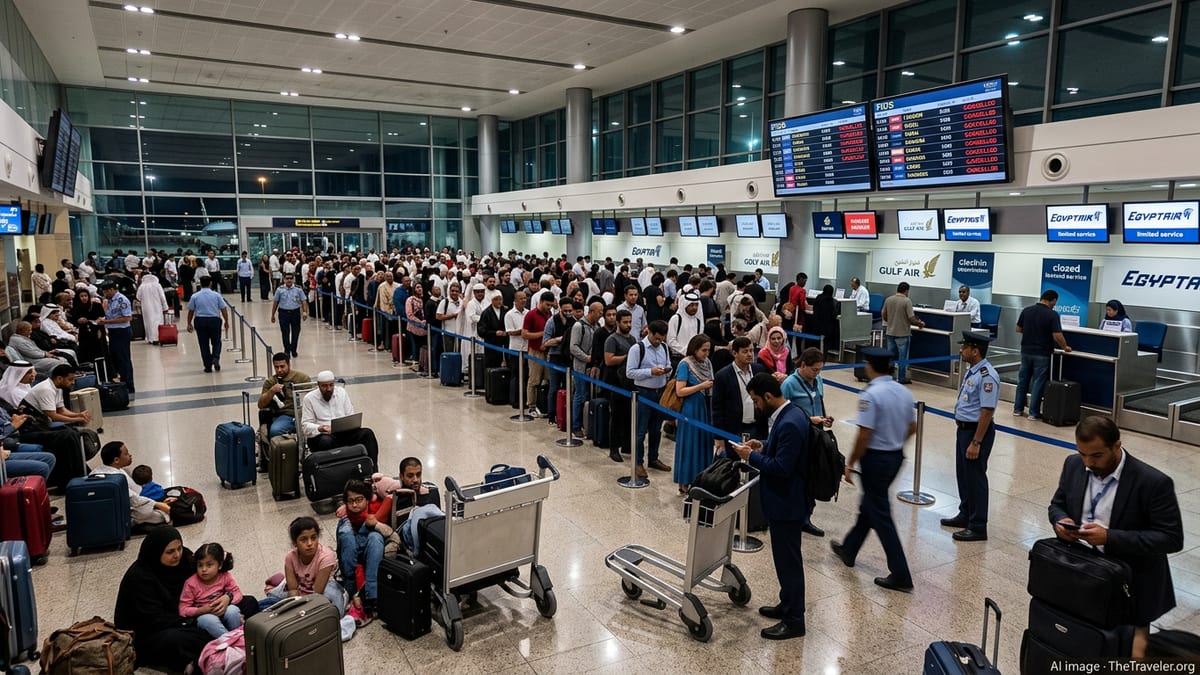
Five Kuwait Flights Scrapped as Disruptions Deepen
Recent updates from airline schedules and industry coverage indicate that Kuwait Airways and Gulf Falcon have withdrawn a cluster of services that are central to Kuwait’s international connectivity. The affected flights include Kuwait Airways routes linking Kuwait City with Geneva and New York, alongside Gulf Falcon services connecting Kuwait with Bahrain and other short-haul destinations.
Reports describe these as “key flights” in the network, serving both business travelers and leisure passengers who rely on Kuwait as a gateway between Europe, North America, and the Gulf. The cancellations are being implemented against a backdrop of wider operational constraints in regional airspace, with airlines continuing to recalibrate flight paths and timetables.
While precise flight numbers vary across schedules and days, publicly available information highlights five specific services that have been canceled or suspended, reducing options for travelers on some of the region’s most in-demand corridors. The changes come on top of an already elevated level of delays and cancellations at major Middle Eastern hubs.
Travel industry reports frame these latest cancellations as part of a rolling pattern of adjustments rather than a one-off event, meaning passengers booked in the coming days and weeks may still see additional changes to planned itineraries.
Impact on Long Haul: Kuwait to Geneva and New York
The loss of Kuwait Airways flights to Geneva and New York is particularly significant for long-haul passengers who use Kuwait as a connection point. Kuwait to New York links the Gulf directly with one of the world’s busiest transatlantic markets, while the Geneva route feeds both diplomatic traffic and high-yield leisure and financial-sector travel.
Published flight data show that Kuwait Airways’ long-haul schedule has already been under pressure, with several routes operating at reduced frequency in recent weeks. The latest step, involving the cancellation of additional long-haul services, further tightens capacity and pushes more passengers onto alternative carriers or multi-stop routings.
Travel analysis pieces note that travelers heading between North America or Europe and the Gulf are now more likely to be routed via other hubs, such as Doha, Riyadh, Jeddah, or Istanbul, depending on ticketing options and alliance partnerships. For some, that means longer total journey times, more complex connections, and fewer same-day alternatives if a flight is disrupted.
For Kuwait-based residents and expatriates, the reduction in nonstop services to Geneva and New York translates into fewer direct links to family, work, and study abroad. Some travelers are choosing to reposition by road to airports in neighboring Saudi Arabia or to rebook through carriers that continue to operate at higher frequencies on transcontinental routes.
Regional Shock: Bahrain and Short-Haul Gulf Routes Affected
Gulf Falcon’s cancellations on routes involving Bahrain and other nearby destinations are creating additional strain on short-haul connectivity within the northern Gulf. Bahrain is a key link for both business and weekend travel, and it often functions as a connection point for flights deeper into the Middle East and South Asia.
Recent coverage of airline operations in the region describes a patchwork of cancellations and reroutings affecting multiple carriers. Gulf Falcon’s suspended flights from Kuwait to Bahrain reduce the number of daily options for travelers who depend on quick, frequent shuttle-style services across the Gulf.
The situation is compounded by wider airspace constraints and schedule reshuffles that have pushed some airlines to shift operations via airports in Saudi Arabia. This has led to more complex itineraries, with travelers in some cases combining road transfers with shorter flights in order to reach their final destination.
For passengers, the practical effect is fewer available departure times, higher likelihood of fully booked remaining flights, and greater exposure to last-minute changes. Travel agents and online booking platforms are having to adjust reservations rapidly as flight statuses are updated.
Why Kuwait Travelers Are Seeing Repeated Cancellations
The wave of cancellations in Kuwait does not exist in isolation. Aviation and travel reports link the disruption to the broader instability affecting Gulf airspace and the knock-on effects of the ongoing Iran-related conflict, which has triggered temporary closures, reroutings, and heightened risk assessments across several states.
Analyses from aviation trackers and travel media point to a sharp drop in overall Gulf flight volumes since late February, with some hubs experiencing repeated suspensions followed by partial resumptions. Kuwait has been among the airports particularly affected, both in terms of direct strikes on regional infrastructure and subsequent airspace management decisions.
This environment has made it harder for airlines to plan stable schedules, especially on cross-border routes that overfly multiple Gulf states. Carriers are frequently forced to choose between operating longer, less economical routings or canceling services outright when risk thresholds or regulatory constraints shift.
As a result, travelers through Kuwait are encountering a higher-than-usual chance that even “confirmed” flights may be rescheduled or canceled at short notice. This pattern is evident not only on long-haul flights to hubs like New York and European cities but also on regional links to Bahrain and neighboring states.
What Passengers Should Do If Their Flight Is Affected
Travelers booked on Kuwait Airways or Gulf Falcon itineraries are being advised by travel industry guidance to closely monitor their flight status through airline channels and airport information boards before heading to the terminal. Because schedules can change rapidly, relying solely on booking confirmations issued days or weeks earlier may not be sufficient.
Publicly available information on Kuwait Airways’ recent handling of cancellations suggests that the airline has, in some cases, offered full refunds or rebooking options when flights are canceled for operational or safety reasons. Gulf Falcon has also adjusted its schedules, and passengers may be able to request rerouting on alternative services when a booked flight is withdrawn from sale.
Travel experts commonly recommend that affected passengers document any communications from airlines or booking intermediaries, including updated itineraries and cancellation notices, as these can be important when seeking refunds, vouchers, or travel insurance claims. Those with time-sensitive connections or nonrefundable hotel and tour bookings are encouraged to contact their providers promptly once a flight change is confirmed.
With the situation still evolving, many observers suggest that passengers traveling via Kuwait in the coming weeks build additional flexibility into their plans, consider backup routings where feasible, and remain prepared for longer transit times as airlines continue to navigate a challenging operating environment.