


More news on this day
Thunderstorms sweeping across major U.S. travel corridors over Labor Day weekend are disrupting one of the year’s busiest getaway periods, contributing to more than 4,000 flight delays nationwide and forcing airlines and airports to adjust schedules in real time.
Get the latest news straight to your inbox!
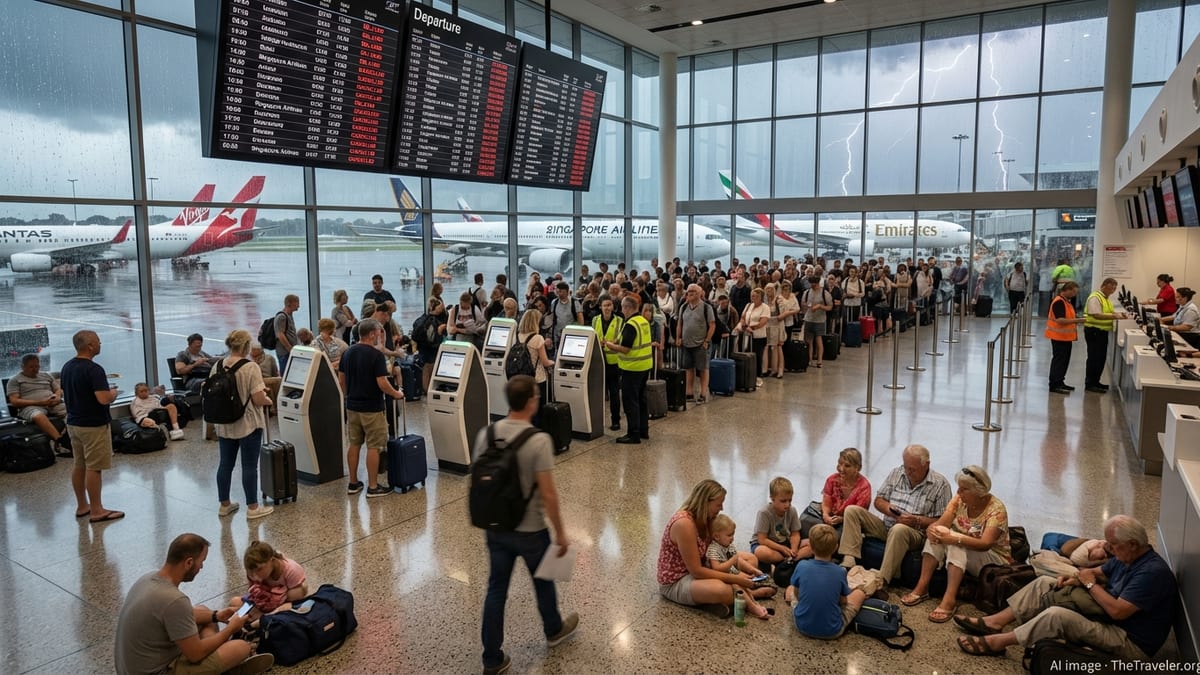
Stormy Skies Collide With Peak Holiday Demand
Publicly available tracking data shows that the Labor Day getaway period once again ranks among the most crowded travel weekends of the year, with hundreds of thousands of passengers funneled through major hubs from New York to Los Angeles. This year, scattered but intense storms along the East Coast and across parts of the country have complicated that rush, triggering widespread airspace congestion and ripple-effect delays.
According to published coverage from New York, storms around the country snarled operations at LaGuardia Airport on Thursday, September 3, with thousands of travelers facing disruptions as airlines attempted to route around pockets of severe weather and manage ground stops and flow-control measures. Reports indicate that Labor Day weekend was expected to feature more than 280,000 flights overall, with Thursday projected as one of the heaviest travel days, raising the stakes when thunderstorms developed near key hubs.
Forecast analyses from national meteorological outlets on Sunday, September 6, point to lingering storm clusters along the Eastern Seaboard and into parts of the Midwest, warning of continuing bottlenecks at select airports. These patterns, layered on top of already saturated schedules, help explain why total delays have climbed beyond 4,000 flights since the start of the holiday period, with additional knock-on disruptions likely as aircraft and crews fall out of position.
The Federal Aviation Administration’s daily air traffic reports highlight how quickly conditions can change when convective weather builds near busy corridors. Traffic management programs, including arrival spacing, reroutes, and occasional ground delay initiatives, have been in effect at various times through the weekend, keeping airports open but slowing throughput enough to push departure and arrival times back for many travelers.
Major Hubs Grapple With Rolling Slowdowns
While no single airport has been fully closed by the storms so far, data from federal systems and airport status dashboards shows that several large hubs are shouldering recurring slowdowns. At LaGuardia, storm cells and congested airspace led to extensive Thursday delays as arriving flights were metered and some departures waited for release slots. Similar patterns emerged at other high-traffic East Coast facilities as airlines and controllers worked within tighter weather windows.
In the Southeast, advisories from the Air Traffic Control System Command Center documented diversion recovery efforts for South Florida airports on Friday evening, an indication that thunderstorms and associated route restrictions forced some flights to temporarily divert to alternate fields. Those diversions, while designed to maintain safety, added complexity for airlines attempting to reunite aircraft, crews, and passengers in time for the rest of the weekend schedule.
Farther west, San Francisco International Airport has been the subject of arrival delay advisories during the holiday period, reflecting another chokepoint for cross-country and regional operations. Reduced arrival rates at a major coastal gateway can quickly translate into missed connections and late-evening delays at downline airports, compounding the national tally even if local weather improves.
Major inland hubs such as Atlanta, Chicago, and Dallas Fort Worth have remained busy throughout the holiday, with official airport forecasts predicting passenger volumes in the millions over the extended weekend. Publicly available status boards from these airports show intermittent departure and arrival delays tied to weather, congestion, and the knock-on effects of earlier disruptions along the routes feeding into their networks.
San Diego Disruptions Highlight Holiday Vulnerability
On the West Coast, San Diego International Airport has experienced significant disruption during the Labor Day window. Local coverage from Friday described multiple flights delayed by roughly two hours as the holiday rush began, with both arrivals and departures affected. Passengers reported extended waits at gates as airlines adjusted to traffic management initiatives and weather-related constraints along popular West Coast and transcontinental routes.
Separate reporting indicates that San Diego’s already constrained, single-runway layout has magnified the impact of any slowdown or safety-related pause in operations. A security-related drone incident reported near the airport’s air traffic control tower on Friday afternoon triggered a temporary ground stop, delaying hundreds of flights at one of the nation’s busiest single-runway commercial airports just as Labor Day travel peaked.
These interruptions in San Diego underscore how quickly localized issues can influence nationwide statistics. When a large number of flights are built around tight turnaround times at a single-runway facility, even a short suspension of operations can cascade into rolling delays that last well into the evening, adding significantly to national totals.
With San Diego also serving as a key origin and destination for leisure travelers heading to and from beach and resort areas, the timing of the disruptions has been particularly challenging. Travelers arriving late may face limited ground transport options, while those departing after substantial delays risk missed connections at larger hubs that are themselves juggling storm-related constraints.
Travelers Confront Crowded Terminals and Tight Margins
Across the country, the combination of near record demand and weather-driven constraints is translating into crowded terminals and longer waits at security checkpoints. Projections from airport authorities in Los Angeles, Chicago, and Dallas Fort Worth anticipated daily passenger volumes in the hundreds of thousands, with some facilities expecting their single busiest day of the year across the Labor Day stretch.
At Los Angeles International Airport, guidance issued ahead of the holiday predicted average daily traffic approaching 200,000 passengers, with Friday flagged as the peak day for arrivals and departures. Chicago’s aviation department, meanwhile, forecast more than 1.7 million travelers through O’Hare and Midway between Thursday and Tuesday, while Dallas Fort Worth expected roughly 1.4 million passengers despite higher airfares and fuel costs.
These volume projections leave little room for error when storms sweep into key regions. Industry commentators note that airline networks now run with tighter aircraft and crew utilization compared with pre-pandemic schedules, which can amplify the impact of any disruption. When weather forces reroutes, diversions, or extended ground delays at a few large hubs, the residual effects can ripple outward for days.
Social media posts and community forums throughout the weekend have captured individual stories of multi hour waits, missed connections, and last minute cancellations tied to thunderstorms and air traffic management initiatives. While experiences differ widely by route and carrier, the broader pattern reflected in delay statistics points to a system stretched thin by holiday demand and unsettled skies.
Forecast: More Storm-Linked Delays Possible Through Monday
Weather outlooks for the remainder of the Labor Day holiday suggest that additional delays are possible, particularly along the East Coast and in parts of the central United States. National forecast discussions on Sunday morning highlighted the potential for more thunderstorms near some of the country’s busiest airports, including those serving major metropolitan areas from the Mid Atlantic into New England.
As of Sunday, meteorologists were cautioning that even scattered afternoon storms could prove disruptive when layered on top of dense holiday schedules. Short lived but intense cells near arrival and departure corridors can trigger holding patterns, reroutes, or temporary ground stops, leading to incremental delays that accumulate throughout the day and impact evening banked flights.
Federal air traffic planners continue to publish daily reports summarizing expected system constraints, including convective weather, turbulence, and volume related programs. Travelers are encouraged by airlines and airports to monitor flight status closely, build extra time into connections, and consider early day departures where possible, since morning flights are statistically less affected by upstream delays.
With the holiday rush continuing through Labor Day Monday, the total number of weather linked disruptions is likely to rise further before schedules normalize midweek. The combination of strong demand, stormy conditions in critical corridors, and isolated security or operational events at individual airports has already produced more than 4,000 delays, turning what many hoped would be a smooth end to summer into a test of patience for air travelers nationwide.
Storms snarl Labor Day travel at LaGuardia Airport
Labor Day weekend airport delay forecast