

Lake Erie is one of North America’s great playgrounds, a shallow inland sea that draws swimmers, paddlers, anglers and sailors from the United States and Canada. Its long sand beaches, lively coastal towns and easy access from major cities make it a favorite for quick getaways and summer holidays. Yet this inviting lake can also be unpredictable, with fast-changing weather, powerful waves, cold water, harmful algal blooms and complex boating conditions. This guide brings together current, practical advice to help you enjoy Lake Erie’s shoreline and open water more safely, whether you are swimming, boating or exploring the coast in any season.
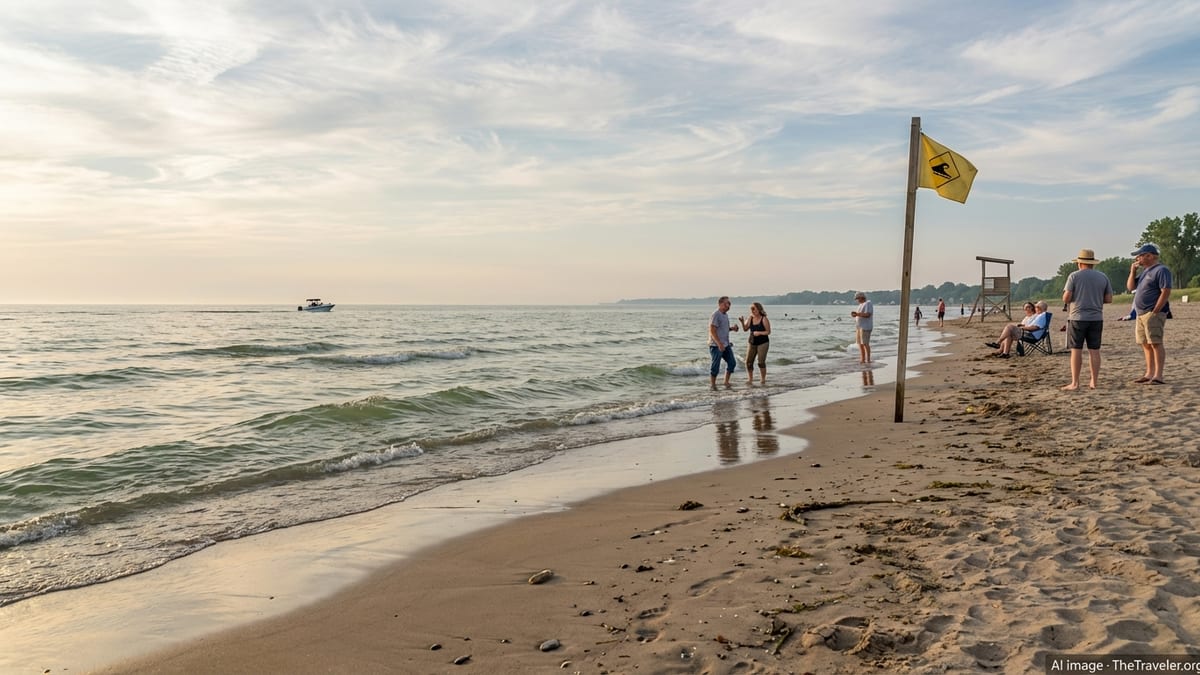
Understanding Lake Erie’s Unique Risks
Lake Erie looks like a large, friendly lake, but in many ways it behaves more like a small ocean. It is the shallowest of the Great Lakes, which means its water can warm quickly in summer yet also allows wind to build steep, choppy waves in a short time. Storm systems can move across the basin rapidly, turning calm water rough in less than an hour. These conditions create hazards for swimmers and small boats that may not be obvious from the beach or marina.
The lake’s shallow depth and nutrient-rich watershed also contribute to water quality issues. In warm months, especially from roughly July through October, western Lake Erie often experiences harmful algal blooms made up of cyanobacteria that can produce toxins. Regional and federal agencies now issue seasonal forecasts and regular bulletins to help communities and visitors understand when and where these blooms are likely to form, how intense they might be and what areas to avoid.
In addition to waves and algae, Lake Erie has strong nearshore currents, including longshore currents running parallel to the beach and rip currents that can pull swimmers away from shore. These are more common when winds blow steadily along or toward the coast, especially near piers, jetties and harbor mouths. In winter, reduced ice cover in recent years has made shoreline ice less predictable, with more frequent breakups and rescues.
Respecting Lake Erie begins with recognizing that conditions change quickly by location and season. A safe day at one beach does not guarantee similar conditions a few miles away, and last weekend’s experience on a favorite sandbar or ice shelf offers little protection from today’s hazards. Consistently checking official forecasts, looking for posted warnings at access points and adopting conservative habits on the water are the foundations of safe recreation here.
Swimming Smart: From Waves to Water Quality
Swimming in Lake Erie can be wonderfully refreshing, but it requires paying attention to both physical hazards and invisible ones. Before you head out, check a combination of local beach reports, National Weather Service information for the lakeshore and any beach monitoring tools maintained by state or provincial agencies. Many public health departments around Lake Erie now post recent bacteria sampling, advisories and closures for popular beaches, and some offer interactive maps and alert systems so you can see at a glance whether a beach is open for swimming.
Rip currents and strong shore breaks are a primary concern on windy days. If you arrive at the beach and see large breaking waves, strong onshore winds or flags and signs warning of hazardous swimming, treat those warnings as non-negotiable. Even strong swimmers can be pulled into deep water quickly. If you are allowed in the water, stay near a staffed lifeguard station where available, avoid swimming next to piers and breakwalls that channel currents, and keep children in shallower water where an adult can stand next to them. If you feel yourself pulled away from shore, focus on floating or treading water, then swim parallel to the beach until you are out of the current before turning back in.
Water quality is another key safety factor. After heavy rains, combined sewer overflows and stormwater runoff can elevate bacteria levels at some beaches. These conditions may not be visible, which is why paying attention to advisories is important. If a beach is posted with a contamination warning or swimming closure, choose another location or enjoy the shoreline without entering the water. Parents should be especially cautious with young children, who are more likely to swallow water while playing.
Finally, think about temperature and personal limits. Lake Erie can remain surprisingly cold in late spring and early summer, particularly away from shore or after a stretch of cooler weather. Cold water increases the risk of cold shock and swimming fatigue. If you are unsure, wade in gradually, pay attention to how quickly you feel chilled and avoid long swims far from shore without a wetsuit or support craft. Enter the water with a buddy, designate an adult observer on shore and agree on a clear signal for getting out if conditions feel uncomfortable.
Harmful Algal Blooms: Recognizing and Avoiding Toxic Water
Harmful algal blooms, or HABs, have become a recurring feature of summers on western Lake Erie. These blooms are usually caused by cyanobacteria that thrive in warm, nutrient-rich water and calm conditions. While not every bloom is highly toxic, some produce cyanotoxins that can irritate skin, cause gastrointestinal upset if swallowed and, at higher concentrations, threaten the health of people and animals. Water suppliers closely monitor drinking water, but individual lake users must take responsibility for avoiding direct contact when blooms are present.
Seasonal forecasts from scientific agencies now provide an early sense of how severe a given year’s bloom season may be, often described as mild, moderate or more intense based on phosphorus loading and historical data. More detailed short-term bulletins use satellite imagery, on-water sampling and circulation models to estimate where blooms are forming, how concentrated they are and how winds and currents might move them over the next few days. Local health departments and park managers use this information, along with visual checks, to decide when to post warnings or close affected beaches.
At the shoreline, your first rule should be visual caution. Avoid any area where the water looks like bright green paint, pea soup or thick scum, or where mats of algae are piling up along the sand. Blooms often appear first in sheltered bays and along the downwind coast, and they can become more concentrated in calm, low wind periods when surface scum forms. Pets are especially vulnerable because they may drink from or play in scummy water at the edge, then lick their fur afterward. Keeping dogs on a leash near any suspicious water and rinsing them off with clean water after a beach visit is a simple, powerful safety step.
Even after a visible bloom clears, toxins can linger for a period in both the water and the wet sand. While research continues on how long these residues pose a meaningful health risk, it is wise to respect posted advisories and give recently affected beaches time to recover before allowing children to dig or play extensively in persistently wet sand near the waterline. When in doubt, contact the local health department or park office for the latest guidance instead of relying solely on how the water looks on a given day.
Boating, Paddling and Offshore Safety
Boaters on Lake Erie benefit from an extensive network of marinas, harbors and navigation aids, but the lake remains challenging for small craft. Rapidly building chop, strong winds across long fetches and frequent squall lines mean that conditions can outmatch an underpowered boat or inexperienced operator quickly. Whether you are launching a small fishing boat, sailing, or heading out on a personal watercraft or paddleboard, start every outing with detailed marine forecasts rather than general land-based weather reports.
The National Weather Service issues specific statements for the Great Lakes that highlight small craft advisories, gale warnings, rip current risks, low water advisories and dense fog or freezing spray when applicable. These products are written for mariners and updated frequently as systems move through. Learning the meaning of each advisory, and deciding in advance that certain thresholds will keep you at the dock, can prevent last-minute pressure to “go anyway” when conditions are marginal.
On the water, personal flotation devices should be non-negotiable. Every person on board needs a properly fitted life jacket, and paddlers and personal watercraft riders should wear them at all times, not just keep them stowed. Many boating accidents on Lake Erie involve falls overboard, sudden capsizes in steep waves or occupants separated from a drifting boat. In cold or rough water, even a short swim back to the hull can become difficult. Wearing a life jacket from the moment you leave the dock is one of the simplest ways to survive an unexpected incident.
Navigation awareness is equally important. Lake Erie’s bottom topography includes shoals, reefs and shallow bars, especially around the islands and near river mouths. These areas can generate confused seas and unexpected breakers when wind and current oppose each other or when water levels fluctuate. Keeping updated digital or paper charts, monitoring water levels and minding marked channels reduces your risk of striking submerged hazards. Recreational boaters should also maintain a functioning VHF marine radio, avoid alcohol while operating a vessel and file a basic float plan with a family member or marina so rescuers know where to search if you do not return as scheduled.
Weather, Seasons and Shoreline Conditions
Lake Erie’s hazards shift with the seasons, making time of year a critical factor in trip planning. Spring often brings rapidly changing temperatures, strong winds and cold water even on sunny days. In this period, hypothermia risk is high for anyone who ends up in the water unexpectedly. Boaters should consider cold water protective gear, such as drysuits or insulated flotation suits, and paddlers should treat immersion protection as essential, not optional.
Summer is peak season for swimming and boating, but it is also when harmful algal blooms and sudden squall lines are most likely. Hot, humid conditions over warm lake water can feed fast-moving thunderstorms with strong gusts and dangerous lightning. Paying close attention to short-term thunderstorm outlooks, radar trends and nearshore marine forecasts can help you avoid being caught offshore by rapidly approaching storms. When in doubt, stay closer to protected waters and plan routes that allow quick returns to safe harbor.
Autumn often offers beautiful, uncrowded days on the water, but longer nights and stronger cold fronts make for more frequent gales and large waves. Water temperatures begin to drop again, and daylight shrinks, leaving less margin for error if something goes wrong late in the afternoon. Hunters and late-season anglers should be especially cautious about overloading small boats with gear and operating in steep, confused seas near river mouths or channel entrances.
Winter on Lake Erie has changed in character as average ice cover has declined in recent years. Historically solid ice that supported fishing huts, snowmobiles and foot traffic is now more variable and often far thinner than people expect. Coast Guard rescuers routinely respond to ice floes that break away from shore or suddenly fracture under groups of anglers. The safest choice for most visitors is to avoid going onto lake ice entirely and instead enjoy winter views from solid ground. Those who do venture out should treat all ice as suspect, carry self-rescue tools, travel with partners, stay close to shore and be prepared to retreat quickly if conditions change.
Planning, Local Resources and Emergency Preparedness
Safe enjoyment of Lake Erie starts long before you arrive at the shoreline. Begin by choosing destinations that match your group’s skills. Families with young children may prefer gently sloping beaches with lifeguards and nearby amenities, while experienced paddlers might seek more remote coastal parks or island shorelines. Check the latest information from local park agencies, municipalities or tourism offices for your chosen area, including any current advisories, construction closures or special regulations for dogs, drones or fires.
Once you have a location in mind, build a simple safety checklist into your packing routine. For swimmers and beachgoers, this might include sun protection, plenty of water, a small first-aid kit, a whistle or signaling device and a plan for shade. For boaters, it should expand to life jackets for every person, a throw rope or throwable flotation device, a VHF radio or other reliable communication tool, navigation aids and backup propulsion where feasible. Paddlers should add a bilge pump, spare paddle and attachment systems to secure gear in case of a capsize.
Emergency preparedness is not about expecting the worst, but about making sure a minor incident does not escalate. Everyone in your group should know the local emergency number, be able to describe your general location and recognize key landmarks that rescuers might see from the water or air. If you are staying at a lakeside rental or campground, learn the name of the nearest marina, public access point or mile marker along the shore. Charge phones fully before leaving, but do not rely on them as your only means of communication. Coverage can be patchy offshore, and wet electronics often fail when they are needed most.
Finally, cultivate a habit of speaking up when something feels off. If wind is building faster than forecast, if someone in the group looks exhausted or chilled, or if the water suddenly changes color or odor, treat that as a prompt to pause and reassess. Turning back early, choosing a different activity or spending the day exploring a lakeside town instead of pushing into questionable conditions is a sign of good judgment, not failure.
The Takeaway
Lake Erie rewards those who approach it with curiosity, preparation and respect. Its beaches and islands can offer unforgettable days in the sun, quiet morning paddles and sparkling offshore sails, but the same forces that make the lake dynamic also create real hazards. Shallow waters that warm quickly can still be dangerously cold in spring, clean-looking waves can hide powerful currents and bright summer skies can give way to storms or algal blooms within a day.
By grounding your plans in up to date forecasts, paying attention to local advisories, choosing gear that fits the conditions and staying within your group’s comfort level, you greatly increase the chances that your Lake Erie adventures will end with tired smiles and safe returns. Whether you are wading at a family-friendly beach, launching a boat before sunrise or walking the icy shoreline in January, letting safety guide your decisions is the most reliable way to keep this remarkable lake a source of inspiration rather than regret.
FAQ
Q1. Is it safe to swim in Lake Erie in summer?
It is often safe to swim in Lake Erie during summer when there are no rip current alerts, contamination advisories or harmful algal bloom warnings in effect, and when you stay near lifeguarded areas or within your depth. Always check local beach reports and weather before entering the water.
Q2. How can I tell if harmful algal blooms are present?
Harmful algal blooms often make water look like green paint, pea soup or thick scum, especially in warm, calm conditions near sheltered bays or downwind shores. If you see discolored or scummy water, avoid contact, keep pets away and look for posted warnings from local health or park authorities.
Q3. Are Lake Erie beaches closed often because of bacteria?
Some Lake Erie beaches experience temporary advisories or closures, particularly after heavy rain when stormwater and combined sewer overflows can raise bacteria levels. Many public health departments monitor water quality regularly in season, so advisories tend to be targeted and time limited rather than constant.
Q4. What should I do if I am caught in a rip current?
If you are pulled away from shore by a current, try to stay calm, float or tread water to conserve energy and then swim parallel to the shoreline until you feel the pull weaken. Once you are out of the current, angle back toward shore. Signal for help by waving and calling out if you are in difficulty.
Q5. Do I really need a life jacket on a warm, calm day?
Yes. Many incidents on Lake Erie happen suddenly when a small boat capsizes, someone slips overboard or wind and waves build faster than expected. Wearing a properly fitted life jacket at all times on the water dramatically improves your odds of staying afloat and being rescued, even on seemingly easy days.
Q6. Is it safe for my dog to play in Lake Erie?
Dogs can safely enjoy Lake Erie when water quality is good and no harmful algal blooms are present, but they are especially vulnerable to drinking contaminated or scummy water. Keep pets away from discolored or foul-smelling water, rinse them with clean water after swimming and contact a veterinarian promptly if they show signs of illness after a lake visit.
Q7. Can I trust clear water even if there have been recent advisories?
Clear water is not a guarantee of safety. Some bacteria and cyanotoxins are not visible, and residues can linger after a bloom or contamination event. Rely on current advisories from local health or park agencies rather than appearance alone, especially if there have been recent warnings at that beach.
Q8. Is winter ice on Lake Erie safe for walking or fishing?
Ice conditions on Lake Erie have become less predictable, with thinner and more variable cover in many recent winters. Large cracks and sudden breakaways are increasingly common. Unless you have expert local knowledge and proper safety gear, the safest choice is to avoid traveling on lake ice at all and instead enjoy winter views from solid shore.
Q9. What kind of weather forecast should boaters use on Lake Erie?
Boaters should rely on Great Lakes marine forecasts, which provide details on wind, waves, visibility, water levels and any small craft advisories or gale warnings. These specialized forecasts are more precise for on-water conditions than general land-based reports and are updated frequently as weather systems evolve.
Q10. How can visitors stay informed about changing conditions during a trip?
Before and during your visit, check official weather and beach reports daily, pay attention to signage at access points and talk with lifeguards, rangers or marina staff about local patterns. Consider signing up for regional alert services where available and be prepared to change plans quickly if conditions, advisories or forecasts shift.