

The Great Lakes together hold nearly 20 percent of the world’s surface freshwater, but for many travelers they are something simpler and more immediate: a place to sink bare feet into sand, wade into clear water and watch the sun dissolve into the horizon. Among them, Lake Erie has quietly built a reputation as a warm, accessible summer playground. Yet it competes with the towering dunes of Lake Michigan, the wild sweep of Lake Superior, the tranquil coves of Lake Huron and the urban-meets-lakefront energy of Lake Ontario. Choosing the “best” beach experience is less about crowning a single champion and more about understanding how these lakes differ, and which shoreline matches the kind of beach day you have in mind.
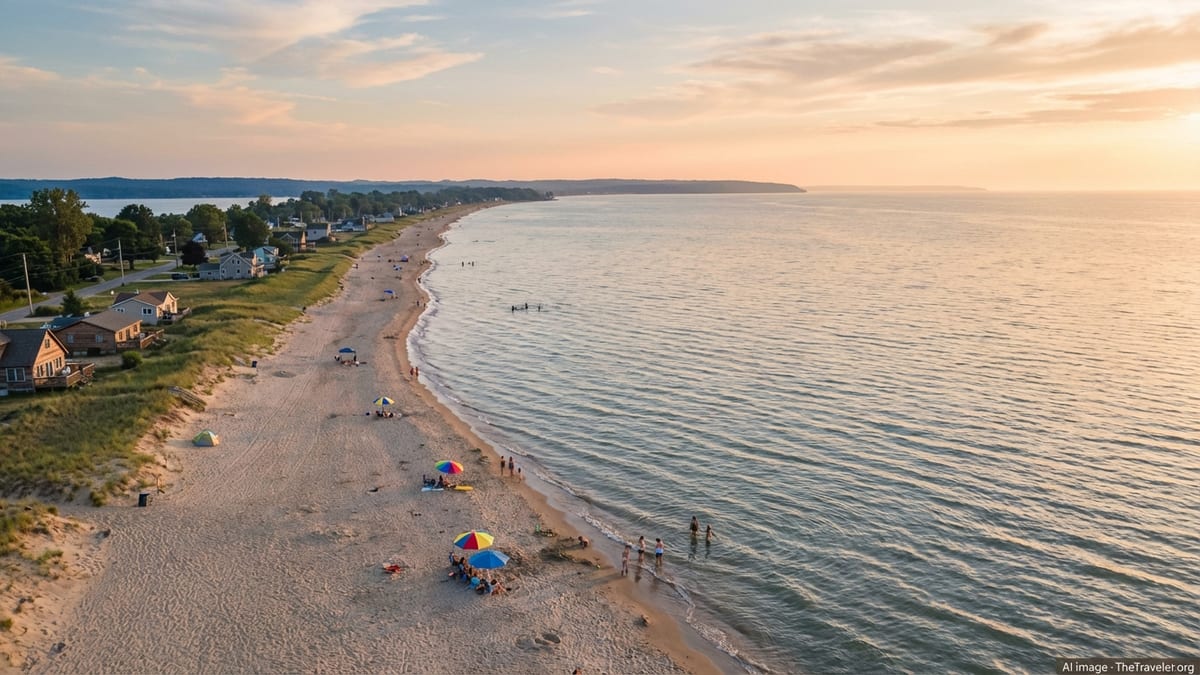
How Lake Erie’s Beaches Stack Up Against the Other Great Lakes
Lake Erie is the shallowest of the Great Lakes, and that one fact shapes much of its beach experience. Shallower water warms more quickly, so by mid-summer Erie’s nearshore temperatures often feel closer to a temperate seaside than a northern inland lake. In practical terms, that means more days when wading is comfortable, sandbars feel inviting and families can linger in the shallows without shivering. In many coastal towns from Ohio to Ontario, summer is defined by swimming, paddling and evenings on soft sand as the water stays relatively mild well into early fall.
By contrast, Lakes Superior and sometimes Huron and Michigan can stay noticeably cooler, even in July and August. Satellite and buoy records from agencies such as NASA and NOAA show that midsummer surface temperatures on Erie frequently sit in the low 70s Fahrenheit on average, while Superior, thanks to its depth and volume, often lags by more than ten degrees. That difference is immediately obvious when you wade in: on Superior, a quick plunge and brisk retreat are common; on Erie, people tend to linger waist-deep, chatting or tossing a ball in water that can feel closer to a traditional beach resort.
When it comes to sand, Erie offers a mix rather than a single signature. Some stretches, such as Presque Isle in Pennsylvania and several Ontario and Ohio state parks, have broad, fine-grained beaches that recall Atlantic or Gulf shorelines, albeit on a more compact scale. Others are narrower, with coarser sand and pockets of cobble. Lake Michigan, by comparison, is home to more of the region’s largest dune-backed strands, while Huron and parts of Ontario feature long, gently shelving sands. Still, Erie’s advantage is that many of its best beaches lie within a short drive of major cities, making a spontaneous beach day more realistic for millions of residents in the United States and Canada.
Scenery is perhaps where Erie appears to concede ground to some of its siblings. Superior’s steep, forested headlands and cliffs, Michigan’s towering dune systems and Huron’s island-dotted reaches can feel more dramatic. Yet Erie’s lower profile and more developed shoreline translate into amenities: lifeguarded beaches, paved promenades, playgrounds, marinas and beachside towns where you can step from towel to ice cream stand in minutes. For travelers who prioritize convenience and sociability over wild vistas, that trade-off can be a virtue.
Water Temperature, Swimming Season and Comfort
For many travelers, the test of a great beach is simple: how does the water feel? Here, Lake Erie has a strong claim. Long-term records compiled by research groups tracking the lake’s climate show that average summer surface temperatures across Erie hover around the low 70s Fahrenheit, with shallower western and central basins often warming further in calm, sunny stretches. That is noticeably more comfortable than typical summer readings on Lake Superior and generally milder than parts of Huron and northern Michigan, where upwelling of deeper, colder water can quickly transform a warm day into a brisk swim.
In practice, Erie’s warmth means a longer reliable swimming window. While hardy locals enter the water as soon as air temperatures allow, casual swimmers and families usually find June through early September the prime months, with peak comfort from mid-July into August. On Lakes Michigan and Huron, these same weeks can be excellent but more variable, especially on exposed shorelines where wind shifts can bring colder offshore water to the beach overnight. Superior, magnificent as it is, often remains genuinely cold enough that many visitors treat full immersion as a quick, invigorating ritual rather than an all-afternoon pastime.
Lake Ontario falls somewhere in between. Its depth is comparable to Michigan and Huron in many areas, which can hold temperatures down early in the season, but its southern shores in New York and Ontario can warm pleasantly by midsummer. Urban heat and sheltered bays help, though the season can feel slightly shorter than Erie’s. For beachgoers who plan trips around guaranteed swimmable water, Erie’s consistency is a strong point.
That warmth, however, has a consequence. Warmer, nutrient-rich waters are more prone to summer algal blooms, and Erie’s western basin in particular has become a focus of scientific and public health attention. Federal and state scientists monitor the lake for harmful algae and bacteria, issuing advisories when conditions are unsafe. Other Great Lakes also experience advisories, but Erie’s combination of shallowness, surrounding agriculture and urban runoff means visitors must pay closer attention to local updates than they might on a more remote Superior or Huron beach.
Sand, Scenery and Shoreline Character
The feel underfoot is another way to compare the lakes. On much of Lake Erie, especially along peninsulas and in protected bays, the sand is fine to medium-grained and comfortable for barefoot walking, castle building and volleyball. Beaches like those found on Presque Isle State Park in Pennsylvania or popular Ontario strands showcase wide crescents of sand with relatively gentle drop-offs into the water. These are classic family beaches, with room to spread out, shallow entry and nearby facilities.
Lakes Michigan and Huron, however, are often where serious dune enthusiasts gravitate. Along Michigan’s western shore and parts of northwest Indiana and Wisconsin, dunes rise high above the water, creating dramatic backdrops and offering sweeping vistas. State and national parks protect many of these landscapes, and trails lead from parking areas up sandy ridges to viewpoints before descending to the lake. The beaches themselves tend to be wide and clean, with sand that is often as soft or softer than many Erie strands. For travelers who equate a “best” beach with grand scenery, these stretches can be hard to beat.
Lake Superior’s shoreline is more varied and rugged. Large sandy bays exist, especially in places like Wisconsin and Minnesota, but they are interspersed with rock, cobble and forested headlands. The visual payoff is immense: cool-toned water, long horizons and a sense of wilderness that is difficult to find on more developed lakes. Yet the same elements that make Superior stunning can be less ideal for casual swimmers. Steep drop-offs, colder water, limited facilities and sometimes challenging access deter those seeking a simple towel-and-cooler afternoon.
Lake Ontario’s beaches take on a different character again. In some areas, especially on the Canadian side, long sweeps of sand front cottage communities and municipal parks, while New York’s shoreline mixes sandy strands with more pebbly bays and urban waterfronts. The setting can feel less wild than Superior or Huron, but often more cosmopolitan. You might find yourself swimming within sight of a skyline or historic harbor, a reminder that this is a lake closely intertwined with city life and shipping.
Access, Amenities and Beach Town Atmosphere
Accessibility is one of Lake Erie’s greatest strengths. Major metropolitan areas such as Cleveland, Buffalo, Toledo and Erie itself sit close to the water, and many communities have developed or improved public access in recent years. Visitors can often drive directly to waterfront parks with parking lots, restrooms, concession stands and lifeguards in season. The compact distances between towns mean that a rainy or crowded beach can sometimes be swapped for a sunnier or quieter alternative after a short drive along the shoreline.
The towns that dot Erie’s coasts tend to lean into a summer-holiday atmosphere. Boardwalks, small amusement areas, casual seafood and pizza spots, ice cream stands and marinas create a mood that is distinctly laid-back and family-oriented. For travelers seeking nightlife, there are waterfront bars and occasional festivals, but the dominant tone is informal rather than high-octane. This suits visitors who want the social energy of a popular beach without feeling overwhelmed by megacity bustle.
Lakes Michigan and Ontario offer a wider spectrum of atmospheres. On Lake Michigan, travelers can move from remote campgrounds and quiet dune-backed strands to small resort towns with galleries and wine bars, and on to larger cities where beaches sit within minutes of downtown towers. Chicago’s celebrated lakefront, for example, is a reminder that a big-city skyline and a broad sandy beach can comfortably coexist. Lake Ontario has similar juxtapositions, particularly near Toronto and along New York’s urban waterfronts, where commuter ferries, harbor traffic and kayakers share the same blue expanse.
On Lakes Superior and Huron, access and amenities can be more limited, by design. Long protected stretches have few buildings in sight, and visitors may need to pack in everything they need for the day. Some smaller communities cater to summer travelers with motels, campgrounds and a few cafés, but it is common to drive longer distances between developed beach areas. For some, that is precisely the appeal. For others, particularly families with small children or anyone who values nearby services, Erie’s blend of easy access and modest but reliable facilities offers a more comfortable compromise.
Water Quality, Safety and Environmental Considerations
No Great Lakes beach discussion is complete without addressing water quality and safety. Lake Erie’s shoreline is among the most closely watched in North America for issues related to harmful algal blooms and bacterial contamination. Agencies such as the National Centers for Coastal Ocean Science and state health departments in Ohio, Michigan, Pennsylvania and New York maintain monitoring programs and forecasting tools specifically for Erie’s western and central basins. In late summer especially, they may issue advisories telling swimmers to avoid discolored or scummy water and to heed posted warnings.
These blooms are influenced by warm temperatures, calm weather and nutrient runoff from surrounding watersheds. When conditions combine, they can temporarily close beaches or at least make them less inviting. Travelers planning an Erie beach trip are wise to check local advisories shortly before heading out and again on arrival, especially in bloom-prone stretches. It is also sensible to avoid swimming in water that looks or smells unusual, and to keep pets away from visible algae, as public health agencies regularly advise.
Importantly, Erie is not alone in facing water quality challenges. Beach closures and advisories occur at sites across the other Great Lakes as well, often due to bacterial spikes after heavy rainfall or localized algae in enclosed bays. New York state, for example, tracks dozens of public beaches on Lake Ontario and inland waters and periodically closes some of them for elevated bacteria or blooms. Municipal and state environmental agencies around Lakes Michigan and Huron also maintain similar monitoring programs, though the exact frequency of advisories varies between regions and years.
On a practical level, this means that water quality should be part of any Great Lakes beach plan, not just an Erie concern. Travelers willing to be flexible about exactly where they swim often find that if one beach is under advisory, another, more open stretch of lake a short drive away remains clear and open. The large scale of each lake, and the way currents and wind can keep conditions highly local, work in the visitor’s favor as long as they stay informed and follow posted guidance.
Who Each Lake Is Best For
Because each of the Great Lakes offers a different blend of warmth, scenery, access and atmosphere, the “best” beach often comes down to the traveler’s priorities. Lake Erie is a strong choice for families with children, casual swimmers and anyone who values warm water, relatively soft sand and easy access from major cities. Its beaches are often lively but not overwhelming, with enough infrastructure to feel comfortable without losing the charm of a summer lake town. If your ideal day includes long swims, sandcastle building and a boardwalk ice cream at sunset, Erie fits that picture well.
Lakes Michigan and Huron tend to appeal to visitors who want a more obviously dramatic coastal landscape. Michigan’s dune systems and Huron’s mix of islands and quiet bays deliver postcard-worthy scenes, with many public parks providing both hiking and swimming in a single outing. Water temperatures can be pleasantly warm in sheltered areas by mid-summer, particularly on the eastern shores of Lake Michigan and select Huron bays, but are slightly less predictable than Erie’s nearshore warmth. Travelers who like to pair beach time with boutique shopping, wineries and dining often find these shorelines particularly satisfying.
Lake Superior attracts those who prize wildness and solitude over warmth. Its beaches can be stunning, with long, empty stretches of sand framed by forest and rock rather than hotels or houses. The trade-offs are real: colder water, fewer amenities and longer drives between communities. For many, however, the reward is a sense of escape and a night sky untroubled by city lights. Lake Ontario, meanwhile, offers a hybrid experience, mixing urban access and cultural attractions with pockets of traditional cottage-country beach life. Travelers who want to visit museums or concerts and still carve out a few hours on a nearby sandy shore may gravitate to Ontario’s coasts.
Ultimately, the Great Lakes function less like siblings competing for a crown and more like a family of distinct destinations. Comparing them helps clarify what you want. Do you crave warmth and convenience, or drama and seclusion? Do you enjoy strolling busy promenades, or would you rather hear only waves and wind? By thinking through those questions, the choice between Erie and its neighbors becomes less abstract and more about aligning your trip with your own idea of what a perfect beach day should feel like.
The Takeaway
When the question is framed as Lake Erie versus the other Great Lakes, it can be tempting to reach for a single, tidy verdict. Yet the closer you look, the more difficult that becomes. Erie arguably provides the most consistently comfortable swimming conditions, a generous selection of accessible public beaches and a classic summer-town feel that is easy to enjoy in a weekend. For many travelers, especially families, that combination is exactly what matters. In that sense, Erie is a strong contender for the best all-around Great Lakes beach experience.
However, what it sometimes lacks in raw drama it concedes to Lakes Michigan, Huron and Superior, where dunes, cliffs and secluded bays offer a wilder or more visually striking version of the freshwater coast. Lake Ontario, for its part, shows how beaches can be woven into the fabric of major cities and cultural hubs. Each lake excels in different categories, and each demands a slightly different kind of traveler. Rather than seeking a universal winner, it is more accurate to say that Erie leads on warmth and convenience, while its siblings shine in scenery, solitude or urban energy.
If your priority is warm, swimmable water, soft sand underfoot and easy access to services, Lake Erie is difficult to surpass within the Great Lakes system. If you are willing to trade some of that comfort for grander vistas, quieter shores or the excitement of a big city at your back, the other lakes come into their own. The best strategy is to treat the Great Lakes not as alternatives but as a long-term travel project: return season after season, shifting from one lake to another, and let each shoreline show you its version of what a great beach can be.
FAQ
Q1. Is Lake Erie really warmer for swimming than the other Great Lakes?
Yes, in general Lake Erie’s shallower depth allows its surface waters to warm more quickly, so many of its beaches feel noticeably milder for swimming in mid to late summer.
Q2. Are Lake Erie beaches safe during harmful algal blooms?
They can be, but conditions vary. Health agencies issue advisories when blooms are present. Visitors should avoid discolored or scummy water and follow posted guidance.
Q3. Which Great Lake offers the most dramatic beach scenery?
Lakes Michigan, Huron and Superior often provide the most dramatic backdrops, with tall sand dunes, rocky headlands, islands and long, relatively undeveloped stretches of shoreline.
Q4. If I want soft sand and family-friendly facilities, should I choose Lake Erie?
Lake Erie is a strong choice, with many public beaches that combine gentle sandy entries, lifeguards in season and nearby restrooms, playgrounds and casual dining.
Q5. How does Lake Superior compare as a beach destination?
Lake Superior offers spectacular, often remote beaches with a strong sense of wilderness, but the water is usually colder and services are more limited than on Lake Erie.
Q6. Are there good beach towns on Lakes Michigan and Huron too?
Yes. Both lakes have small resort towns and coastal communities with shops, restaurants and marinas, often set beside dune-backed or bay-front beaches popular in summer.
Q7. Is Lake Ontario a good option if I want both city life and beach time?
Lake Ontario can work very well for that, with several urban and near-urban beaches that allow travelers to combine museum visits, dining and lakefront swimming in one trip.
Q8. Do all the Great Lakes have issues with occasional beach advisories?
Yes, though the frequency varies by site and year. Advisories can occur on all five lakes due to bacteria, runoff or localized algae, so it is wise to check conditions in advance.
Q9. When is the best time of year to visit Lake Erie for a beach vacation?
For the warmest water and the widest range of services, late June through August is usually ideal, with some years offering pleasant swimming conditions into early September.
Q10. If I can only visit one Great Lake, which offers the best overall beach experience?
For most casual beachgoers seeking warm water, easy access and a classic summer atmosphere, Lake Erie is an excellent all-around choice, though scenery-focused travelers may prefer Michigan, Huron or Superior.