

Planning a Great Lakes escape often comes down to one big decision: Lake Superior or Lake Huron. Both offer wild freshwater coastlines, clear blue water and character-filled small towns, but the feel of a trip to each lake is very different. Understanding those differences will help you choose the shoreline that matches your travel style, comfort level and timing.
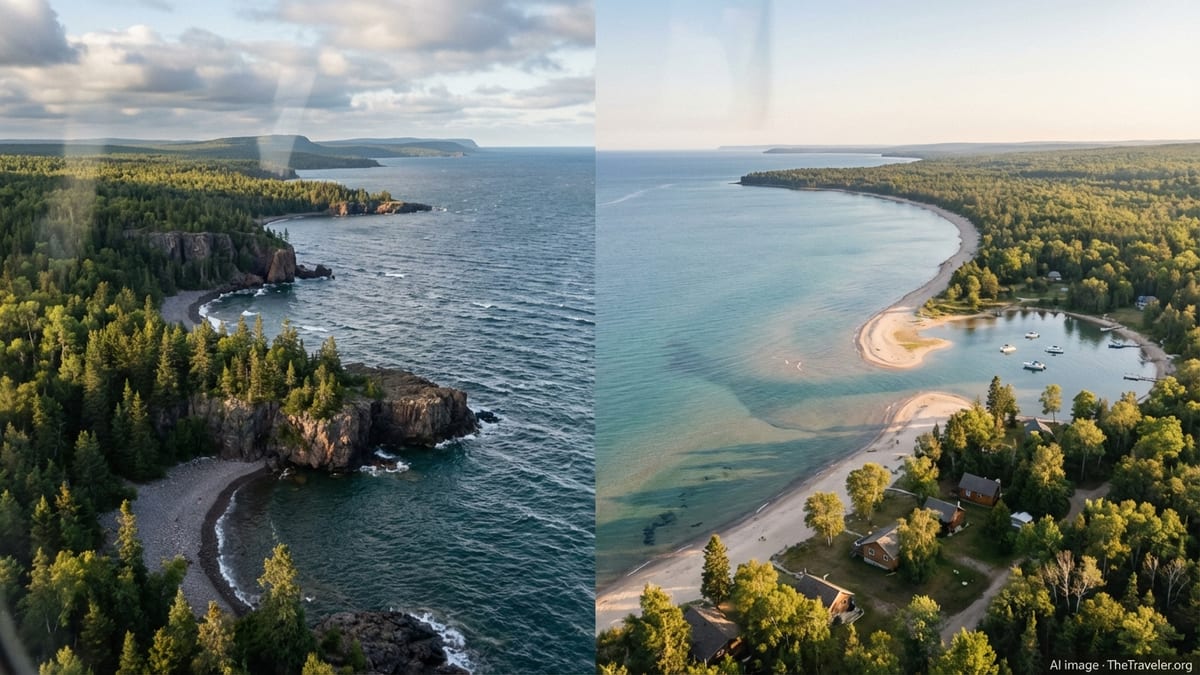
Lake Superior vs Lake Huron at a Glance
For many travelers, Lake Superior and Lake Huron are neighbors on the map but worlds apart in personality. Lake Superior, the largest, deepest and coldest of the Great Lakes, is known for raw, dramatic scenery and a sense of northern wilderness. Lake Huron, slightly smaller and much more indented with bays and islands, feels softer and sunnier, with long sandy beaches and gentler conditions in many areas.
Lake Superior’s American shore stretches mainly across northern Minnesota, Wisconsin and Michigan’s Upper Peninsula, while its Canadian coast runs along remote parts of Ontario. Much of the shoreline is rugged rock, pebble beach and forested cliff, which shapes the kind of experiences visitors have: hiking, paddling, scenic drives and backcountry-style camping are central here.
Lake Huron rims eastern Michigan, the Bruce Peninsula and much of Ontario’s cottage country, and it is heavily dotted with islands. The famous Georgian Bay and Manitoulin Island region offers sheltered coves, warm shallows and numerous towns geared toward beach vacations, boating and easy access to the water. Travelers will also find quieter stretches on Michigan’s “Sunrise Side,” where small communities look straight east over open water.
If you imagine yourself standing on high cliffs above crashing surf in a fleece jacket in July, Lake Superior is likely your match. If you picture wading out forever over warm sandbars or watching sunrise over calm blue water from a cottage deck, Lake Huron is more likely to feel right.
Landscape, Scenery and Overall Atmosphere
Lake Superior is often the choice for travelers seeking dramatic, almost oceanic landscapes. Long sections of its shore are dominated by bare rock, headlands and steep forested hills. Areas such as Pictured Rocks National Lakeshore in Michigan and sections of the North Shore in Minnesota are known for colorful cliffs, waterfalls and views that feel much wilder than their latitude suggests. The lake’s sheer size and depth mean waves can be powerful and weather changes can be sudden, lending the region a reputation for unpredictability.
On the Canadian side, Ontario’s Lake Superior Provincial Park and the coastal trail that runs through it have become a magnet for serious hikers. The backcountry trail is known for rugged footing, cobble beaches and lengthy, remote stretches that require careful planning. Visitors come for the combination of Canadian Shield rock, boreal forest and big-water vistas more typical of a northern coastline than an inland lake.
Lake Huron offers a different kind of beauty. Much of the shoreline, particularly along Georgian Bay and the Bruce Peninsula, features clear turquoise water, limestone cliffs of more modest scale and extensive beaches. The Bruce Peninsula is famous for its rocky coves and formations like Flowerpot Island, while Singing Sands Beach and other shallow bays have soft sand and wide, gently sloping lakebeds ideal for wading. Other areas, such as Sauble Beach on the eastern Huron shore, are known for broad, shallow beaches where sandbars help keep the water relatively warm in season.
The atmosphere on Lake Huron is generally more relaxed and summery. Towns and parks are set up for beach days, family picnics and casual strolls, and many shorelines feel sheltered compared with Superior’s more exposed coast. Travelers who want “classic beach town” energy often gravitate here, while those craving wind-whipped cliffs and a sense of remoteness lean toward Superior.
Beaches, Swimming and Water Conditions
Both lakes boast beautiful beaches, but how comfortable you feel in the water can differ dramatically. Lake Superior’s size and depth keep water temperatures lower than its neighbors. Even in mid-summer, swimmers often describe the water as bracing rather than balmy, and most people limit their dips to short, refreshing plunges. Some bays and shallower shorelines do warm more, and local tourism boards highlight a few beaches reputed to be relatively warmer, but travelers should still expect chilly water and be cautious about sudden changes in wave height and currents.
Superior’s beaches themselves are varied and often striking: cobble and pebble shores rich with colorful stones, pockets of fine sand, and stretches backed by dunes and pine forest. Spots like Black Rocks Beach near Marquette, Michigan, have become popular for cliff jumping into deep clear water, though conditions and safety signage should always be checked in person. Other areas, such as parts of the Keweenaw Peninsula, offer long, windswept sand beaches that feel wild and uncrowded.
Lake Huron tends to be the better choice for travelers whose priority is long, relaxed swims and classic sandy beach days. Many of Huron’s most popular beaches are shallow for a long way offshore, which allows the water to warm more in summer and creates gentle conditions for families with children. Sauble Beach in Ontario, stretching several miles, is known for shallow, warm water created by sandbar deposits near the shoreline. On Michigan’s “Sunrise Side,” parks such as Tawas Point and Oscoda Beach offer wide, sandy strands with clear, gently shelving water oriented ideally for sunrise viewing.
Water clarity is a strong point on both lakes, but it is particularly noticeable in certain Lake Huron areas like Bruce Peninsula National Park, where visitors often comment on the almost Caribbean look of the turquoise shallows set against pale rock. Even there, though, surface conditions can change rapidly with wind direction, and swimmers should remain mindful of cold snaps, currents near points and rocks, and any posted advisories.
Outdoor Activities and Adventure Travel
Lake Superior has a well-earned reputation as an adventure destination. Hikers can tackle everything from short, family-friendly trails to multi-day backpacking routes. The Lake Superior Coastal Trail in Ontario, sections of long-distance routes along Minnesota’s North Shore and day hikes in Pictured Rocks and the Keweenaw Peninsula offer constant lake views, waterfall access and challenging terrain. Much of the trail infrastructure emphasizes backcountry ethics, with simple campsites, seasonal access points and a focus on self-sufficiency.
Paddling is another standout on Lake Superior. Sea kayakers explore rockbound coasts, sea caves and remote beaches, often in guided groups that provide local knowledge about wind, waves and safe landing spots. Because of the lake’s size and reputation for sudden storms, outfitters and park agencies strongly encourage conservative planning and appropriate gear, including cold-water protection even in summer. Sailing and powerboating are common too, but distances between harbors can be long, and mariners pay close attention to marine forecasts.
On Lake Huron, the outdoors feel slightly more accessible for casual travelers. Hiking options abound, but they tend to be shorter and closer to towns, especially on the Bruce Peninsula and Manitoulin Island. Coastal trails may still include rocky footing and elevation changes, yet trailheads are often within a short drive of accommodations and services. Cycling, both on quiet rural roads and dedicated routes, is popular along the flatter stretches of shoreline.
Huron is particularly attractive for boating, from leisurely sailing in Georgian Bay to family pontoon trips on sheltered inlets. Clear water and numerous wrecks have made parts of the lake a well-known freshwater diving destination, particularly around marine parks where submerged shipwrecks are visible from glass-bottom boats and snorkel tours. For many visitors, days on Huron are a mix of paddling calm bays, beach picnics and short scenic walks rather than multi-day expeditions.
Towns, Culture and Road Trip Experiences
The character of towns along each lake further reinforces their distinct personalities. Around Lake Superior, key American stops such as Duluth in Minnesota, Marquette and Houghton in Michigan and smaller communities along Wisconsin’s shore blend industrial heritage with outdoor culture. Travelers will find historic warehouses converted into restaurants and breweries, murals celebrating shipping and mining history, and waterfront trails that keep the lake constantly in view.
Many Superior towns serve as gateways to nearby wilderness. Marquette, for example, offers easy access to Presque Isle Park, where looping roads and trails reach out onto a forested peninsula with cliffs and viewpoints over the lake. Houghton connects travelers to the Keweenaw Peninsula, with its combination of historic mining sites and quiet, beach-lined bays. Across the border, small Ontario communities along Highway 17 serve as jumping-off points for provincial parks, long hiking routes and scenic lookouts.
Lake Huron’s communities feel more like classic resort and cottage towns. On the Canadian side, destinations on the Bruce Peninsula and around Georgian Bay blend small harbors, ice cream shops, casual restaurants and outfitters offering boat tours to islands and rock formations. Manitoulin Island combines Indigenous cultural sites, small villages and lake-centered recreation, with many visitors returning to the same cottages and campgrounds year after year.
On Michigan’s Huron shore, towns such as Tawas City, Oscoda and Cheboygan mix local history with a slower-paced, family-friendly atmosphere. Boardwalks, lighthouses and small downtowns provide diversions between beach sessions. Overall, road tripping around Huron offers short hops between beaches, marinas and villages, while driving around Superior involves longer stretches of forested highway punctuated by big viewpoints and relatively fewer but more distinctive towns.
Weather, Seasons and Best Time to Visit
Weather is one of the strongest practical differences between the two lakes. Lake Superior’s northern latitude and depth give it a notably cooler climate. Even in July and August, travelers often need layers, especially in the evening and on windy days. Spring can be slow to arrive, with patches of lingering snow in forested areas into May in some years and water temperatures that stay low well into summer. Autumn, however, can be spectacular, with vivid foliage against blue water and generally fewer insects.
Because summer is short and weather can be variable, trip planners to Lake Superior often build in buffer days to allow for fog, strong winds or rain. Many hiking and paddling experiences remain enjoyable in less-than-perfect weather as long as visitors are prepared with rain gear and warm clothing, but beach days in the conventional sense are less predictable. Winter tourism is strong in certain hubs, with opportunities for snowshoeing, cross-country skiing and, in some regions, downhill skiing and snowboarding.
Lake Huron, located farther south on average and with more shallow, enclosed bays, tends to offer a longer stretch of true beach weather. In many years, comfortable swimming conditions appear earlier in the season and last later into September, especially in sheltered areas with sandbars or south-facing shores. Summer days on Huron’s beaches can be hot, with light breezes off the lake providing relief without dropping temperatures too far.
Storms and cooler fronts certainly affect Huron as well, and shoulder seasons can still feel brisk, particularly on more exposed points and islands. Yet families planning weeklong summer vacations typically find a higher chance of day-after-day warmth suitable for swimming. For shoulder-season travelers focused on hiking, cycling or quiet coastal drives, both lakes can be appealing, though Huron’s slightly milder conditions may appeal to those who dislike cold wind and chilly rain.
Access, Logistics and Trip Costs
Reaching each lake and getting around once you arrive can influence which destination makes more sense for your itinerary. Lake Superior’s most visited stretches, such as Minnesota’s North Shore and Michigan’s Pictured Rocks region, are accessible by highway from major cities including Minneapolis, Duluth and, via longer drives, Chicago or Detroit. However, driving distances between key sights can be significant, and services such as gas stations, grocery stores and lodging options thin out on the more remote Canadian side.
On the Lake Superior Circle Tour route, travelers encounter a mix of small cities with full services and long, lightly populated gaps. This appeals to road trippers who enjoy big vistas and quiet nights but can be challenging for those who prefer frequent restaurant choices and last-minute lodging options. In high summer and peak fall color periods, popular campgrounds and hotels around marquee sites can book up well in advance, and prices may reflect the short, busy season.
Lake Huron, by contrast, is surrounded by a denser network of towns, especially along Michigan’s eastern shore and around Ontario’s Georgian Bay and Bruce Peninsula. This tends to mean shorter distances between fuel stops, more frequent grocery stores and a wider range of lodging types, from basic motels to mid-range hotels, cottages and seasonal rentals. Many areas have long traditions as family holiday destinations, and services are often oriented toward repeat visitors.
Trip costs can vary widely on both lakes, but travelers may find more budget-friendly options along less-publicized stretches of Lake Huron’s Michigan shoreline, where smaller state parks and low-key motels line the coast. On both lakes, staying slightly inland rather than directly on the water, traveling in shoulder seasons and choosing public campgrounds over private resorts can significantly reduce costs. Visitors to the more remote Superior coastlines, especially in Canada, should factor in the price of extra fuel, limited dining options and any specialized gear needed for backcountry activities.
Which Lake Fits Your Travel Style
Choosing between Lake Superior and Lake Huron often comes down to clarifying what kind of trip you want. Travelers who are energized by big landscapes, do not mind cool temperatures, and gravitate toward hiking, paddling and photography of dramatic natural scenes are likely to feel at home on Lake Superior. The sense of scale, the contrast of forest and rock and the relative lack of development in many areas support trips that feel like genuine escapes from daily life.
Superior is also a strong fit for those who enjoy planning and preparation as part of the journey. Building a route that connects trailheads, key viewpoints, lighthouses and historic harbors can be as satisfying as the trip itself. People who like quiet nights under starry skies, rugged coastal campsites and the feeling of being close to the edge of a vast inland sea tend to return repeatedly to Superior’s shores.
Lake Huron more naturally suits travelers looking for a blend of easy access, warm-weather relaxation and gentle sense of adventure. Families with young children often appreciate shallow, sand-bottomed beaches and short drives between attractions. Couples or groups seeking cottage rentals, beach days, evening strolls through small resort towns and casual paddling on calm water generally find Huron’s rhythm comfortable and restorative.
Of course, it is possible to design adventurous trips on Lake Huron and relaxed getaways on Lake Superior, especially by choosing specific regions on each lake that buck the overall pattern. However, thinking honestly about your tolerance for cold, your preferred balance between comfort and wildness, and how much planning you enjoy will guide you toward the shore that best aligns with your style.
The Takeaway
Lake Superior and Lake Huron share the same Great Lakes map, yet offer distinctly different experiences for travelers. Superior is the realm of cold, clear water, tall cliffs and long vistas, where road trips connect pockets of civilization separated by forest and rock. Huron is more intimate and varied, framed by beaches, islands and long-established cottage communities that invite slower days and frequent dips in comparatively warmer water.
If your ideal trip involves pulling on a windbreaker in midsummer to watch waves smash into a rocky headland before hiking deep into a lakeside park, Lake Superior will likely feel unforgettable. If you picture carrying a beach bag down to knee-deep, sun-warmed water with an ice cream shop a short walk away, Lake Huron may be the better fit.
Ultimately, both lakes reward repeat visits and exploration beyond their best-known landmarks. Many seasoned Great Lakes travelers eventually circle both shores, letting Superior supply their sense of wildness and Huron deliver their classic beach days. Whichever you choose first, understanding these key differences will help you make the most of your time on the water.
FAQ
Q1. Is Lake Superior or Lake Huron better for swimming?
Lake Huron is generally better for swimming, thanks to its shallower, warmer bays and sandbar-backed beaches, while Lake Superior tends to stay noticeably colder even in mid-summer.
Q2. Which lake has better beaches for families with children?
Lake Huron typically offers more family-friendly beaches, with long, shallow entries, soft sand and calmer conditions in many areas that make wading and play easier for kids.
Q3. Where will I find more dramatic scenery, Lake Superior or Lake Huron?
Lake Superior usually delivers more dramatic scenery, with high cliffs, rugged rock shorelines and large expanses of undeveloped coast that create a powerful sense of wilderness.
Q4. Is Lake Superior really that much colder than Lake Huron?
Yes, Lake Superior is significantly colder on average because it is deeper and holds cold water longer, so even summer swims often feel brisk compared with Lake Huron.
Q5. Which lake is better for a relaxed cottage or beach-town vacation?
Lake Huron is often the better match for relaxed cottage stays and beach-town atmospheres, especially around Georgian Bay, the Bruce Peninsula and Michigan’s eastern shoreline.
Q6. Is Lake Superior safe for beginner paddlers and kayakers?
Lake Superior can be challenging for beginners due to cold water and fast-changing conditions, so novices are safest on guided trips or in very sheltered areas with proper gear.
Q7. Which lake is easier to explore on a short road trip?
Lake Huron is generally easier to explore on a short road trip, with shorter distances between towns, more frequent services and many beaches accessible with minimal detours.
Q8. Are there good hiking options on both lakes?
Yes, both lakes offer excellent hiking. Lake Superior emphasizes longer, rugged routes and backcountry experiences, while Lake Huron features more short to moderate scenic trails.
Q9. When is the best time of year to visit Lake Superior and Lake Huron?
For warm-weather activities, July through early September is usually best for both, with Lake Huron often warming earlier and staying comfortable for swimming slightly longer.
Q10. If I like both wilderness and beach time, which lake should I choose?
If you want a balance, consider Lake Huron regions that combine rocky coves and long beaches, or plan a longer trip that spends time on both lakes to experience their contrasting moods.