

More news on this day
Tourism operators on Laois’s Barrow Line are sounding the alarm ahead of the 2026 cruising season, warning that persistent maintenance problems on the Grand Canal spur are putting a vital rural waterway and local jobs at risk.
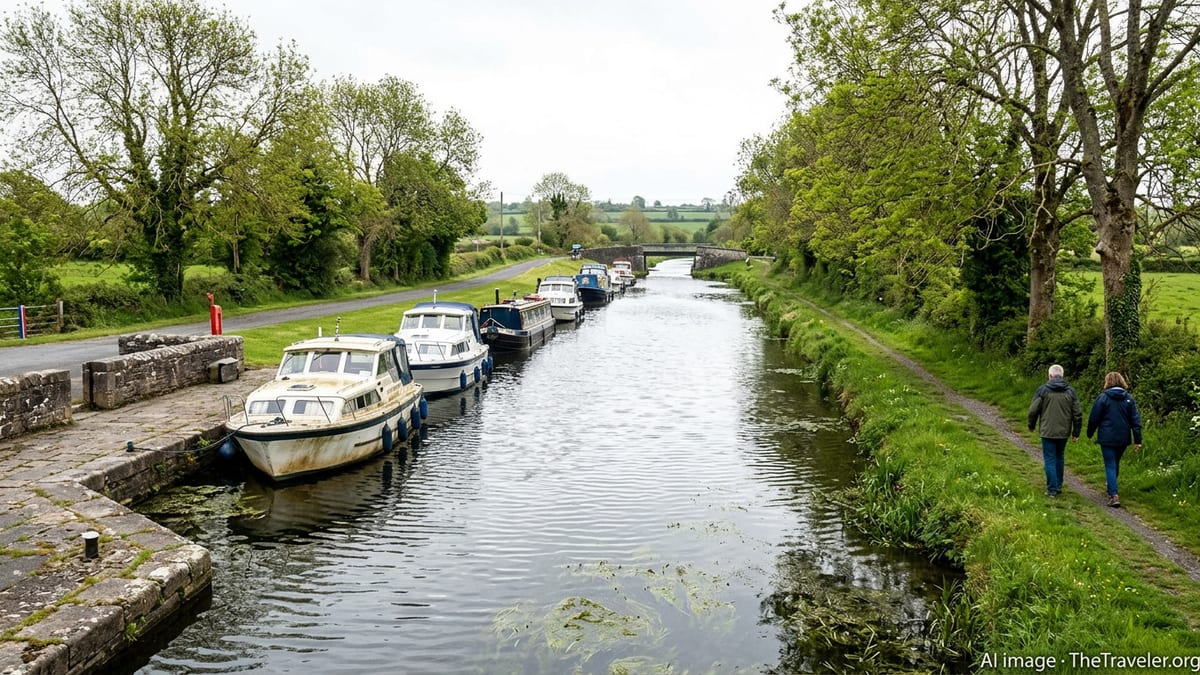
Cruise Operator Says Business Hit by Weed and Water Woes
Barrowline Cruisers, based at Vicarstown Harbour, has emerged as one of the most vocal critics of current conditions on the Barrow Navigation and the Grand Canal’s Barrow Line. The family-run business, which hires barges and offers cruising holidays linking the River Barrow with the wider canal network, says a mix of heavy weed growth, silted channels and erratic water levels has damaged boats and disrupted itineraries.
Speaking in recent months, owner Philip Crean described how propellers have become fouled by dense aquatic weed and how narrow, shallow sections have slowed journeys to a crawl. In peak summer weeks, when itineraries are tightly scheduled, delayed returns can mean cancelled bookings, refunds and reputational damage for a sector that relies heavily on word of mouth.
Barrowline argues that the problems are not isolated incidents but evidence of what they describe as years of underinvestment in everyday navigation maintenance. They say the issues have been repeatedly raised with Waterways Ireland and local representatives, but solutions have been slow to materialise at the scale and speed needed to give operators confidence for the coming season.
The concerns are particularly acute after a series of challenging years on the Barrow system, including periods of historically low groundwater levels that affected feeding sources for the canal and navigation, leaving sections difficult to traverse for larger craft.
Waterways Ireland Defends Record as Major Works Progress
Waterways Ireland, the cross-border body responsible for the Barrow Navigation and Grand Canal, strongly rejects suggestions of neglect. The agency points to a rolling programme of dredging, bank works, weed cutting and lock maintenance across the Barrow catchment, and notes that planning permission is in place for a five‑year dredging and maintenance scheme on the River Barrow in Laois.
Officials argue that they are working within tight environmental constraints. Low groundwater levels in sensitive sites such as Pollardstown Fen, which feeds both the Barrow Line and sections of the Grand Canal, have complicated water management, while ecological protections limit how and when dredging and extensive weed clearance can take place. Waterways Ireland says it has updated its weed management plan for 2026 and deployed extra cutting resources on the Barrow in recent seasons.
Significant engineering projects are also under way on the Laois section of the Barrow Line, including bridge works near Rathangan and restoration efforts in and around Vicarstown Harbour. A guided tour by Waterways Ireland engineers this month offered local residents and canal users a close look at new bank protections, quay repairs and heritage structure stabilisation that are intended to safeguard the canal’s long‑term future.
Nonetheless, cruise operators and boating groups say that while long‑term capital works are welcome, they do not always translate into immediate improvements to everyday cruising conditions. For holidaymakers arriving this spring and summer, they argue, reliable depths, clear channels and predictable journey times will matter more than big‑ticket infrastructure still in progress.
Local Representatives Urge Balance Between Tourism and Ecology
Laois councillors and national representatives have been pressing the issue for several years, warning that if navigation becomes unreliable, the region will lose out on a growing niche of slow‑travel tourism. They acknowledge the complexity of managing a historic waterway that is also a biodiversity corridor, but say that protection of habitats should not come at the expense of basic navigability on a designated navigation route.
At Vicarstown, where the Grand Canal’s grassy banks and restored harbour make it a popular stopping point for walkers and cyclists on the Barrow Blueway, there is broad agreement that the water must remain at the heart of the visitor experience. Local businesses, from pubs and guesthouses to activity providers, rely on passing boat traffic and the visibility that moored barges give to the village.
Community figures have called for a more transparent, joined‑up maintenance plan that sets clear service standards for cruise operators, anglers, paddlers and blueway users. They want local authorities, Waterways Ireland and tourism agencies to agree publicly on minimum navigation depths, regular weed surveys and a calendar of planned closures or delays so that operators can plan itineraries with greater certainty.
There is also a push for better communication on climate‑related constraints. As rainfall patterns shift and extreme weather events become more frequent, stakeholders say it is vital that boaters understand when environmental conditions, rather than budget or bureaucracy, are behind restricted operations on the canal.
Boaters Fear Another Season of Disruption
With the 2026 season approaching, Barrowline Cruisers and their peers are watching water levels, weed growth and maintenance bulletins closely. Memories are still fresh of recent summers when dense weed mats forced skippers to stop and clear propellers repeatedly, and when unexpected restrictions at locks or bridge sites created bottlenecks on what should be a leisurely rural cruise.
Holidaymakers booking multi‑day trips expect to be able to reach marquee stops such as Athy, Monasterevin and St Mullins on schedule. When sections become hard to navigate, operators may have to truncate routes, shift to less scenic stretches or bus guests around problematic reaches, undermining the sense of immersion that canal holidays are meant to provide.
Cruisers worry that if frustrations mount, customers will opt instead for better‑resourced waterways abroad or for land‑based breaks, depriving Laois and neighbouring counties of valuable visitor revenue. Some operators say they have already seen guests query online reviews and media coverage about canal conditions before confirming bookings for 2026.
Boating associations are urging Waterways Ireland to publish clear pre‑season status reports on the Barrow Line, detailing where dredging has been completed, what weed management is scheduled and how water levels are being monitored. They argue that even when conditions are not perfect, upfront information can help manage expectations and avoid disputes on the towpath.
Hopes for a Turning Point on the Barrow Line
Despite the tensions, there is cautious optimism among many stakeholders that 2026 could mark a turning point for the Laois section of the Barrow Line. The combination of new capital works, refined maintenance strategies and heightened political attention has raised the profile of the canal far beyond its quiet banks.
Barrowline Cruisers has repeatedly stressed that its goal is not confrontation but collaboration: a waterway that is both ecologically healthy and commercially viable. The company has participated in planning consultations and says it stands ready to support pilot projects, from targeted dredging to trial weed‑cutting regimes, that can be monitored for environmental impact while delivering tangible benefits to navigation.
For now, the spotlight is firmly on how quickly promised improvements can be felt on the water. As spring advances and the first hire boats of the year turn out of Vicarstown Harbour, the experience of those early crews will be closely watched. If they report smoother passages and fewer delays, confidence in the Barrow Line’s future as a flagship inland cruising route could begin to recover.
If not, the chorus of concern from Laois’s boating community is likely to grow louder, reinforcing a message that has echoed along the Grand Canal for years: without consistent, visible maintenance, one of Ireland’s most characterful waterways risks slipping off the map of serious cruising destinations.