

More news on this day
LATAM Airlines has been certified as a four-star carrier in the Skytrax World Airline Star Rating, a milestone that makes it the only airline in Latin America to hold this level of recognition and cements the group’s bid to set a new benchmark for service quality in the region.
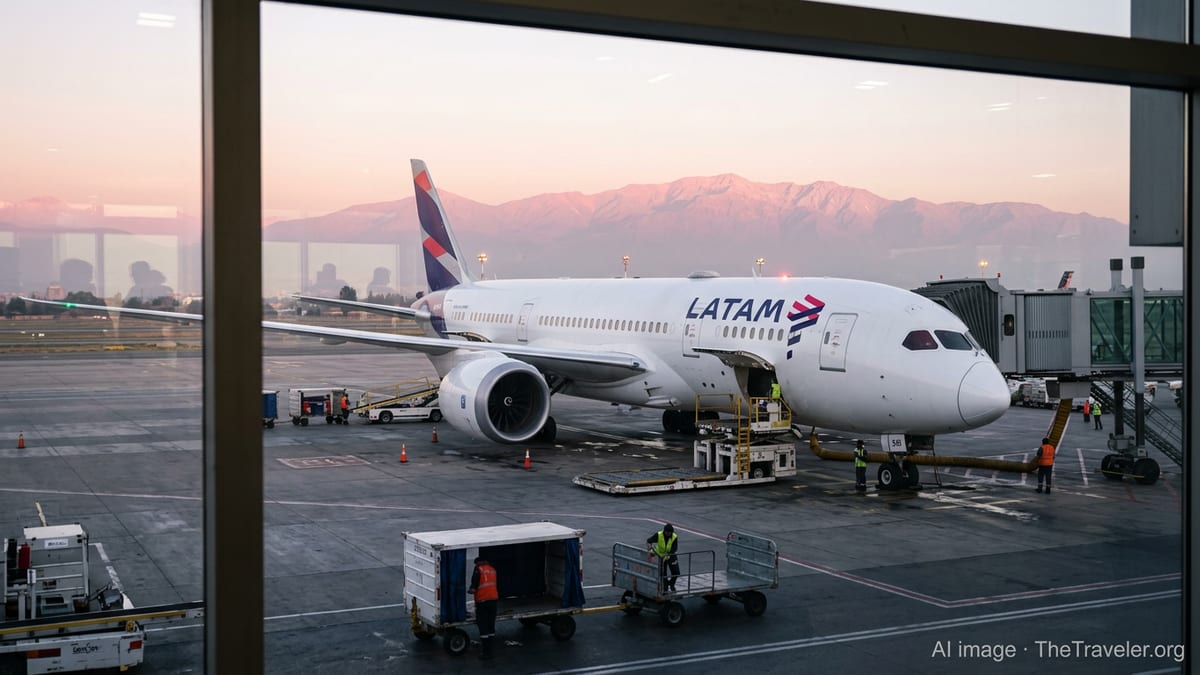
Skytrax Recognition Marks a New Benchmark for the Region
The four-star certification follows an in-depth audit by UK-based Skytrax, which evaluates airlines on hundreds of criteria spanning customer service, cabin comfort, inflight catering, digital tools, ground experience, and operational consistency. The latest assessment, completed at the end of 2025 and formally announced in early March 2026, elevates LATAM into a select group of around 70 airlines worldwide meeting this standard.
For Latin America, the move is particularly significant. LATAM has become the first and currently only carrier from the region to achieve four stars in the Skytrax World Airline Star Rating, placing it closer to long-established global leaders in Europe, Asia, and the Middle East. The award underscores how the group has leveraged its scale across South America to push up service standards in markets long associated more with aggressive low fares than with premium experience.
Skytrax’s rating system is among the most closely watched quality benchmarks in commercial aviation, used by corporate travel buyers, tourism boards, and frequent flyers to compare airlines beyond price and network. LATAM’s elevation offers fresh validation of the group’s post-restructuring strategy, which has focused on simplifying its fleet, strengthening hubs in Santiago, São Paulo, Lima and Bogotá, and reinvesting in the onboard and ground product.
Service Upgrades Across Cabins and Hubs
The four-star rating caps several years of upgrades across LATAM’s cabins and airport facilities. In long-haul business class, the airline has steadily rolled out new-generation seats with direct aisle access, larger entertainment screens, and improved privacy, particularly on its Boeing 787 and 777 fleet operating key routes between South America, North America, and Europe. Refreshed soft products, including redesigned bedding and regionally inspired menus featuring South American ingredients, have aimed to distinguish the carrier’s premium offering.
In economy cabins, LATAM has concentrated on consistency and digital convenience rather than radical reconfiguration. The airline has expanded streaming entertainment, improved seat power availability on newer aircraft, and invested in more intuitive mobile and web platforms for booking, check-in, and disruption management. For leisure travelers connecting across multiple South American countries, these incremental improvements are designed to reduce friction on complex itineraries.
On the ground, the group has invested in flagship lounges in Santiago and São Paulo, reworked priority check-in and boarding flows for elite and premium passengers, and upgraded signage and wayfinding at key hubs. The Skytrax audit also examined frontline staff training and service recovery protocols, areas where LATAM has sought to show it can combine operational scale with more personalized assistance when irregular operations occur.
Performance, Sustainability and Reputation in a Competitive Market
The Skytrax recognition comes against a backdrop of rising competition and scrutiny in Latin American aviation. Independent operational data from analytics firm Cirium has consistently positioned LATAM among the world’s more punctual global airlines in recent years, with on-time performance often above 80 percent across hundreds of thousands of flights. That reliability has been a central pillar of the carrier’s push to attract higher-yield corporate and connecting traffic.
At the same time, LATAM has placed sustainability at the heart of its brand narrative. The group has been recognized by leading sustainability indices for its environmental and governance performance, ranking as one of the most sustainable airline groups in the Americas. Investment in more fuel-efficient aircraft, waste reduction initiatives, and targeted conservation partnerships has allowed LATAM to align quality improvements with broader environmental expectations from regulators, investors, and environmentally conscious travelers.
Yet the airline’s reputation has not been without challenges. Consumer protection agencies across South America have logged rising complaint volumes related to delays, rebookings, and baggage issues, particularly during peak travel periods and in the wake of rapid post-pandemic growth. Balancing rapid capacity expansion with consistently high service delivery remains a key test for LATAM, even as international rating agencies now acknowledge substantial progress at a structural level.
Implications for Passengers and Regional Aviation
For travelers, LATAM’s new four-star status offers a clearer quality signal when choosing between carriers in a fragmented regional market that includes full-service airlines, hybrids, and ultra-low-cost operators. While the Skytrax rating does not guarantee a flawless journey, it indicates that the airline’s product and service have been independently benchmarked at a higher global standard, from check-in and lounges to onboard comfort and after-sales support.
The upgrade could also influence how global alliances, corporate travel programs, and tourism boards position South American connectivity. LATAM, which already holds multiple Skytrax World Airline Awards for categories such as Best Airline in South America and Best Cabin Crew in the region, now brings a four-star platform to partnerships with North American and European carriers, strengthening its appeal as a preferred regional connector for long-haul networks.
Within Latin America, the move may add pressure on rival airlines to accelerate their own product and service upgrades. As passenger expectations in the region converge with global norms, especially among younger, digitally savvy travelers, the gap between carriers that invest in quality and those that compete solely on price could widen. LATAM’s four-star recognition is likely to be used heavily in marketing campaigns, but it also raises the bar the airline will be expected to maintain as operational conditions and customer expectations continue to evolve.
A Strategic Milestone in LATAM’s Post-Restructuring Journey
The Skytrax four-star certification marks a symbolic milestone in LATAM’s recovery and transformation after its exit from Chapter 11 restructuring. Having stabilized its balance sheet, grown traffic to record levels, and tightened its route network around profitable hubs, the carrier is signaling that the next phase of its strategy is centered on service differentiation rather than scale alone.
Executives are likely to point to the rating as validation of years of investment in fleet renewal, staff training, digital platforms, and customer experience initiatives that were not always visible to travelers during the turbulence of recent years. For employees across the group, the recognition offers an external endorsement that can be used internally to reinforce a culture of service and operational discipline.
For now, LATAM’s four-star status stands out as a rare bright spot in a region where many airlines face currency volatility, regulatory complexity, and uneven infrastructure. Whether it can maintain and build on this new standard will be closely watched by passengers, competitors, and industry analysts alike as the airline seeks to consolidate its position as Latin America’s reference carrier for aviation excellence.