

More news on this day
Malaysia has confirmed that the latest deep-sea search for Malaysia Airlines flight MH370 in the southern Indian Ocean has ended without locating the aircraft’s wreckage, leaving one of modern aviation’s most haunting mysteries unresolved twelve years after the jet disappeared en route from Kuala Lumpur to Beijing.
Newest Search Draws a Blank After Months at Sea
In a statement issued over the weekend, Malaysia’s Air Accident Investigation Bureau said a fresh seabed survey conducted between March 2025 and January 2026 failed to uncover any debris field or wreckage linked to flight MH370. The operation focused on a refined sector of the southern Indian Ocean identified through updated drift modelling and satellite analysis but yielded no confirmed traces of the missing Boeing 777.
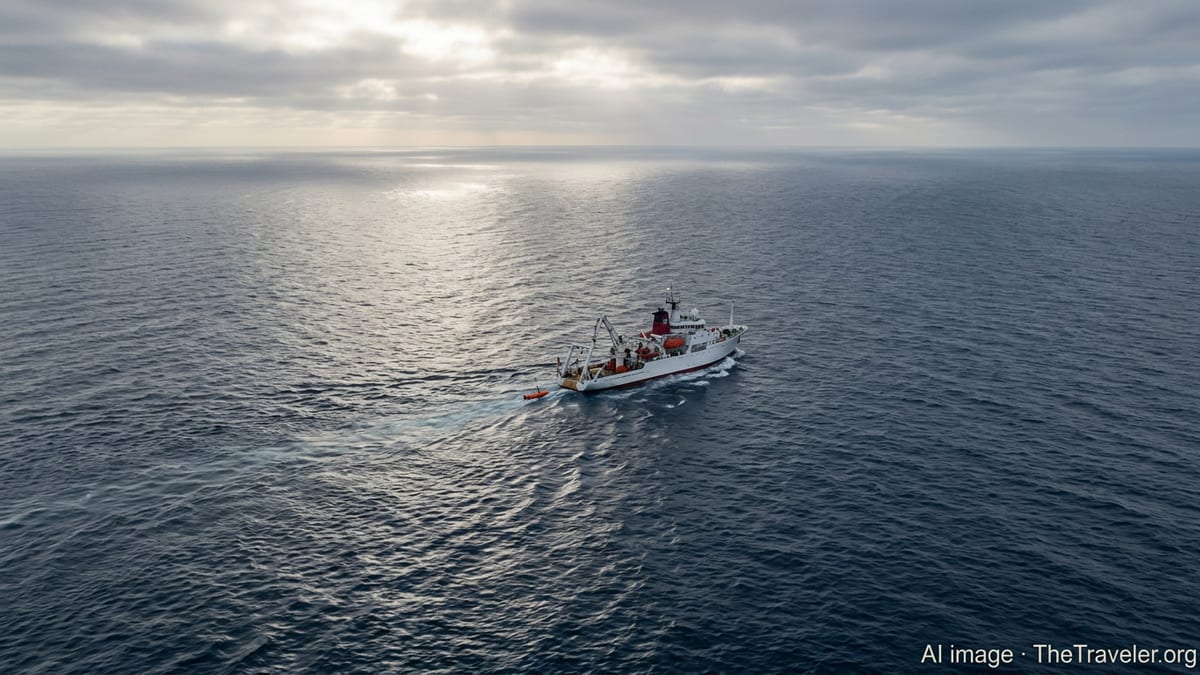
The search was carried out under a commercial arrangement with US-based marine robotics firm Ocean Infinity, which deployed an advanced fleet of autonomous underwater vehicles from a support vessel operating roughly 1,900 kilometers southwest of Perth. Authorities said the company scanned more than 7,500 square kilometers of seabed in water depths reaching several thousand meters.
Under the contract’s “no find, no fee” terms, Ocean Infinity would only have been paid if it located the aircraft. With no wreckage discovered, the mission has formally concluded for now, although officials emphasized that the case remains open and that they are prepared to consider further operations if compelling new evidence emerges.
Transport officials in Kuala Lumpur reiterated that Malaysia continues to coordinate closely with Australia and China, which have been core partners in the search since 2014. All three governments have publicly backed the latest technical assessments, even as they acknowledge the deepening frustration of families who are still waiting for answers.
Tripartite Effort Builds on a Decade of Searches
The latest mission is the most recent chapter in a multinational effort that began almost immediately after MH370 vanished from radar in the early hours of March 8, 2014. Initial surface and air searches in the South China Sea and Andaman Sea soon shifted to the remote southern Indian Ocean after investigators concluded the jet had diverted sharply from its planned route and flown for several hours before likely crashing into open ocean.
Working under a tripartite framework, Malaysia, Australia and China coordinated what became one of the largest and most complex underwater searches in aviation history. Between 2014 and early 2017, teams mapped and combed some 120,000 square kilometers of seabed, an area nearly the size of Greece, but failed to find the main wreckage.
In 2018, the governments supported a separate privately funded mission, also led by Ocean Infinity, which added more than 100,000 square kilometers of search coverage without success. The bulk of confirmed MH370 debris has instead been recovered in small fragments that washed ashore on Indian Ocean islands and along the east coast of Africa, offering only partial clues about the jet’s final flight path.
For Australian authorities, whose search and rescue zone encompassed much of the suspected crash area, the renewed effort represented both a continuation of earlier work and a test of how far deep-sea technology has advanced over the past decade. Chinese officials, whose citizens made up the largest group of passengers on board, have likewise maintained a formal role in reviewing data and supporting bereaved families.
Families Mark Twelve Years With Renewed Calls to Continue
The latest announcement comes as relatives of the 239 people on board mark the twelfth anniversary of the jet’s disappearance, holding memorials in Malaysia, China, Australia and several other countries. Many family members welcomed the decision to restart the hunt last year but say the unsuccessful outcome only strengthens their determination to keep pressing for a definitive answer.
Groups representing next of kin in China and Malaysia have urged authorities not to treat the conclusion of this search phase as the end of the investigation. In joint statements, they called on Malaysia’s government to swiftly approve any request from Ocean Infinity or other operators for an extension, arguing that even negative search results help refine the models that guide future missions.
For families who have spent more than a decade navigating grief, uncertainty and conspiracy theories, the latest setback is emotionally heavy but not entirely unexpected. Several relatives said they had prepared themselves for the possibility that the aircraft might still not be found, given the vastness of the search area and the technical challenges of operating in deep waters far from shore.
Advocacy groups also stressed that the search is about more than personal closure. They argue that conclusively locating the wreck and recovering flight recorders, if still readable, remains essential for understanding what happened and for ensuring that international aviation safety systems are robust enough to prevent a similar disappearance.
Technology Advances, but the Ocean Keeps Its Secrets
Investigators say the most recent campaign benefited from dramatic improvements in deep-sea mapping and autonomous vehicle technology since the first searches a decade ago. Modern underwater drones can operate longer, capture higher resolution sonar imagery and navigate more complex terrain than earlier generations, raising hopes that a renewed effort could finally pinpoint MH370’s resting place.
Despite these advantages, the southern Indian Ocean remains one of the most remote and inhospitable environments on Earth, with strong currents, unpredictable weather and vast underwater ridges and escarpments that complicate sonar interpretation. Any small miscalculation in the aircraft’s final path can place the wreckage hundreds of kilometers outside the most likely search zone.
Technical teams from Malaysia, Australia and China will now pore over the latest data to see whether subtle anomalies or unexplored gaps suggest other areas that merit a closer look. Specialists say that even a negative search helps to eliminate possibilities, narrowing the focus for any future mission that might again rely on performance-based contracts tied to verifiable results.
While the authorities have not committed to a timeline or location for another search, they continue to work with independent experts who have produced updated drift analyses based on debris finds and refined interpretations of satellite communications data recorded in the hours after MH370 lost contact.
Unresolved Mystery Leaves Lasting Mark on Aviation
Although the latest search has drawn to a close without answers, MH370 has already reshaped global aviation in visible ways. Airlines and regulators have since tightened real-time aircraft tracking requirements over remote oceanic regions, expanded the use of satellite communications and pushed for new standards on the long-term transmission and storage of flight data.
For travelers, many of these changes are largely invisible, embedded in cockpit systems and airline operations manuals rather than in cabin routines. Yet industry experts say they form an important legacy of a disaster that exposed how, in 2014, a modern wide-body jet could slip from conventional radar coverage and effectively vanish in one of the least monitored corners of the globe.
Malaysia’s transport ministry has reiterated that its commitment to uncovering the truth about MH370 remains unchanged, echoing earlier pledges by Australia and China. Officials say they will not rule out another search if new, credible information points to a high-probability area where the aircraft might be found.
Until then, the disappearance of MH370 continues to stand as a stark reminder of both the power and the limits of modern technology. For the aviation community and for families who still leave messages at memorials in Kuala Lumpur, Beijing and Perth, the hope endures that the next time search vessels head back into the southern Indian Ocean, they will finally return with answers.