

More news on this day
Latin America’s adventure travel market has swelled to an estimated 39 billion dollars in annual spending, with new research indicating that culture-focused, nature-based and exploratory trips across the region are reshaping global tourism demand.
Get the latest news straight to your inbox!
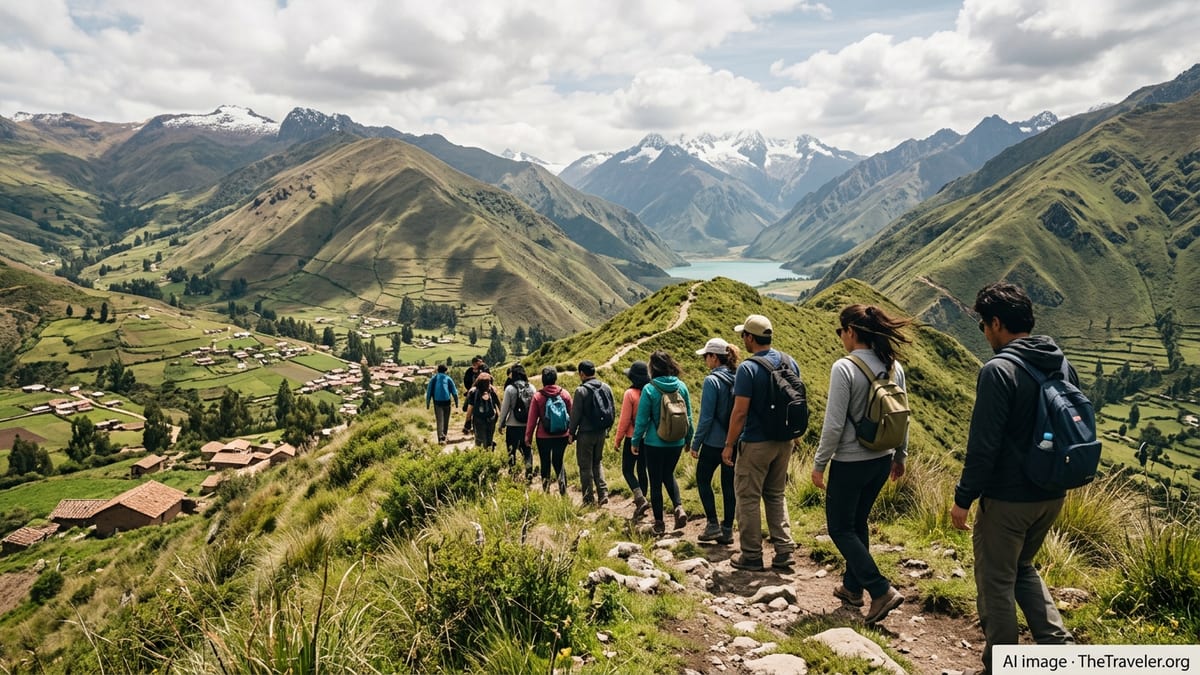
Adventure Spending Becomes a Global Demand Driver
Recent research from the Adventure Travel Trade Association indicates that Latin America’s outbound travelers now account for roughly 39 billion dollars in annual spending on trips that include adventure components, such as nature immersion, active pursuits and cultural encounters. This figure highlights how the region has become one of the most dynamic sources of demand for global adventure experiences, complementing its long-standing role as a destination for international visitors.
Market analysis from firms tracking the sector shows that Latin America is emerging as a leading region for adventure tourism revenues, with one 2024 outlook noting that it already generates well over 16 billion dollars in regional adventure travel receipts and is on track to surpass 37 billion dollars by 2030. Against the backdrop of a global adventure tourism industry that is expanding rapidly, Latin America’s combined position as both a source and host of adventure travelers is beginning to shift competitive dynamics in destinations from the Andes and the Amazon to Southern Europe and Southeast Asia.
Broader travel and tourism data underline the scale of this transformation. Regional tourism market estimates suggest that Latin America’s overall travel and tourism economy is expected to exceed 110 billion dollars in 2025 and grow steadily toward 2030, with adventure and nature-based segments capturing a disproportionate share of that expansion. Analysts describe adventure offerings as a “growth engine” within this wider recovery, supported by rising middle-class incomes, improved air connectivity and the rapid adoption of online booking platforms.
At the same time, online travel agencies and digital platforms are amplifying the reach of adventure products. A recent assessment of the Latin American online travel market valued the segment at more than 37 billion dollars in 2025, reflecting how consumers are increasingly discovering and purchasing complex itineraries that bundle flights, boutique stays and guided activities in a single transaction.
Culture, Nature and Soft Adventure Lead the Charge
Industry research points to “soft adventure” as the defining characteristic of Latin America’s boom. Rather than focusing solely on high-risk pursuits, the majority of travelers engaging in adventure spending are booking experiences that combine moderate physical activity with cultural immersion and time in nature. This includes guided hikes, wildlife watching, community-based tourism, food and music tours, and visits to archaeological and historical sites.
Countries such as Costa Rica, Peru, Chile and Mexico are frequently highlighted in market and policy reports as examples of how protected natural areas and cultural heritage can be leveraged into sustainable adventure offerings. Costa Rica’s national parks and biodiversity, the Inca Trail and Sacred Valley in Peru, Patagonia’s trekking circuits in Chile and Argentina, and Mexico’s cenotes, volcanoes and highland villages all feature prominently in international tour catalogues and booking data for nature and culture-based experiences.
Research from global tourism bodies and regional development institutions emphasizes that adventure travelers tend to stay longer and spend more per trip than average visitors, particularly when itineraries include locally owned lodges, guiding services and cultural workshops. This pattern is encouraging governments and private operators to invest in trail infrastructure, visitor centers, safety standards and training for local guides, so that communities can capture a greater share of the value generated by the 39 billion dollar adventure segment.
Analysts also note that Latin American travelers themselves are seeking similar combinations of activity and culture when they travel abroad. The Adventure Travel Trade Association’s recent segmentation work describes a large cohort of “experience samplers” in the region who prefer itineraries that mix outdoor activities, food, history and relaxation. This behavior is contributing to rising demand for adventure-style products in destinations from southern Europe to North Africa and Asia, as Latin American outbound travelers look for experiences that mirror, or extend, those available at home.
Recovery, Connectivity and New Source Markets
The adventure travel boom is taking shape in the context of a broader tourism rebound across the Americas. According to recent UN tourism barometer data and regional industry reports, international arrivals to the Americas recovered to around 90 percent of pre-pandemic levels in 2023 and continued to rise into 2024, with several Latin American destinations surpassing 2019 volumes. This recovery is supported by expanded air capacity, visa facilitation measures in selected markets and sustained investment in tourism infrastructure.
Within Latin America, large source markets such as Brazil and Mexico, along with mid-sized markets including Argentina, Chile and Colombia, are emerging as important contributors to outbound adventure demand. Industry outlooks describe the region as a “mosaic” of markets with differing levels of income, connectivity and tourism maturity, but with a shared trend toward experiential, higher-value travel. Growing middle classes and an increasingly digital-savvy population are encouraging more consumers to plan trips that include trekking, diving, rafting, wildlife encounters and community visits.
Improved connectivity is a critical enabler. New regional flight routes, low-cost carriers and enhanced links to long-haul hubs in Europe and North America are making it easier for Latin American travelers to reach both intra-regional adventure hotspots and distant destinations. At the same time, destinations within Latin America are investing in smaller airports, port facilities for expedition and small-ship cruises, and road upgrades that improve access to remote natural areas that underpin the adventure offer.
Tourism-focused investment reports indicate that Latin America and the Caribbean attracted several hundred tourism-related foreign direct investment projects between 2018 and 2023, with billions of dollars directed to hotels, resorts, eco-lodges and mixed-use developments. A growing share of this investment is oriented toward nature and experience-led concepts rather than solely mass-market beach tourism, which aligns with the preferences of adventure-oriented travelers.
Sustainability, Community Benefits and Emerging Pressures
The rapid expansion of adventure tourism is also creating new pressures on ecosystems and communities. Policy papers and academic analyses from the region highlight concerns about overcrowding on popular trekking routes, stress on fragile high-altitude and marine environments, and uneven distribution of tourism income. In some cases, local residents have raised questions about the affordability of housing and services in destinations where tourism has grown faster than underlying infrastructure.
In response, tourism strategies across several Latin American countries place increasing emphasis on sustainability frameworks, carrying-capacity assessments and certification schemes for operators. Nature-based lodges and tour companies are promoting low-impact practices, including limits on group sizes, controlled access to sensitive sites, partnerships with conservation projects and the use of local supply chains. These measures are presented in public documentation as ways to ensure that the 39 billion dollar adventure segment supports long-term environmental stewardship rather than undermining it.
Community-based tourism features prominently in many national and regional plans. Programs that channel visitors to indigenous territories, rural villages and protected areas are being structured to give local organizations an active role in managing tourism flows and capturing revenue. In destinations such as the Andean highlands and Amazonian regions, this often involves homestays, guided cultural walks, traditional cuisine and artisan workshops that allow travelers to engage more deeply with host communities.
Observers note that managing growth will be a central challenge over the coming decade. As Latin America’s adventure reputation continues to strengthen and global demand for immersive experiences rises, destinations will have to balance marketing ambitions with limits on visitor numbers, climate resilience planning and investments in public infrastructure ranging from waste management to trail maintenance.
What Latin America’s Boom Means for Global Tourism
The scale of Latin America’s 39 billion dollar adventure travel boom is beginning to influence product development and marketing strategies worldwide. Tour operators in Europe, Asia and Africa are tailoring itineraries with Latin American outbound travelers in mind, emphasizing combinations of soft adventure, local culture and gastronomy that mirror the preferences identified in recent research. Cruise lines, small-ship operators and overland specialists are also refining shore excursions and land programs to highlight hiking, wildlife encounters and local community visits.
Global tourism forecasts suggest that adventure and experience-driven travel will capture an increasing share of international trip spending through 2030 and beyond. Latin America’s dual role as a major adventure destination and a fast-growing source of adventure-oriented outbound travelers positions the region as a strategic player in this shift. As more travelers from the region seek meaningful, active and culturally rich experiences abroad, their choices are likely to influence investment patterns, route planning and destination branding far beyond Latin America itself.
For many destinations worldwide, understanding the tastes of Latin America’s adventure travelers is becoming as important as catering to traditional source markets in North America and Europe. As online platforms, social media and word-of-mouth networks amplify stories from treks in Patagonia, jungle lodges in the Amazon or surf towns in Central America, a feedback loop emerges in which Latin American experiences both shape and respond to global expectations of what adventure travel should look like.
Market observers indicate that this feedback loop is pushing the global industry toward more localized, small-group and responsible models of tourism. In that sense, Latin America’s adventure travel surge is not only a 39 billion dollar economic story, but also a sign of how culture, nature and exploration are redefining what modern travelers seek from the world.