

More news on this day
Flight disruptions intensified at Los Angeles International Airport on April 10, with 69 delayed departures and arrivals affecting major U.S. and international carriers during an already strained spring travel period.
Get the latest news straight to your inbox!
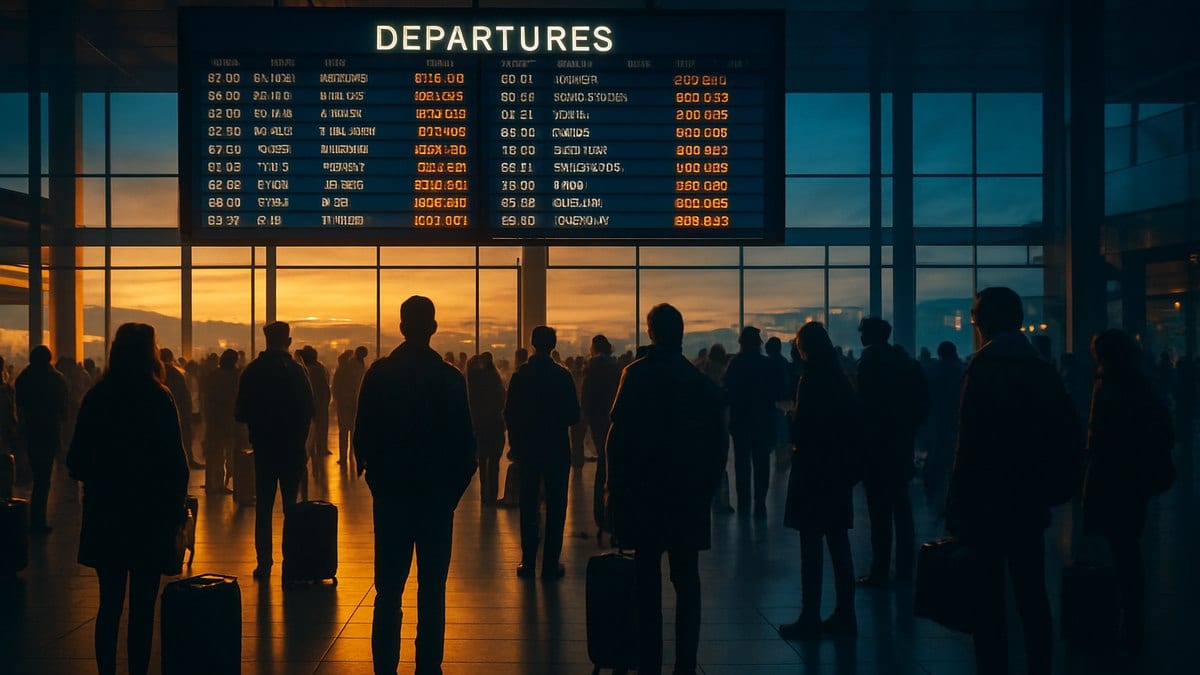
Spike in Delays Hits Major Airlines at LAX
Publicly available tracking data for April 10 indicate that Los Angeles International Airport recorded 69 delayed flights across its domestic and international network, with the impact concentrated among large U.S. carriers and their partners. The total added another difficult day to a month already marked by unstable operations at major hubs nationwide, including New York, Atlanta, Chicago and Miami.
Industry-focused outlets tracking national performance reported that, on the same date, thousands of flights across the United States experienced delays or cancellations, underscoring that LAX’s problems formed part of a wider system under pressure. While Los Angeles did not lead the nation in raw disruption totals, the airport’s role as a key transpacific and coast-to-coast gateway meant even modest spikes in delays reverberated through airline networks.
Operational data show that the late-running services at LAX on April 10 were spread across peak morning and evening periods, when banks of departures and inbound connections are tightly timed. This pattern heightened the risk of missed connections for transit passengers and put additional strain on airline efforts to reposition aircraft and crews for subsequent flights.
Carriers most affected included large network airlines that rely heavily on LAX for both long-haul and high-frequency domestic routes. While each delay may have only stretched schedules by minutes or an hour, the cumulative effect contributed to rolling knock-on impacts that extended into late evening departure waves.
Part of a Broader April Turbulence in U.S. Air Travel
The April 10 delays at LAX unfolded against a backdrop of sustained turbulence across the U.S. aviation system. Recent analyses of early April performance point to several consecutive days of elevated disruption nationwide, driven by a mix of storm systems, airspace congestion and already-tight airline schedules.
Travel industry reports for the week of April 8 describe more than three thousand flight delays and well over one hundred cancellations in a single day across U.S. airports, including major hubs such as Atlanta, Chicago, New York and Los Angeles. These figures suggest that LAX’s 69 delayed flights were one strand in a much larger pattern of stress on carriers and airports.
Commentary from aviation analysts highlights that many airlines entered the spring travel season with high aircraft utilization and limited slack in staffing, particularly for pilots, cabin crew and maintenance teams. Under such conditions, local weather challenges or air traffic control constraints in one region can ripple quickly through hub airports like Los Angeles, amplifying the scale of disruption seen on days such as April 10.
The experience at LAX also reflects longer-term trends documented in federal transportation statistics, which show that large hub airports have absorbed a growing share of delay minutes in recent years. As passenger volumes recover and expand, even incremental deterioration in on-time performance can translate into significant passenger impact on busy days.
Ground Operations and Terminal Experience Temper the Impact
Despite the uptick in flight delays, reports from April 10 indicate that conditions inside the terminals at LAX remained comparatively stable. Coverage from travel and business outlets on that date noted that security screening wait times often stayed below the 15-minute mark across much of the day, a sharp contrast with the long queues associated with some past periods of disruption.
Recent reporting in early April has attributed these shorter waits in part to more consistent staffing at Transportation Security Administration checkpoints and the smoothing effect of infrastructure upgrades throughout the airport’s central terminal area. For passengers, this meant that while departure boards showed a rise in late flights, the process of clearing security and reaching gates was generally less chaotic than during previous waves of disruption.
Airport-focused publications have also pointed to ongoing investment in terminal modernization and airfield improvements at LAX as factors that can help reduce operational bottlenecks during busy periods. Improved gate management, expanded hold rooms and enhanced baggage systems can all play a role in limiting the passenger-facing impact when flight schedules begin to slip.
Nonetheless, the April 10 pattern shows that smooth experiences at security and check-in do not fully insulate travelers from wider network stresses. Once aircraft and crews are out of position, delays can cascade even when airport facilities are functioning relatively well.
Travelers Confront Missed Connections and Rebooking Challenges
For passengers, the 69 delayed flights at LAX translated into missed connections, extended time in terminals and, in some cases, overnight stays when late arrivals complicated onward travel. Consumer travel platforms tracking the April disruptions reported a rise in rebooking activity across major carriers, as passengers sought alternative routings through other hubs or later departures out of Los Angeles.
Guidance from passenger-rights organizations emphasizes that, in such scenarios, travelers are generally encouraged to monitor their flight status through airline apps and airport displays, to respond quickly when rebooking options appear. Many carriers have increasingly shifted support toward digital channels and self-service tools during disruption events, which can benefit passengers able to navigate those systems but may leave others relying on traditional customer service lines.
Analysts note that, when delays stem from weather or airspace constraints beyond an airline’s direct control, eligibility for monetary compensation is often limited under current U.S. rules. However, travelers may still be entitled to assistance such as meal vouchers, hotel accommodation and alternative flights, depending on carrier policies and the precise cause of the disruption.
The clustering of delays at hub airports like LAX also raises concerns about equity in travel experiences. Passengers with flexible schedules, elite status or access to premium lounges may find it easier to absorb disruption, while budget-conscious flyers and families with tight connections can face disproportionate stress when operations falter.
What April 10 Signals About LAX’s Vulnerabilities
The disruption pattern at LAX on April 10 underscores how even a mid-sized spike in delays can reveal underlying vulnerabilities in the airport’s role within the national air network. As one of the country’s busiest international gateways, LAX operates with high runway and gate utilization across much of the day, leaving limited room to recover when upstream issues arise.
Recent policy discussions around aviation reliability have highlighted factors such as air traffic control staffing, airline scheduling practices and infrastructure capacity at major hubs including Los Angeles. The April 10 delays fit into a wider conversation about how to balance growing passenger demand with the need for resilience in the face of storms, technology outages or federal budget uncertainty.
Observers also point to LAX’s complex mix of domestic, transcontinental and long-haul international flights, which can complicate recovery when delays accumulate. Long-range services typically operate with fewer daily frequencies, making rebooking more difficult for affected passengers, while short-haul routes can see rapid schedule adjustments that ripple quickly through regional networks.
As the busy late-spring and summer travel periods approach, the April 10 experience serves as an indicator of how quickly conditions at LAX can shift from manageable to strained. For airlines, airport managers and passengers alike, the day’s 69 delayed flights offer a snapshot of the challenges facing one of the world’s most important aviation hubs during a period of heightened uncertainty for air travel.