

More news on this day
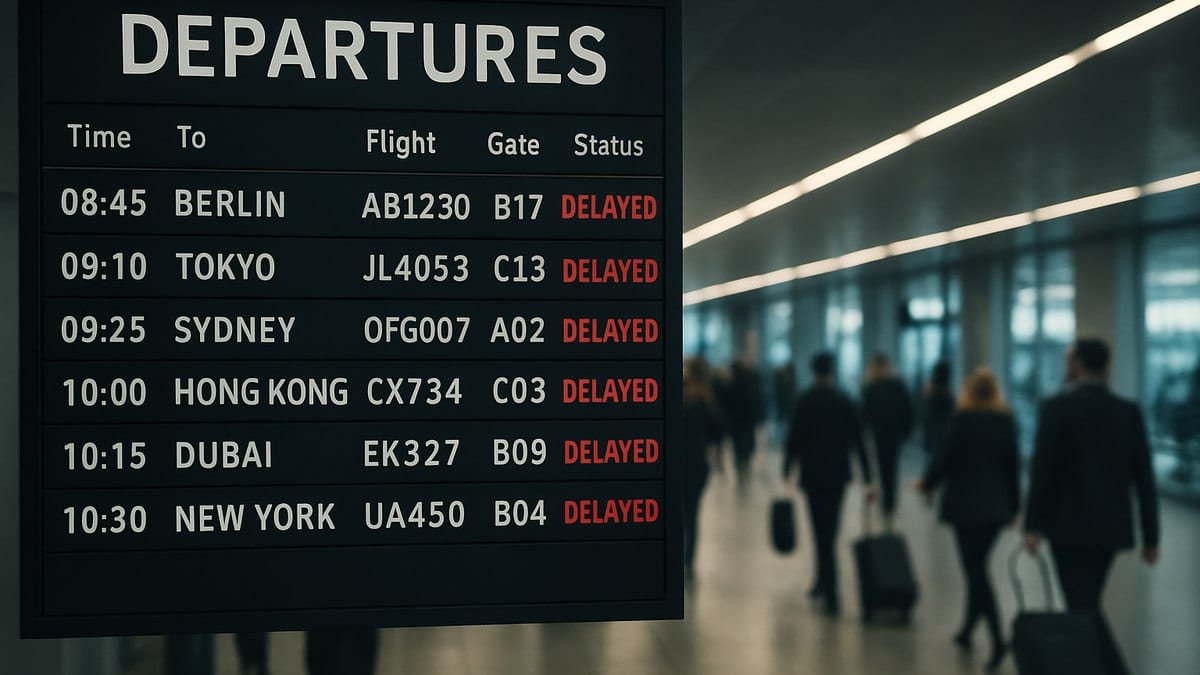
Flyers moving through Los Angeles International Airport on Friday encountered a fresh wave of delays as tightly scheduled flight banks, high spring demand and broader U.S. network disruptions converged across major carriers.
Get the latest news straight to your inbox!
Backups at a Key West Coast Hub
Publicly available flight tracking data and airline status pages for April 10 indicate clusters of late departures and arrivals at LAX across several large domestic airlines, including American, Delta, United and Alaska. While most flights continued to operate, many were running behind schedule, contributing to longer waits at gates and crowded boarding areas during peak morning and midday banks.
Los Angeles International is one of the country’s busiest connecting hubs, with no single airline holding a dominant share and the three largest network carriers each controlling less than one fifth of the market. This fragmented landscape typically gives travelers more choice, but on days of widespread disruption it can also mean that delays ripple through multiple terminals at once as different airlines struggle with the same weather, traffic and staffing constraints.
Terminal configurations add another layer of complexity. Alaska and its regional partners, for example, share facilities with other carriers, while American, Delta and United anchor their own heavily banked operations in separate terminals. When multiple banks are affected on the same day, security queues, ramp movements and gate turnover all slow, feeding back into further schedule slippage.
Reports from national aviation trackers on Friday highlighted elevated delay counts across the United States, with thousands of flights arriving late and a smaller but notable number canceled. LAX’s role as a transcontinental and transpacific gateway means that even modest schedule upsets can cascade quickly, as late inbound aircraft miss their planned departure windows and crews bump up against duty limits.
Major Carriers Confront Systemwide Strain
Friday’s disruptions at LAX are part of a broader pattern of strain across North American airlines this spring. Industry performance data compiled for March showed on time arrival rates slipping several percentage points month over month for most large U.S. carriers, reflecting tighter schedules, high aircraft utilization and the lingering effects of winter operational challenges carrying into the shoulder season.
Recent analyses of airline punctuality show that even the best performing North American carriers are delivering on time arrivals for roughly eight out of ten flights, leaving a significant minority affected by delays. American, Delta, United and Alaska all sit within a relatively narrow band of performance, but when traffic spikes on Fridays and around holidays, those averages translate into substantial numbers of late flights at big hubs such as LAX.
Operational data made public by the U.S. Department of Transportation for prior months underscore the vulnerability of tightly banked hub operations. Instances of multi hour tarmac delays, while rare, tend to cluster around large connecting airports when weather or air traffic constraints reduce capacity just as peak waves of departures are scheduled to push out. While Friday’s issues at LAX did not reach that level of severity in early data, they fit into the same pattern of knock on effects when aircraft and crews are scheduled with little slack.
Compounding matters, fee increases and cost cutting initiatives announced by several major airlines in recent days have kept carriers in the spotlight for reasons unrelated to punctuality. For travelers caught in delays at LAX on Friday, frustration over late departures is occurring alongside a broader conversation about rising ancillary fees and the overall value offered by the largest U.S. carriers.
Friday Patterns and Peak Travel Pressure
Historically, Fridays rank among the most challenging days for airline reliability, particularly in the late afternoon and evening when a week’s worth of compounding disruptions intersect with heavy leisure and business demand. Data visualizations produced from millions of recent U.S. flight records show significantly higher odds of delay or cancellation on Friday evenings, with some low cost carriers experiencing disruption rates above fifty percent during the busiest periods.
LAX is particularly exposed to this weekly pattern because of its extensive network of transcontinental and medium haul flights that depend on tight aircraft turns. Flights from the East Coast and Midwest that encounter morning or mid day weather disruptions arrive in Los Angeles behind schedule, narrowing the margin for their next departure. By late afternoon local time, even small additional air traffic control restrictions or minor technical issues can push a sequence of flights deeper into delay.
Traveler anecdotes circulating on social platforms in recent weeks describe late night departures out of LAX where boarding completes only for aircraft to remain parked for extended periods while crew or maintenance issues are resolved. These individual experiences align with the broader statistical picture of a system that has become more prone to bottlenecks when conditions are less than ideal, especially at already congested hubs.
On Friday, early day route specific data for LAX showed several departures operating near or behind scheduled push times on popular domestic corridors, an indication of the tight margins under which airlines are running their fleets. As late running aircraft stack up on the ground and in arrival streams, even flights that technically depart within a short buffer of schedule can translate into missed connections and longer overall journey times for passengers.
What Travelers at LAX Are Encountering
For passengers moving through LAX during this latest wave of delays, the most immediate impacts are longer lines at check in counters, heavier crowds in gate areas and a general scramble to rebook tight connections. With multiple major carriers experiencing schedule pressure at the same time, options to move to an earlier or alternate departure can quickly dry up, especially on heavily traveled domestic routes.
Publicly available flight status pages on airline and airport sites show that many delayed services are still operating, but often with departure times pushed back anywhere from minutes to more than an hour. This pattern leads to rolling boarding time changes on departure boards, requiring travelers to monitor updates closely and, in some cases, remain near the gate for extended stretches to avoid missing a suddenly ready flight.
At the same time, the relative resilience of regional partners and certain route groups can create pockets of normalcy. Some commuter and intra West Coast flights appear to be maintaining closer to schedule performance, providing at least partial relief for travelers whose journeys do not depend on transcontinental or international connections. However, for many long haul passengers, especially those connecting through LAX to or from overseas services, even modest domestic delays can jeopardize onward itineraries.
Travel forums and consumer advocacy channels continue to advise flyers departing LAX on busy Fridays to build extra buffer time into connections, favor earlier departures when possible and remain prepared for same day schedule changes. As airlines navigate persistent operational strain with little spare capacity, the experience unfolding at LAX this Friday illustrates how quickly a handful of small disruptions can combine into a challenging travel day for thousands of passengers.