

More news on this day
Visitors arriving in London this weekend are being urged to check journeys carefully, as planned engineering works are set to affect the Elizabeth line, the Metropolitan line, London Overground routes into Liverpool Street, and parts of the Docklands Light Railway, creating potential pinch points across some of the capital’s most important visitor corridors.
Get the latest news straight to your inbox!
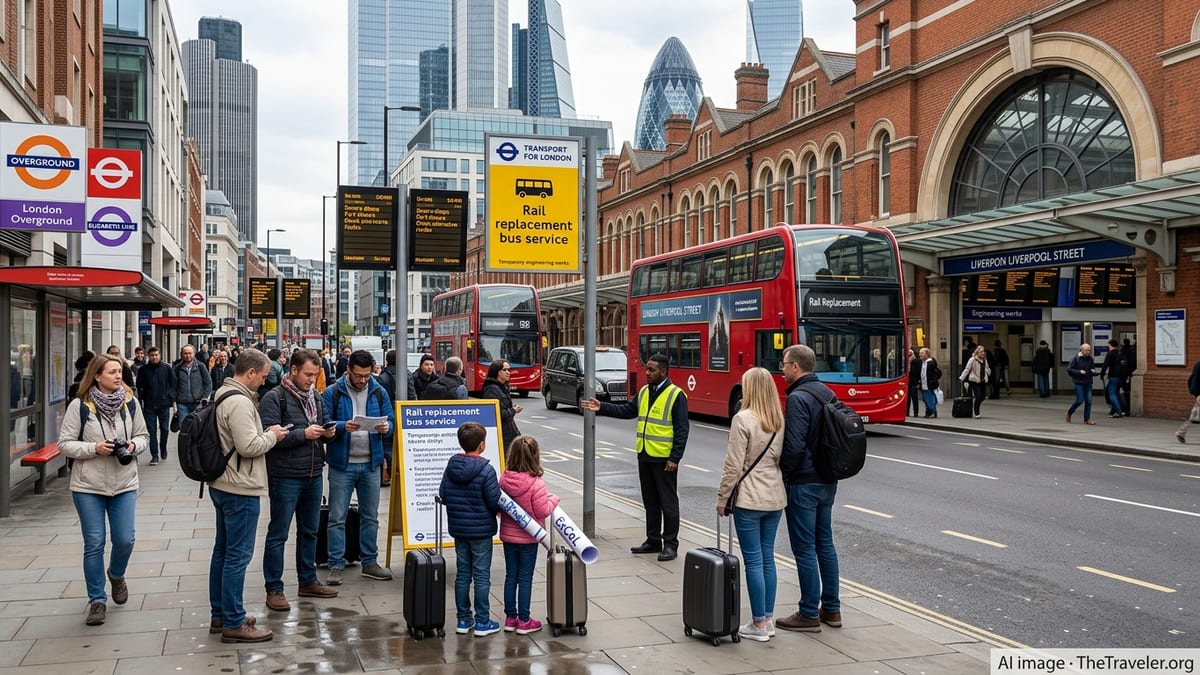
Engineering Works Focused on Liverpool Street and the Elizabeth Line
Publicly available transport calendars indicate that London Liverpool Street, a key gateway for Stansted Airport services and East Anglia routes, will see changes to regular weekend operations because of ongoing engineering work on lines feeding into the station. In several recent maintenance periods, some services have terminated at Stratford instead, with passengers completing the final leg into the Liverpool Street area using connecting routes. Similar patterns are expected this weekend, with rail operators concentrating upgrades at times of high leisure demand but lower weekday commuting.
The Elizabeth line, which normally provides a high‑frequency link between Heathrow Airport, central London and key rail hubs such as Liverpool Street and Paddington, is again affected by planned track and signalling work on its outer sections. Previous weekend schedules show that services between Liverpool Street and Shenfield are particularly prone to closures or reduced frequencies during upgrade periods, while trains within the central tunnel section often continue to run on modified timetables. Tourists heading to or from Essex or the eastern suburbs should expect rail replacement buses or rerouted services at short notice.
Within central London, the Elizabeth line is still expected to function as a backbone for cross‑city travel, but visitors may encounter longer intervals between trains, crowding at key interchanges such as Tottenham Court Road and Farringdon, and last‑minute platform changes. Travellers bound for exhibitions at ExCeL, events in the West End, or hotel districts around Paddington are advised to allow additional time and to be ready to switch to the Underground or buses if sections of the line are suspended for part of the day.
Airport passengers are particularly vulnerable to short‑notice changes. While Heathrow‑bound Elizabeth line services are generally prioritised, works west of Paddington can occasionally lead to reduced services or early evening finish times. Visitors should keep a close eye on live departure boards at stations and be prepared to use the Heathrow Express or Piccadilly line if Elizabeth line frequencies drop unexpectedly.
Metropolitan Line Closures and Alternatives Through Central London
Planned works this weekend also touch the Metropolitan line, which connects key visitor hubs at Baker Street and the northern suburbs. Recent Transport for London closure notices have shown repeated weekend suspensions between Baker Street and Wembley Park to allow for track and signalling renewals, and similar constraints are in place again. This can affect journeys to events at Wembley Stadium and the surrounding entertainment district, where spectators often rely on the Metropolitan line for fast connections.
With parts of the Metropolitan line out of service, other routes through central London are expected to absorb additional demand. Jubilee line trains, which share sections of route between Baker Street and Wembley Park, are likely to run busier than normal before and after major events. Circle and Hammersmith & City line services that overlap with Metropolitan stations in central London can also become congested as passengers re‑route around the closures.
For tourists staying near Baker Street, Euston or King’s Cross and planning day trips to attractions in North West London, the combination of Metropolitan line works and other rail changes means journey times may be longer and involve at least one extra change. Visitors heading toward Wembley are advised to consider the Jubilee line via Bond Street or London Bridge, or to make partial use of National Rail services where those remain unaffected.
Because these closures take place on top of routine weekend timetable changes, services that are normally frequent can thin out significantly at certain times of day. Visitors who are unfamiliar with the network may find it easier to plan around a smaller number of key routes, such as sticking to the Jubilee or Victoria lines for the core of their journey, then using buses or short walks to complete the last segment rather than attempting to thread together several disrupted lines.
London Overground: East London and Suburban Routes Under Pressure
London Overground services into Liverpool Street are also impacted by scheduled engineering work, especially on the lines running to Enfield Town, Cheshunt and Chingford via Bethnal Green and other East London stations. Previous weekend work programmes show that these routes can face full closures or altered stopping patterns, with rail replacement buses or diversions into alternative terminals when tracks near Liverpool Street are under possession for maintenance.
Recent discussion on rail and commuter forums highlights that the Overground has undergone an intensive period of weekend engineering, particularly on orbital routes linking North, East and South London. This has included frequent closures on the stretch between Gospel Oak and Barking Riverside and other segments that are popular with residents heading to parks, markets and local events. Visitors relying on the Overground for cross‑town journeys may therefore encounter last‑minute alterations, bus replacements and platform changes even when services appear to be running in principle.
On the Weaver line corridor between Liverpool Street and outer suburban destinations, weekend timetables can shift to reflect both Network Rail works and operator‑specific engineering programmes. Tourists planning day trips to areas such as Walthamstow, Chingford or the Lee Valley are encouraged to confirm whether London Overground is running a full service or whether National Rail alternatives from other terminals provide a faster and more reliable option.
Because Overground routes often intersect with multiple Underground lines, they normally provide useful detours during Tube closures. This weekend, however, some of those fallback options are constrained by engineering possession, meaning passengers may have to rely more heavily on buses or walkable interchanges between nearby stations such as Liverpool Street, Moorgate and Old Street to keep journeys moving.
DLR Changes in Docklands and Implications for Visitors
The Docklands Light Railway, which serves Canary Wharf, Greenwich, the Royal Docks and London City Airport, is also affected by a programme of weekend works. Public information about current projects indicates that DLR services are periodically reduced or diverted around Canning Town, Custom House and the ExCeL area, key gateways for conferences and large‑scale events. Replacement buses or single‑track working can lead to slower journeys and additional waiting times at platforms.
For tourists staying in Docklands hotels or visiting attractions such as Greenwich, the Museum of London Docklands or the cable car across the Thames, DLR disruptions can remove some of the most direct rail links to central London. In these circumstances, visitors are often encouraged by travel advice services to make greater use of the Jubilee line between Canary Wharf and central London, or to connect to the Elizabeth line at interchange points like Canary Wharf and Custom House when those services are running normally.
London City Airport passengers are particularly sensitive to changes on the DLR, as it is the principal rail link for most travellers. Altered services around Canning Town or Royal Victoria can mean that trains are busier and less frequent than on a typical weekday. Travellers with flights this weekend should factor in extra transfer time and consider taxi or bus alternatives if they are travelling very early in the morning or late in the evening when frequencies are reduced further by night‑time maintenance.
The wider context for the works is an ongoing investment programme in Docklands rail capacity, with long‑term plans including a DLR extension toward Thamesmead. In the short term, however, those improvements are being delivered through rolling weekend possession periods that continue to affect the visitor experience in and around the former docklands.
Practical Advice for Tourists Navigating the Disruptions
For visitors arriving in London over the coming days, the combined effect of work on the Elizabeth line, the Metropolitan line, London Overground routes and the DLR is a more complex rail map than weekday users typically encounter. While most tourist attractions remain easy to reach, journeys are likely to involve extra changes, short walks between nearby stations and occasional use of replacement buses, especially in East London and the Docklands.
Travel planners and journey‑time tools are strongly recommended, as they incorporate the latest engineering updates more reliably than static paper maps. Tourists are advised to re‑check itineraries on the morning of travel, since overnight updates can alter which lines are running and where rail replacement buses are operating. Where there is a choice of route, selecting itineraries that rely on just one or two lines, even if slightly longer on paper, can make for a smoother experience than chaining together multiple disrupted services.
Visitors should also be prepared for stations such as Stratford, Farringdon, Tottenham Court Road and Paddington to feel busier than usual as passengers are funnelled through a smaller number of operating interchanges. Allowing additional time to navigate platforms, escalators and wayfinding signs will help avoid missed connections, particularly for those carrying luggage or travelling with children.
Despite the disruption, London’s extensive bus network, frequent services in the core of the Underground, and the dense layout of central stations mean that most journeys can still be completed with modest adjustments. Travellers who remain flexible, build in extra time and check status updates regularly are likely to find that the city’s rail and bus system continues to provide workable options, even on a weekend shaped by engineering work.