

More news on this day
On the eastern shore of Mexico’s Baja California Sur, Loreto is quietly redefining luxury travel, coupling high‑end stays and wellness experiences with strict marine protections and a growing focus on low‑impact adventure.
Get the latest news straight to your inbox!
A Marine Sanctuary at the Heart of the Destination
Loreto’s appeal is anchored in its setting on the Sea of Cortez, where Bahía de Loreto National Park protects more than 2,000 square kilometers of relatively intact marine habitat, including five larger islands and numerous islets. Publicly available information describes the park as one of Mexico’s most biodiverse marine areas, with regular sightings of blue, fin and humpback whales, pods of dolphins and large seabird colonies. The natural abundance has made the town a focal point for travelers seeking close encounters with wildlife in a controlled and regulated environment.
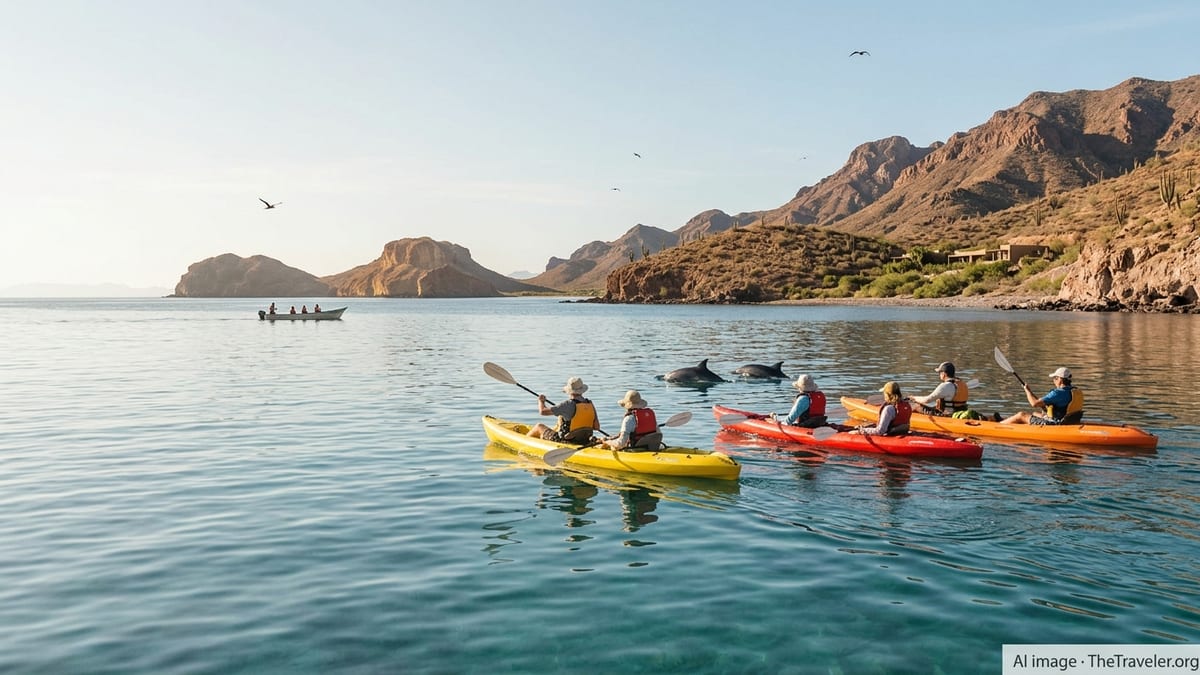
Kayaking, snorkeling, diving and small‑boat excursions out to islands such as Coronado and Danzante have become signature experiences. Local operators promote small group sizes, non‑extractive tours and adherence to park permit rules as selling points, reflecting a broader shift from mass‑market boating to curated, conservation‑minded outings. Seasonal whale watching, particularly for blue whales offshore, is drawing visitors who are willing to pay premium prices for respectful encounters that keep minimum distances and avoid high‑speed chases.
Conservation groups active in Loreto point to the park’s relatively healthy reefs and fish populations as evidence that stricter rules on fishing and development are compatible with tourism growth. Reports indicate that recent efforts to place adjacent coastal zones under stronger ecological protection aim to create a buffer for the marine park, limiting prospects for heavy construction and mining along sensitive shoreline and desert corridors.
This combination of legal protection, community advocacy and market demand for nature‑based trips is positioning Loreto as a model for how Mexican coastal towns can leverage national parks not only as scenic backdrops, but as the core asset of a sustainable tourism economy.
Regenerative Tourism and Community‑Led Initiatives
As visitor numbers grow, Loreto is seeing a strong emphasis on regenerative tourism, a concept that goes beyond minimizing harm and seeks to leave destinations better off. Local non‑profits and tour operators have developed programs that channel a portion of tourism revenue and volunteer time into beach cleanups, habitat restoration and environmental education for residents and visitors.
Publicly available program descriptions highlight initiatives such as mangrove and desert vegetation restoration, monitoring of sea turtle nests and outreach campaigns to reduce single‑use plastics. Some outfitters now market itineraries that combine island‑hopping or desert hikes with hands‑on conservation activities, positioning these experiences as part of a “give back” component embedded in an otherwise leisure‑focused stay.
Community workshops and long‑term planning exercises, summarized in recent reports, suggest that residents and local businesses are pushing for a 2050 vision in which tourism growth is capped by environmental carrying capacity. The aim is to avoid the large‑scale urbanization seen in other parts of the peninsula, favoring smaller properties, low‑rise architecture and infrastructure that fits within the constraints of limited freshwater supplies and fragile desert ecosystems.
This approach is also influencing how Loreto markets itself internationally. Destination campaigns increasingly emphasize the town’s small scale, walkable historic center and quiet waterfront rather than nightlife or shopping, appealing to travelers who prioritize nature, culture and personal well‑being over high‑density resort districts.
Sustainable Luxury Arrives on Loreto’s Shores
For years, Loreto was dominated by fishing lodges, budget hotels and a handful of condo complexes. That profile is changing as high‑end developments adopt sustainability as a core feature. The Danzante Bay community south of town has become a focal point, combining a championship golf course, spa facilities and beach access with marketing that stresses its location inside a UNESCO‑recognized marine environment.
Villa del Palmar at the Islands of Loreto, the anchor resort at Danzante Bay, promotes solar power use, water recycling and limited building footprints between the desert and the sea, while also offering multi‑bedroom suites, fine dining and yacht excursions. Industry fact sheets note that the property has received regional accolades as a leading resort, helping to raise Loreto’s profile among affluent travelers looking for quieter alternatives to Cabo San Lucas.
The next phase of Loreto’s luxury story is expected in 2026, when the Mailena Wellness Resort is slated to open within Danzante Bay. Trade coverage describes Mailena as a high‑end wellness property with architecture inspired by local geology and vegetation, designed by a Mexico‑based studio with a focus on passive cooling, natural materials and low‑impact construction. Plans highlight regenerative wellness programs that integrate nutrition, spa therapies and outdoor activities such as sunrise hikes and guided sea kayaking.
Together, these projects signal that Loreto’s version of luxury is less about scale and spectacle and more about immersion in landscape, privacy and access to nature. The investment trend is drawing attention from tour operators and travel advisors who specialize in wellness and responsible high‑end travel, adding Loreto to itineraries that once focused almost exclusively on Los Cabos or mainland beach destinations.
Cultural Roots and “Pueblo Mágico” Appeal
Beyond its coastline, Loreto leverages its status as one of Mexico’s designated “Pueblos Mágicos,” a program that recognizes towns for their historical, cultural and natural significance. Founded in 1697 as the first capital of the Californias, the town preserves a compact historic center centered on its mission church and plaza, where restored facades and low‑rise buildings give a sense of continuity with its colonial past.
Travel coverage portrays Loreto as one of the more authentic and less commercialized destinations in Baja California Sur, with a rhythm defined by fishing boats at dawn, evening strolls along the malecón and small family‑run restaurants serving regional dishes. Cultural festivals, religious celebrations and local craft markets add layers of experience that appeal to visitors seeking a connection with everyday life rather than staged performances.
This cultural dimension aligns with the town’s sustainable positioning. Smaller inns and boutique hotels around the center highlight locally sourced food, traditional design elements and partnerships with neighborhood businesses. Walking tours often combine stops at the mission, small museums and contemporary art spaces with introductions to regional products such as handcrafted chocolate, seafood specialties and desert‑grown ingredients.
By tying its tourism narrative to history and community rather than solely to beachfront amenities, Loreto provides an alternative to the all‑inclusive model, attracting travelers willing to spend more per day on lodging, dining and guided experiences that remain rooted in local heritage.
Adventure, Access and the Future of Low‑Impact Travel
Adventure travel has long been part of Loreto’s identity, and it is being reframed to match sustainability goals. Multi‑day kayaking expeditions between uninhabited islands, guided hikes into the Sierra de la Giganta and mountain biking on desert trails are packaged for visitors who want active trips with minimal environmental footprint. Operators emphasize leave‑no‑trace principles, use of reusable gear and limited group sizes as part of their value proposition.
At the same time, the town’s accessibility is improving. Regular flights from major Mexican hubs and select U.S. cities feed a tourism economy that remains modest in volume compared with larger resorts, helping to keep pressure on infrastructure relatively low. Industry observers note that this window offers Loreto a chance to steer growth toward smaller, higher‑value segments such as wellness retreats, photography workshops and specialist wildlife tours.
State‑level measures, including new conservation designations along the coast and discussions of tourism levies earmarked for environmental management, suggest that policymakers view Loreto as a testing ground for balancing visitor spending with ecosystem protection. Local planning documents and advocacy campaigns frequently use the term “intentional travel” to capture the kind of visitor the town hopes to attract: guests who stay longer, engage more deeply and accept guidelines designed to protect wildlife and cultural sites.
As global travelers look for destinations that combine exclusivity with environmental responsibility, Loreto’s mix of protected seascapes, emerging luxury wellness resorts and living history is drawing new attention. The challenge in the coming decade will be to maintain the quiet, small‑town character that underpins its appeal while accommodating carefully managed growth at the upper end of the market.