

More news on this day
Lucky Air has expanded its domestic network in China with the launch of new direct flights between Chengdu Tianfu International Airport and Zhuhai Jinwan Airport, introducing three weekly Boeing 737 services from early February 2026 to meet rising demand between the southwest hub and the booming Pearl River Delta coastal city.
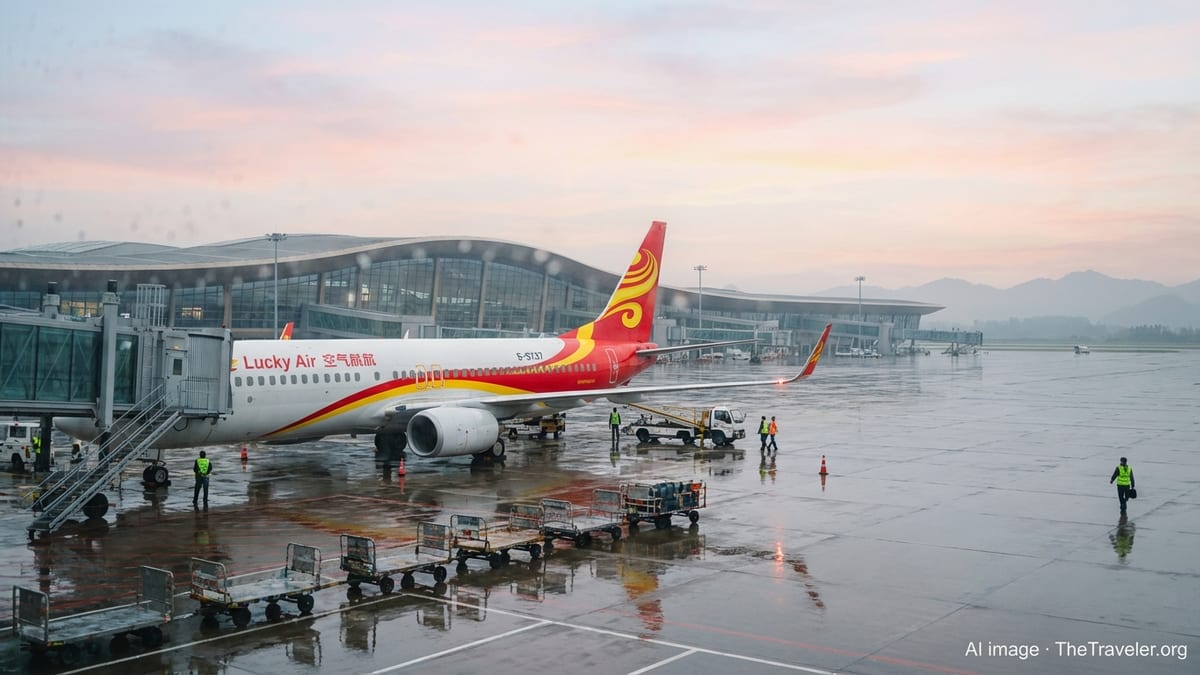
Details of Lucky Air’s New Chengdu–Zhuhai Service
The new Chengdu–Zhuhai route officially began operations on February 3, 2026, positioning Lucky Air among the latest carriers to connect one of western China’s fastest-growing aviation hubs with the southern coastal city of Zhuhai. The service reflects a broader push by Chinese airlines to strengthen secondary city links as domestic air travel continues to recover and diversify.
Operating under flight number 8L9661 from Chengdu to Zhuhai and 8L9662 in the opposite direction, the service is scheduled three times per week, giving both business and leisure passengers more flexibility without overwhelming the market on a route that is already served by several full-service competitors. Flight tracking data and schedule information indicate that the flights are planned from Chengdu Tianfu’s Terminal 2 into Zhuhai’s main terminal, with a typical block time of just over two hours.
Lucky Air is using Boeing 737 aircraft on the route, a mainstay of its narrowbody fleet. Aircraft seen operating the service in February include 737-800 series jets registered in China, configured in an all-economy layout that is standard for the low-cost carrier and designed to keep fares competitive on domestic routes.
With this launch, Chengdu now enjoys nonstop connections to Zhuhai on a mix of state-owned and private airlines, while Lucky Air adds a low-cost option that may appeal to price-sensitive travelers, tour groups and younger passengers seeking value over frills.
Schedule, Frequency and Onboard Experience
Lucky Air’s three weekly flights between Chengdu and Zhuhai are scheduled to operate on alternating days, with recent timetables pointing to afternoon departures from Chengdu Tianfu and mid- to late-afternoon arrivals in Zhuhai. The return leg typically departs Zhuhai in the early to mid-afternoon, arriving in Chengdu by late afternoon or early evening, allowing passengers to make same-day connections or reach city centers before nightfall.
The flight time is listed at around two hours five minutes, broadly in line with other carriers on the same route. Recent operations show the service running broadly on schedule, with only modest departure and arrival delays typical of busy Chinese domestic corridors in winter. The relatively short sector length makes it an easy hop for both weekend leisure trips and short business visits.
Onboard, Lucky Air’s Boeing 737 aircraft offer a single-class economy cabin, reflecting the airline’s low-cost model. While passengers should not expect premium cabins or extensive complimentary services, the product is comparable to other budget and hybrid carriers in China, with standard economy seating, buy-on-board refreshments on many flights, and a focus on keeping ticket prices accessible. The 737’s 3–3 seating layout and overhead bin space are familiar to frequent flyers across the region.
For travelers connecting in Chengdu, the use of Tianfu International Airport is significant. Opened in 2021, the airport was designed to relieve pressure on the older Chengdu Shuangliu facility and is steadily building out its domestic and international connections. Lucky Air’s presence at Tianfu adds another option for passengers routing through the city to reach destinations across Yunnan and other parts of western China.
Strengthening Links Between Southwest China and the Greater Bay Area
The new route arrives at a time when economic and tourism ties between southwest China and the Pearl River Delta are deepening. Chengdu, capital of Sichuan province, has emerged as a major technology, manufacturing and cultural hub, while Zhuhai plays a growing role within the Guangdong–Hong Kong–Macau Greater Bay Area, with close links to Macau and nearby regional cities by sea and road.
By adding direct Chengdu–Zhuhai services, Lucky Air taps into a stream of two-way traffic that includes business travelers, conference delegates, students and tourists. Many passengers previously relied on connections through Guangzhou, Shenzhen or other hubs, or on services operated primarily by full-service carriers. A low-cost entrant on the route raises competitive pressure on fares and increases choice in terms of departure days and times.
Zhuhai itself has been positioning as a more relaxed coastal alternative to its larger neighbors, with resorts, theme parks and seafront developments drawing visitors from inland provinces. For Chengdu residents accustomed to mild but often overcast inland weather, the route opens easier access to Zhuhai’s coastal climate and nearby islands, making it attractive for short getaways and family holidays.
From Zhuhai’s perspective, the route supports efforts to attract investment and talent from the interior. Direct flights to major inland centers like Chengdu reduce travel times for entrepreneurs, engineers and executives commuting between factories, research centers and headquarters across the two regions.
What Travelers Need to Know Before Booking
For travelers considering the new Lucky Air service, the main draw is a combination of nonstop convenience and typically lower base fares compared with some full-service rivals. However, passengers should factor in the low-cost model when planning trips. Checked baggage allowances may be more limited on the cheapest tickets, and extras such as seat selection, additional bags or onboard meals may incur separate fees depending on the fare type purchased.
Because the route operates only three times per week, flexibility is crucial. Travelers on tight schedules or with time-sensitive meetings may want to have backup options on other carriers in case of disruptions, especially during peak holiday periods or adverse weather. Monitoring flight status in the days before departure is advisable, as winter and early spring can still bring occasional fog or low-visibility conditions across parts of China’s domestic network.
Those connecting via Chengdu Tianfu should allow adequate time to transfer between flights, especially if traveling on separate tickets. While Tianfu is a modern facility, walking distances, security checks and domestic transfer procedures can add time, particularly during holiday peaks such as Lunar New Year or the May Day holiday period.
For international travelers starting their journey outside China, Lucky Air’s Chengdu–Zhuhai leg can be paired with separate long-haul tickets into Chengdu or other Chinese gateways. In such cases, it is prudent to leave generous connection windows, as low-cost domestic flights are typically not protected on separate international itineraries.
Outlook for Lucky Air’s Domestic Growth
The Chengdu–Zhuhai launch underscores Lucky Air’s broader strategy of reinforcing its presence in China’s fast-growing secondary city markets. Known historically for its strong network in Yunnan province and western China, the airline has been gradually branching out to connect emerging economic centers with tourism hotspots and coastal gateways.
By adding a three-times-weekly Boeing 737 link between Chengdu and Zhuhai, the carrier positions itself to capture both organic demand and spillover traffic from competitors as domestic tourism continues to evolve. If load factors remain healthy and operational performance stays stable, industry observers will be watching to see whether Lucky Air increases frequency on the route or adds similar point-to-point links elsewhere in the Greater Bay Area.
For now, the new service provides an additional choice on a busy domestic corridor, giving travelers another way to move between the dynamic tech and cultural capital of Sichuan and the resort-focused, trade-oriented coastline of southern Guangdong. As airlines across China adjust networks in response to shifting demand, Lucky Air’s Chengdu–Zhuhai route is a clear sign that secondary city connectivity remains a key battleground in the country’s competitive domestic aviation market.