

More news on this day
Lufthansa’s German flight network is bracing for major disruption on Friday, April 10, 2026, after the independent cabin crew union UFO called a one-day strike at both Lufthansa and its regional subsidiary Lufthansa CityLine, coinciding with the busy end of the Easter holiday travel period.
Get the latest news straight to your inbox!
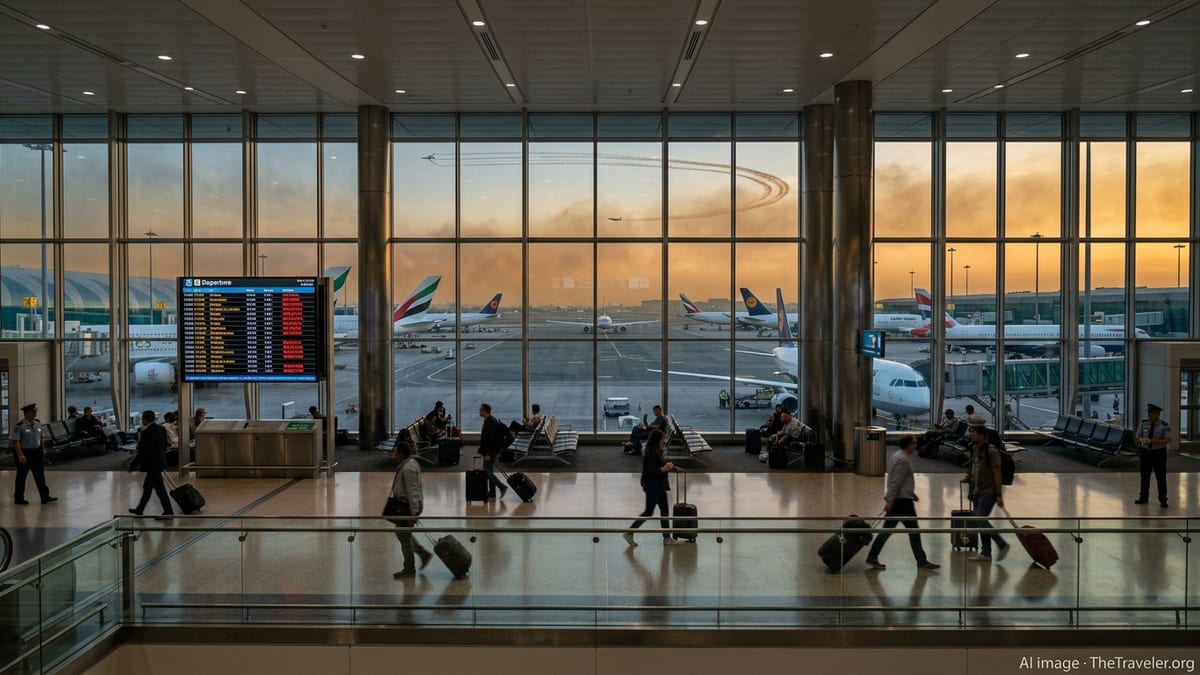
Strike Call Targets Lufthansa and CityLine on Key Travel Day
According to published information from the airline and union, the walkout is scheduled to cover large parts of the Lufthansa and Lufthansa CityLine operation on April 10, affecting departures from major German hubs including Frankfurt and Munich as well as other airports such as Berlin and Hamburg. The action follows a ballot in which an overwhelming majority of cabin crew backed industrial measures after wage and contract talks stalled.
Reports indicate that Lufthansa expects widespread cancellations and delays across its German route network, with particular pressure at its Frankfurt and Munich hubs, which serve as key connecting points for both European and long-haul traffic. Regional routes operated by Lufthansa CityLine are also expected to be heavily affected, reducing feeder capacity into the main intercontinental services.
Publicly available information shows that other airlines within the wider Lufthansa Group network, such as Swiss, Austrian Airlines, Brussels Airlines, Air Dolomiti, Eurowings and Discover Airlines, are not directly covered by the strike call and plan to operate their schedules. However, these carriers may experience knock-on effects from congestion at German airports and may be used to backfill some lost capacity where aircraft and crews are available.
The strike comes on the heels of pilot walkouts earlier in March and wider industrial unrest in Germany’s aviation sector, meaning many travelers are now facing yet another wave of uncertainty. Travel industry observers note that the frequency of labor disputes at Europe’s largest airline groups is adding a new layer of volatility to an already challenging operating environment.
Flight Cancellations, Special Schedules and Rebooking Options
Lufthansa has activated a special timetable for the strike day, with advance cancellations already visible in its booking systems and on airport departure boards. Public guidance from the airline indicates that passengers with affected flights are being notified by email or mobile message, provided their contact details are stored in the booking.
The carrier is offering customers on cancelled services the option to rebook once free of charge or to request a refund, in line with its irregular-operations policy. For German domestic routes, travelers whose flights are cancelled may be able to switch to rail services and use Deutsche Bahn trains instead, an option that has been deployed in previous industrial actions to keep passengers moving between major cities.
Reports from travel waiver notices issued by partner airlines suggest that some transatlantic passengers booked on Lufthansa-operated segments are being allowed to switch to alternative flights on other carriers within certain travel windows. However, rebooking capacity remains limited on peak Easter return days, and many travelers may find that only earlier or significantly later dates are available.
Passenger accounts shared on public forums ahead of the walkout describe a mix of automatic rebookings, long waiting times to reach call centers, and uncertainty around overnight accommodation when re-routed via different airports. Travel experts recommend that passengers monitor their booking closely, arrive early at the airport if their flight is still scheduled to operate, and consider proactive rebooking if their itinerary relies on tight connections through German hubs.
Union Demands and Lufthansa’s Response
The strike is being organized by the Independent Flight Attendants’ Union, known by its German acronym UFO, which represents a significant share of Lufthansa’s cabin crew. The union has framed the dispute around a combination of pay, working-time rules and conditions contained in the so-called collective framework agreement for cabin staff.
Union statements published in recent days highlight demands for higher wages, improved scheduling rules and better protections against what representatives describe as increasing workload and operational stress. The successful strike ballot among Lufthansa and Lufthansa CityLine cabin crew cleared the last formal hurdle for industrial action and was followed by a relatively rapid escalation to a full-day walkout.
Lufthansa, in its public communications, has criticized the latest strike call as disproportional, particularly given its timing at the tail end of the Easter holidays. Company statements emphasize that management has presented concrete proposals and that negotiations on complex deployment conditions require more time and willingness to compromise. The airline argues that repeated walkouts are damaging both to customers and to the company’s competitiveness in a difficult market environment marked by high fuel prices and geopolitical uncertainties.
Despite these public positions, no breakthrough has yet been reported in the negotiations. The gap between union expectations and management’s current offer remains significant enough that further strikes later in the spring cannot be ruled out if talks fail to progress after the April 10 action.
Broader Impact on Germany’s Air Network
The scheduled walkout lands at a sensitive moment for Germany’s aviation system, which has already been tested by recent pilot strikes and localized actions by airport and ground staff unions. Industry reports note that Frankfurt, Munich and Berlin are operating at or near peak holiday capacity this week, magnifying the impact of any large-scale flight cancellations.
Germany’s dense domestic and intra-European network means that disruptions at key hubs ripple quickly across the continent, affecting not only originating passengers but also transfer traffic on long-haul routes to North America, Asia and Africa. Travelers connecting through Germany on other airlines may also encounter delays or missed connections if their journey involves Lufthansa-operated segments or congested terminals.
Airport operators have warned in previous industrial disputes that large-scale strikes can lead to crowded terminals, longer security lines and pressure on baggage systems, even when only one airline group is directly affected. With many travelers returning from Easter holidays, observers expect particularly high demand for alternative flights, rail services and last-minute hotel rooms around major airports.
Travel industry analysts point out that Germany is not alone in facing aviation labor unrest, with recent or ongoing actions reported in Belgium, Italy and other European markets. However, given Lufthansa’s scale and its central role in European connectivity, a coordinated cabin crew strike on a peak travel day is likely to stand out as one of the most disruptive single-day events in the region’s spring travel calendar.
What Travelers Should Watch in the Coming Days
As the strike date approaches, travelers booked on Lufthansa and Lufthansa CityLine services on April 10 are being advised by consumer groups and travel advisors to verify their contact details in airline profiles, monitor flight status tools, and check whether their tickets qualify for flexible rebooking or refunds. Those with onward connections, particularly on separate tickets, may wish to build in additional buffer time or consider rerouting where possible.
Observers note that even flights scheduled outside the official strike window may be affected by aircraft and crew positioning challenges, meaning some disruption could spill into the evening of April 9 and the morning of April 11. Passengers with critical travel plans, such as cruise departures, business events or family occasions, are being encouraged to explore contingency arrangements.
For now, both the union and the airline publicly maintain their respective positions, with no indication that the April 10 strike will be called off. Should talks resume after the action, the outcome will help determine whether Germany’s largest carrier can stabilize its operations for the summer season or faces a prolonged period of rolling labor disputes.
The situation remains fluid, and travelers planning to pass through German airports in the coming days are likely to keep a close eye on schedule updates as one of Europe’s key airline networks prepares for another day of severe disruption.