


More news on this day
Lufthansa Cargo is warning customers to expect potential delays for air freight moving through its main German hubs in Frankfurt and Munich, as operational constraints and wider disruption across the Lufthansa network threaten to slow cargo handling and onward connections.
Get the latest news straight to your inbox!
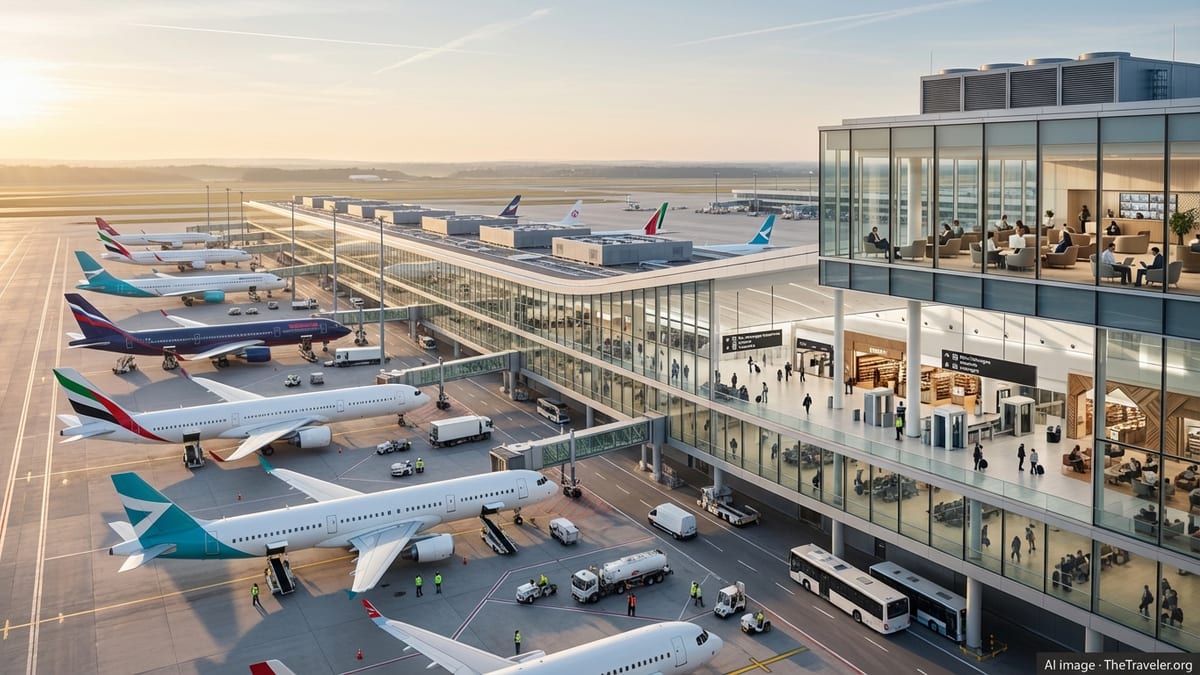
New Advisory Highlights Pressure on Key Cargo Hubs
Recent advisories published by Lufthansa Cargo and industry outlets indicate that customers using Frankfurt Airport and Munich Airport for freight movements may face longer transit and handling times than usual. The warnings follow a period of recurring disruption across the wider Lufthansa network, including strikes and capacity adjustments that have affected both passenger and cargo operations.
Publicly available information on Lufthansa Cargo’s network shows that Frankfurt and Munich function as the airline’s primary cargo hubs in Germany, handling thousands of tons of freight every week across dedicated freighters and the belly holds of passenger aircraft. Any disturbance to aircraft rotations, staffing levels or ground processes at these airports can therefore ripple quickly through time-sensitive supply chains.
The latest notice urges freight forwarders and shippers to monitor booked routings closely and to build in additional buffer time for shipments that depend on tight connections at Frankfurt or Munich. Priority is expected to be placed on high‑value and contractually time‑critical cargo, which may lead to longer dwell times for general freight during peak periods.
Industry reports also point to periods of congestion at cargo terminals when irregular operations occur, with backlogs sometimes taking days to clear once normal flight schedules resume. This dynamic is particularly relevant at hub airports where multiple long‑haul banks converge within a short time window.
Labor Disruptions and Capacity Shifts Feed into Delay Risk
Published coverage in German and international media over recent months has highlighted significant labor unrest affecting various parts of the Lufthansa Group, including cabin crew and pilots. Strikes targeting the mainline carrier and affiliated units have led to large numbers of flight cancellations at Frankfurt and Munich, undermining the predictability of both passenger and cargo services.
Reports indicate that freight operations are not immune when walkouts occur, since Lufthansa Cargo relies heavily on the passenger network to move a substantial portion of its global tonnage. When passenger flights are grounded or rescheduled, cargo uplift capacity shrinks accordingly, forcing rerouting of shipments and raising the risk of missed connections at the major hubs.
Alongside labor issues, analysts tracking the European air cargo market have noted that Lufthansa Cargo is adjusting parts of its fleet and short‑haul capacity in response to cost pressures, including elevated fuel prices. While such moves are intended to align capacity with demand, they can temporarily reduce flexibility on certain routes, which in turn heightens the impact when unexpected disruption hits Frankfurt or Munich.
The combination of intermittent strikes, timetable changes and capacity optimization means that shippers now face a more volatile operating environment on routes touching Germany. The latest advisory from Lufthansa Cargo is framed against this backdrop, emphasizing that while the company continues to operate its hubs, performance may deviate from standard transit times.
High-Stakes Cargo: Pharma, E-commerce and Just-in-Time Supply Chains
The potential for delays is particularly sensitive because Frankfurt and Munich serve as specialized gateways for high‑value and time‑critical freight. Lufthansa Cargo markets both airports as pharma hubs, offering active and passive temperature‑control solutions for pharmaceutical and biotech shipments that require tightly managed cold chains.
Information published by the airline details dedicated facilities and handling processes intended to limit the time that temperature‑sensitive cargo spends outside controlled environments. When hub operations slow down, however, these consignments can require extra coordination, including prioritization on limited flights and careful staging at warehouses, to keep product integrity intact.
E‑commerce and express shipments are also heavily exposed to irregular operations, since many products are sold with guaranteed delivery windows. Forwarders that consolidate online retail cargo through Frankfurt or Munich may need to rebook shipments, split routings across alternative gateways, or upgrade service levels to protect lead times when disruption occurs.
Automotive, machinery and other just‑in‑time industries that depend on predictable flows of components are likewise encouraged to review contingency plans. In some cases, companies may choose to hedge by diversifying routings across other European cargo hubs if the risk of bottlenecks at Lufthansa’s German bases remains elevated.
What Shippers Can Do to Mitigate Disruption
Guidance shared by freight industry analysts and logistics providers suggests several practical steps for companies moving goods via Lufthansa Cargo through Frankfurt and Munich. First, shippers are being advised to book as early as possible and to provide accurate, detailed shipment data so that carriers and forwarders can optimize space and routing under constrained conditions.
Second, customers with critical consignments are encouraged to consider premium services or higher‑priority products where available, as these often come with enhanced handling commitments and greater protection against offloads. For some temperature‑controlled or high‑value shipments, such upgraded options may be essential to maintain quality standards and contractual deadlines.
Third, logistics planners are reviewing alternative routings that can bypass the most congested banks at Frankfurt and Munich, either by connecting through other hubs within the Lufthansa network or by using partner airlines where interline agreements allow. While indirect routings can lengthen transit times on paper, they may in practice offer more reliable delivery when disruptions are concentrated at specific nodes.
Finally, industry commentary emphasizes the importance of clear communication along the supply chain. Shippers are being urged to keep consignees informed about potential timing shifts and to ensure that downstream warehousing, trucking and distribution partners have up‑to‑date visibility when flights or handling times change at short notice.
Short-Term Outlook for Germany’s Air Freight Gateway
Frankfurt and Munich remain two of Europe’s most important air cargo gateways, and Lufthansa Cargo continues to market them as central pillars of its global network. At the same time, recurring operational challenges underline how exposed complex hub‑and‑spoke systems can be to labor disputes, infrastructure strains and schedule volatility.
Industry observers note that the coming months will be closely watched by shippers and freight forwarders that rely heavily on German hubs for transatlantic and intercontinental flows. Any sustained improvement in labor relations and operational stability could gradually restore confidence, while further rounds of disruption would likely accelerate efforts by customers to diversify routings and carriers.
For now, the warning of potential shipment delays serves as a signal to the market that flexibility and contingency planning are essential. Companies with time‑sensitive cargo moving through Frankfurt or Munich are being urged, based on publicly available advisories and trade coverage, to plan for possible irregular operations and to work closely with logistics partners to protect critical supply chains.