


More news on this day
Tourists heading for Europe this summer are being urged to rethink their travel insurance and airport timings as the European Union’s new biometric border system triggers long queues, missed flights and fresh disputes over who pays when trips go wrong.
Get the latest news straight to your inbox!
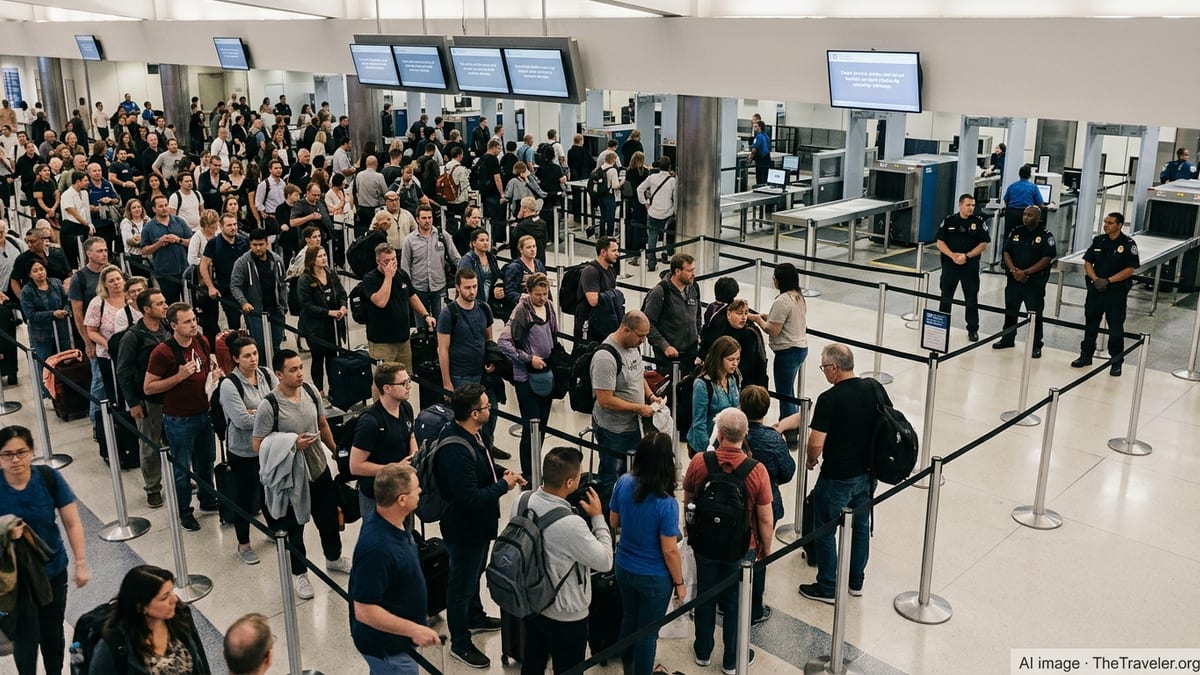
New EU border system stretches airport queues
The European Union’s Entry/Exit System, which replaces passport stamps with biometric registration for non EU nationals entering the Schengen area, is now fully operational at external borders. The scheme records fingerprints, facial images and travel data for short stay visitors in an effort to tighten security and track overstays.
Since full activation in April 2026, reports indicate that the system has lengthened processing times at a number of major airports, particularly for passengers arriving from the United Kingdom, United States and other non Schengen countries. Travel coverage from outlets including Euronews and specialist visa and border publications has documented queues of several hours at peak periods and a rise in missed departures for connecting and outbound flights.
Industry groups representing European airports and airlines have publicly warned that without temporary relaxations or extra staffing, queues during the peak summer season could reach four to five hours at some border checkpoints. In parallel, consumer travel sites and forums are carrying a growing number of accounts from passengers who say they arrived at the airport well in advance yet still missed flights after being held up at immigration.
The disruption has been most keenly felt at hub airports handling large volumes of non EU traffic, where first time biometric registration for the new system is taking significantly longer than traditional passport stamping. Subsequent crossings are expected to be faster, but evidence from early weeks of operation suggests that data glitches and repeated enrolments are still affecting throughput in some locations.
Missed flights raise urgent questions over who pays
The new border queues are shining a spotlight on a long standing grey area in travel protection. When a passenger misses a flight because they were late to the airport, standard insurance policies and airline conditions of carriage generally treat the loss as the traveller’s responsibility. The Entry/Exit System complicates that picture, because many affected holidaymakers say they arrived hours before departure and were delayed entirely within the government controlled border zone.
According to published analysis from travel insurance comparison services, most policies were written before the system went live and do not contain specific language on biometric border queues or the Entry/Exit System by name. Instead, delays at immigration are usually categorised as part of the normal operation of border controls, falling outside the definitions of “travel delay”, “missed departure” or “travel disruption” that would trigger a payout.
Specialist commentators note that insurers are wary of opening the door to very large claims arising from state run processes they cannot control. Unless regulators intervene or policy wordings are rewritten, many travellers who miss flights purely because of long Entry/Exit System queues are likely to find that neither the airline nor their insurer will reimburse the cost of new tickets, accommodation or lost holiday time.
Consumer advocates are already warning that this gap in protection could lead to a surge in complaints as more tourists encounter problems during the peak holiday months. They argue that clearer information is needed at the point of booking, both from airlines and insurance providers, so that travellers understand in advance that government border delays are often treated differently from airline caused disruption.
What current insurance policies typically cover
Publicly available policy documents from large international insurers indicate that cover for missed departures usually applies only in narrowly defined situations. These often include breakdown or accidents on the way to the airport, severe weather, strikes affecting public transport, or mechanical problems directly involving the insured person’s flight. Routine queues at security or passport control, even if unusually long, are generally not listed among the covered reasons.
Analysts who track insurance wordings in the UK and wider European market report that, at present, Entry/Exit System delays are being treated under the same logic. Because border checks are regarded as an inherent part of international travel, extra waiting time caused by a new system or by staff shortages is classified as a foreseeable risk that travellers are expected to manage through earlier arrival rather than through an insurance claim.
Some higher tier policies do include broader “travel disruption” or “travel misconnection” benefits, which can provide limited compensation when a missed onward flight is caused by an earlier delay during the same trip. However, the small print often requires evidence that carriers have refused assistance and that the traveller allowed what the insurer considers a reasonable minimum connection time. Where border queues created by the Entry/Exit System are concerned, these clauses remain untested in many jurisdictions.
Insurance experts cited in recent financial and consumer press coverage suggest that more products may gradually incorporate explicit references to the new border regime if long queues persist. For now, however, they note that travellers should assume that biometric border delays will be treated no differently from any other form of congestion at immigration.
Travel industry responses and calls for flexibility
The aviation industry has reacted with a mix of practical adjustments and political pressure. Several European airport operators and airline associations have issued public advisories telling passengers to arrive far earlier than before for flights into or out of the Schengen area, particularly where first time Entry/Exit System registration is required. Some carriers are recommending that travellers present themselves at the airport at least three and a half to four hours before departure.
At the same time, trade bodies for airlines and airports are lobbying European institutions and national governments for temporary relief measures during the busiest weeks of summer. Reports from industry statements indicate that proposals have included allowing border authorities to suspend Entry/Exit System checks at times of extreme congestion, or to rely on simplified procedures for passengers who have already been properly enrolled on previous trips.
While a small number of countries have discussed looser implementation to protect tourism flows, the overall trend in official communications from EU bodies continues to emphasise the security and migration control benefits of full biometric registration. Observers note that this leaves airlines and airports managing the operational consequences of a system they do not control, while also facing pressure from passengers who expect help when queues lead to missed flights.
Some consumer commentators have urged airlines to take a more generous approach to rebooking where passengers can show that they were present at the airport well in advance but delayed at passport control. However, carriers point to the financial burden of absorbing such costs at a time when margins remain tight and argue that border processes are ultimately a matter for states, not private companies.
How tourists can reduce their risk this summer
With no quick fix in sight, travel experts are advising tourists to focus on risk reduction rather than relying on compensation after the event. Guidance from European and national travel information services stresses the importance of allowing extra time at departure and on arrival, especially for the first trip through the Entry/Exit System, when initial biometric capture can take several minutes per person.
Passengers with connecting flights within the Schengen area are being encouraged to choose longer connection windows and to avoid self connecting itineraries that require re clearing border control between separate tickets. For cruise passengers and those joining organised tours immediately after landing, recommendations include arriving a day early where possible to remove the risk that a delayed border crossing causes them to miss the start of their trip.
Insurance specialists also advise that travellers read policy documents carefully before purchase, checking whether missed departure or travel disruption cover is included and under what conditions it applies. Policies that explicitly include government ordered closures, security incidents or airspace restrictions may offer broader protection, but they still may not cover routine Entry/Exit System queues at passport control.
As the new border regime settles in, observers expect insurers, airlines and regulators to reassess how responsibility for such disruptions is shared. For travellers heading to Europe in the coming months, the practical message remains blunt: arrive much earlier than before, build generous buffers into itineraries and assume that long border queues caused by the new system will, in most cases, be their own financial risk to bear.