


More news on this day
Lufthansa and Munich Airport have widened their joint Munich Stopover Program to include travelers departing from five major Asian markets, allowing stays of up to seven days in the Bavarian capital on long-haul itineraries.
Get the latest news straight to your inbox!
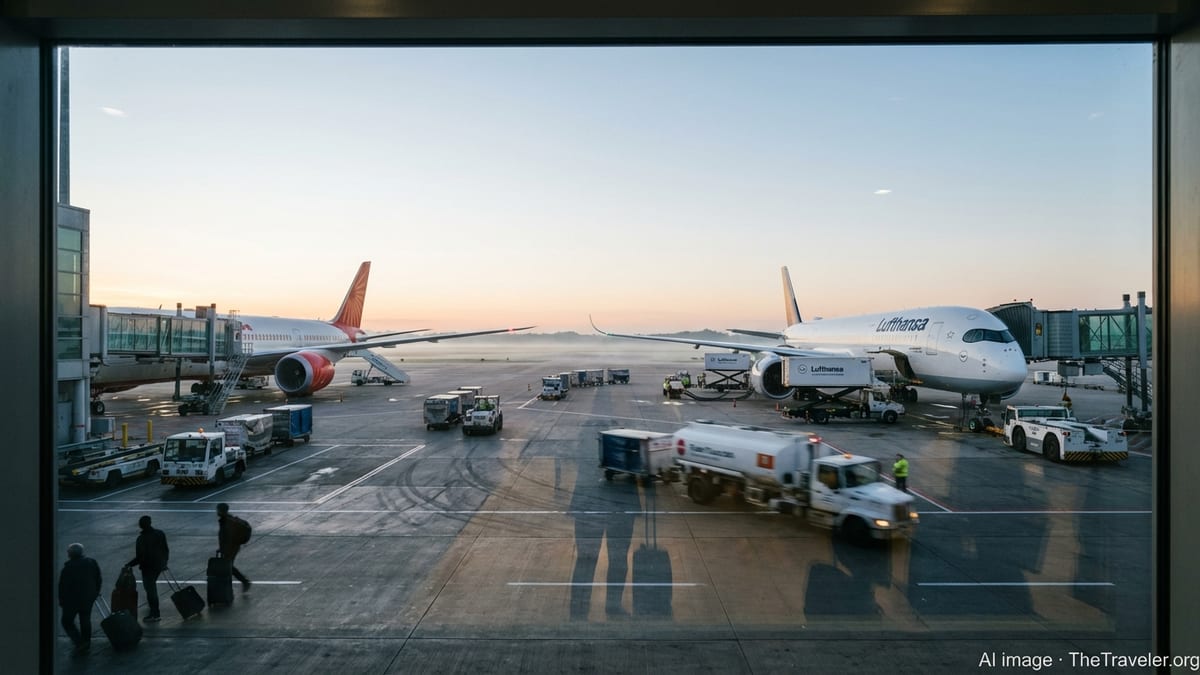
Seven-Day Munich Stopovers Now Reach Deeper Into Asia
According to published coverage and Lufthansa program materials, the Munich Stopover Program has been expanded to passengers originating in China, India, Japan, South Korea and Thailand. Travellers from these markets can now convert what would often be a brief connection at Munich Airport into a short city break, with stays ranging from 24 hours to seven days built directly into their ticketed journey.
The offer is structured as a collaboration between Lufthansa and Munich Airport, first introduced in spring 2026 for itineraries involving Singapore and the United States before being scaled out across Asia-Pacific. Recent reports indicate that this latest phase effectively brings much of Lufthansa’s long-haul Asia network into scope, positioning Munich as both a transfer hub and an intermediate destination in its own right.
Publicly available information shows that the stopovers can be scheduled on either the outbound or return leg, subject to fare rules, but not on both in a single round-trip booking. The expansion is framed by partner communications as a way to encourage long-haul passengers to spend additional time and money in Bavaria rather than simply passing through the airport.
How the Munich Stopover Program Works
Lufthansa’s dedicated stopover pages outline a relatively streamlined booking flow. When searching for flights on the airline’s website, eligible customers can select a multi-day stop in Munich instead of a standard same-day connection. Once the itinerary is confirmed with a stopover window of one to seven days, passengers gain access to special offers from local tourism partners.
These offers include discounted or curated options for accommodation, local transportation, attractions and shopping within Munich and the wider Bavarian region. Program descriptions emphasize that the stopover concept is designed to feel like a short holiday layered onto an existing long-haul trip, rather than a forced, extended layover. Travellers can explore the historic city center, day-trip into the Alps, or combine Munich with nearby cultural and outdoor destinations.
Reports from specialist travel outlets add that the stopover duration must exceed 24 hours to qualify and that any additional costs, such as hotels and activities, remain the responsibility of the traveller. However, by formalizing the option and presenting it within the booking engine, Lufthansa simplifies what would otherwise require custom multi-city searches or agency assistance.
Five Asian Gateways Added to Singapore and U.S. Launch Markets
The latest expansion targets some of Lufthansa’s most strategically important Asian origin markets. Coverage of the announcement notes that passengers beginning their journeys in China, India, Japan, South Korea and Thailand are now eligible to integrate a stopover in Munich on connecting routes to Europe and North America. These markets join Singapore and the United States, which were included when the program launched earlier in the year.
Route maps and destination lists show that Lufthansa already links Munich with major Asian gateways such as Bengaluru, Tokyo, Seoul and Bangkok, providing natural feed into the stopover concept. The program therefore rides on existing network strength, rather than requiring new routes, while giving Asian travellers a tangible reason to choose Lufthansa over carriers that route through rival hubs.
Industry analysis suggests that the move is particularly relevant as outbound travel from Asia continues to recover and diversify. Travellers from these countries often combine multiple European cities in a single itinerary, and the ability to embed a flexible Munich stay of up to seven days offers another building block for customized trip planning.
Munich and Bavaria Position for Longer Stays
Munich Airport and tourism partners in the region are using the program as a promotional platform to showcase Bavaria beyond a single overnight connection. Official program pages highlight the availability of city passes, attraction bundles and regional excursions accessible from Munich, aiming to lengthen average stays and spread visitor spending beyond traditional peak events.
Travel media reports underline that the stopover initiative is part of a broader strategy to establish Munich as a leading European hub where passengers are encouraged to exit the terminal and engage with the destination. By tying airline booking paths to tourism products, the scheme attempts to turn transit traffic into repeat visitors who may return for standalone trips.
The emphasis on curated experiences, simplified booking and partner offers also aligns with wider trends in long-haul travel, where passengers increasingly seek more meaningful breaks rather than purely functional connections. For Asia-based customers, the stopover offers the chance to explore Bavarian culture, food and landscapes without committing to a separate trip.
Competitive Context and Booking Considerations for Travellers
Analysts note that Lufthansa’s move places it alongside a growing number of international airlines that use stopover programs to differentiate their long-haul products. By focusing on Munich and structuring stays of up to seven days, the carrier aims to compete not only on schedule and price, but also on the overall travel experience.
For travellers in China, India, Japan, South Korea and Thailand considering the program, published guidance stresses the importance of checking visa requirements for Germany and the Schengen area, as a multi-day stop will typically require appropriate entry clearance. Fare conditions should also be reviewed closely to understand any change penalties, minimum stay restrictions or seasonal blackout periods linked to the stopover.
Booking flows described in travel industry coverage indicate that the most straightforward way to secure a stopover is to use the Lufthansa website’s multi-city or stopover option, rather than attempting to retrofit an extended layover after initial purchase. Travel advisors and online agencies may also be able to construct equivalent itineraries using the published rules tied to the Munich Stopover Program.
With the latest expansion, Lufthansa and Munich Airport are positioning the Bavarian capital as a multi-night highlight built into routes from five of Asia’s largest outbound markets, rather than just a transfer point between flights.
Lufthansa Group Newsroom: Munich Stopover Program
Lufthansa: Official Munich Stopover Program page