


More news on this day
A Ukrainian air passenger with a disability was reportedly left stranded in Norway for two days after being refused boarding by Ryanair on a journey to Romania, drawing renewed attention to how European airlines handle travelers with reduced mobility.
Get the latest news straight to your inbox!
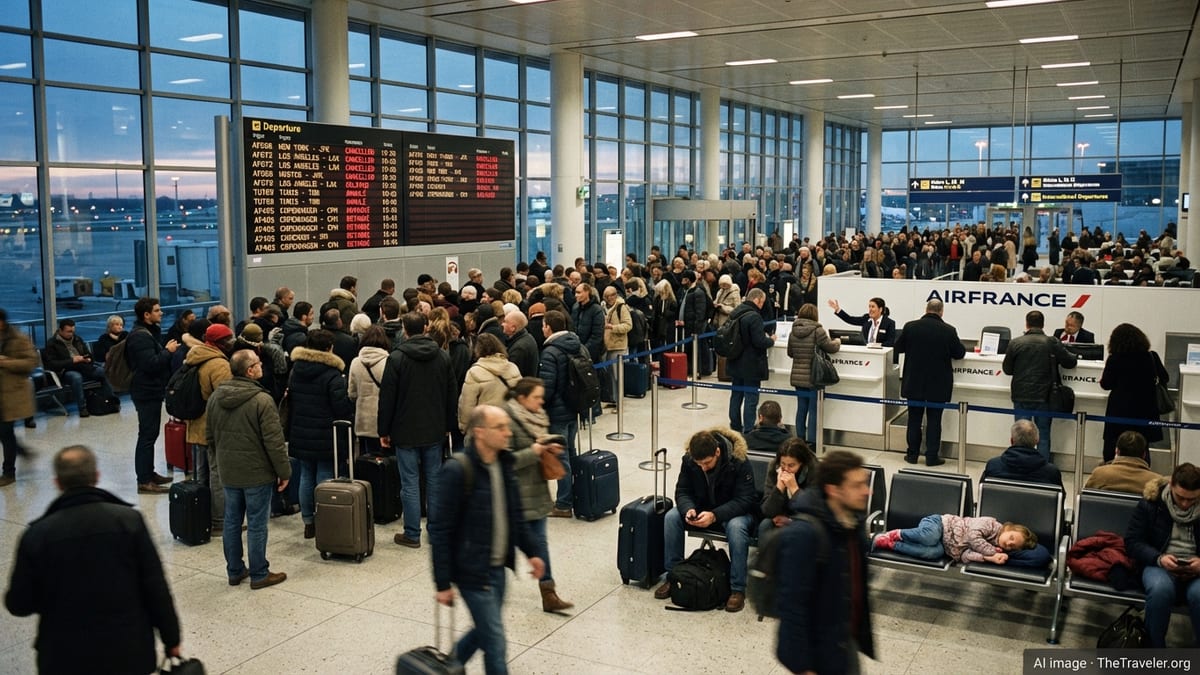
Incident in Stavanger sparks public outcry
According to recent Norwegian and international media coverage, the incident took place in late September 2026 at Stavanger Airport Sola in western Norway. The Ukrainian citizen, who uses a wheelchair and has reduced mobility, had been attempting to travel to Romania via a Ryanair flight.
Reports indicate that ground staff refused to allow the passenger to board, citing concerns about the individual’s ability to move independently in an emergency. As a result, the traveler remained in Norway for roughly two days while alternative arrangements were sought. Coverage notes that family members and local contacts struggled to secure assistance and clarification on the decision.
Publicly available information shows that the case rapidly attracted attention in both Norway and Ukraine, with disability advocates arguing that the treatment was humiliating and inconsistent with the passenger’s rights. Commentators in the travel sector say the episode illustrates ongoing gaps between formal protections for passengers with reduced mobility and the way those rules are implemented at airports.
Ryanair has not, at the time of writing, publicly detailed its handling of this specific case beyond general references to safety requirements and the need for some passengers to travel with a companion. The carrier’s broader policies on special assistance form part of a Europe-wide framework intended to prevent discrimination against travelers with disabilities.
What EU and Norwegian rules say about disabled air passengers
Within the European Union and European Economic Area, including Norway, rules for passengers with disabilities or reduced mobility are based on Regulation (EC) No. 1107/2006. Guidance from Norway’s Civil Aviation Authority explains that air travelers who need assistance are entitled to help at the airport and during boarding at no additional charge when flying within the EU and EEA. This includes help with check-in, moving through the terminal, boarding and disembarkation, and collecting baggage.
Norwegian regulatory information states that refusing travel on the grounds of disability or reduced mobility is generally forbidden except where necessary to satisfy clearly defined safety requirements, or when the size of the aircraft or its doors makes boarding physically impossible. In cases where a reservation or boarding is refused for safety reasons, airlines are expected to make reasonable efforts to propose an acceptable alternative routing or solution.
National guidance further notes that if passengers are denied boarding in situations not justified by safety or operational limitations, they may be entitled to claim a refund or re-routing under European passenger rights rules. Where a journey is disrupted overnight, carriers may also be expected to provide meals, refreshments, and accommodation, depending on the circumstances and applicable regulations at the time.
The incident in Stavanger has therefore raised questions about whether the airline fulfilled its obligations to inform the passenger of their rights, offer appropriate re-routing, and secure temporary accommodation while the traveler was unable to leave Norway. Those details have not been fully clarified in published accounts, leaving some aspects of the case under review by consumer and aviation bodies.
Ryanair’s policies on passengers with reduced mobility
Ryanair’s public assistance guidelines state that passengers with reduced mobility who are self-reliant may travel independently, while those who are not self-reliant must be accompanied by a non-disabled person aged 18 or over. The airline defines self-reliance mainly in terms of a passenger’s ability to understand safety instructions, unfasten a seat belt, use an oxygen mask and life vest, and reach an emergency exit without help.
The carrier also sets out procedures for requesting special assistance during booking or up to a specified time before departure. This can include help with wheelchairs, boarding lifts, and support moving to and from the aircraft door. While such services are described as free of charge for passengers with reduced mobility, they may depend on advance notification so that airports and handling agents can allocate staff and equipment.
However, disability organizations in Europe have long argued that the boundary between legitimate safety concerns and discriminatory screening can be unclear in practice. Critics say that when decisions are made late in the boarding process, travelers can find themselves stranded at airports far from home, often without sufficient information about assistance, reimbursement options, or complaint procedures.
In the Ryanair case in Norway, disability advocates have questioned whether the passenger received adequate explanation in a language they understood, and whether alternative routing to the intended destination was actively arranged. Without detailed public disclosure from the airline or regulators, observers note that it is difficult to determine exactly how the carrier applied its internal rules.
Airport responsibility and assistance systems in Norway
Stavanger Airport Sola is operated by Avinor, the state-owned company managing most of Norway’s civil airports. Information published by Avinor states that passengers with disabilities can request assistance to move through terminals, check in, pass security, and board flights. Requests are typically made through the airline or travel agent at least 48 hours before departure so that staffing and equipment can be coordinated.
Avinor’s guidance emphasizes that airports must provide special assistance points where travelers can report their arrival and ask for help. Norwegian authorities also describe service standards covering maximum waiting times for assistance once a passenger has announced their presence at the airport, particularly at larger airports with high passenger volumes.
The situation in Stavanger has prompted questions about how responsibilities are divided between the airport and airline when a boarding refusal occurs. While the airport is responsible for assistance on the ground, airlines remain responsible for decisions related to boarding and flight safety. When those decisions prevent a passenger from leaving the country as planned, there may be overlapping expectations around accommodation, communication with consular services, and coordination of onward travel.
Travel rights specialists note that cases involving foreign nationals with disabilities can be especially sensitive. If a passenger is left in a country where they have limited support networks or language skills, the practical impact of a boarding refusal can be severe, even if the underlying decision is argued to be consistent with safety policies.
Broader implications for disability rights in European air travel
The Ryanair incident in Norway comes amid wider discussion about accessibility in European aviation. Organizations representing passengers with disabilities point to repeated complaints involving insufficient pre-flight assessment, late-stage refusals at the gate, and inconsistent interpretation of what constitutes being self-reliant.
In recent years, regulators across Europe have urged airlines and airports to improve staff training on disability rights, standardize communication around assistance options, and ensure that information on complaint mechanisms is easier to access. Some travel observers argue that higher penalties and more visible enforcement by national authorities could be necessary to change behavior within the industry.
For travelers with disabilities and reduced mobility, the case underlines the importance of documenting assistance needs when booking, confirming arrangements with the airline well before departure, and keeping written records of any refusals or disruptions. Consumer advocates also encourage passengers to contact national enforcement bodies for aviation rights if they believe rules have not been respected.
As attention focuses on what happened at Stavanger Airport Sola, the experience of the stranded Ukrainian passenger is being cited in public debate as a reminder that formal protections are only as strong as their implementation on the ground. The outcome of any reviews arising from the case may influence how European airlines and airports manage disability assistance and boarding decisions in the years ahead.