

More news on this day
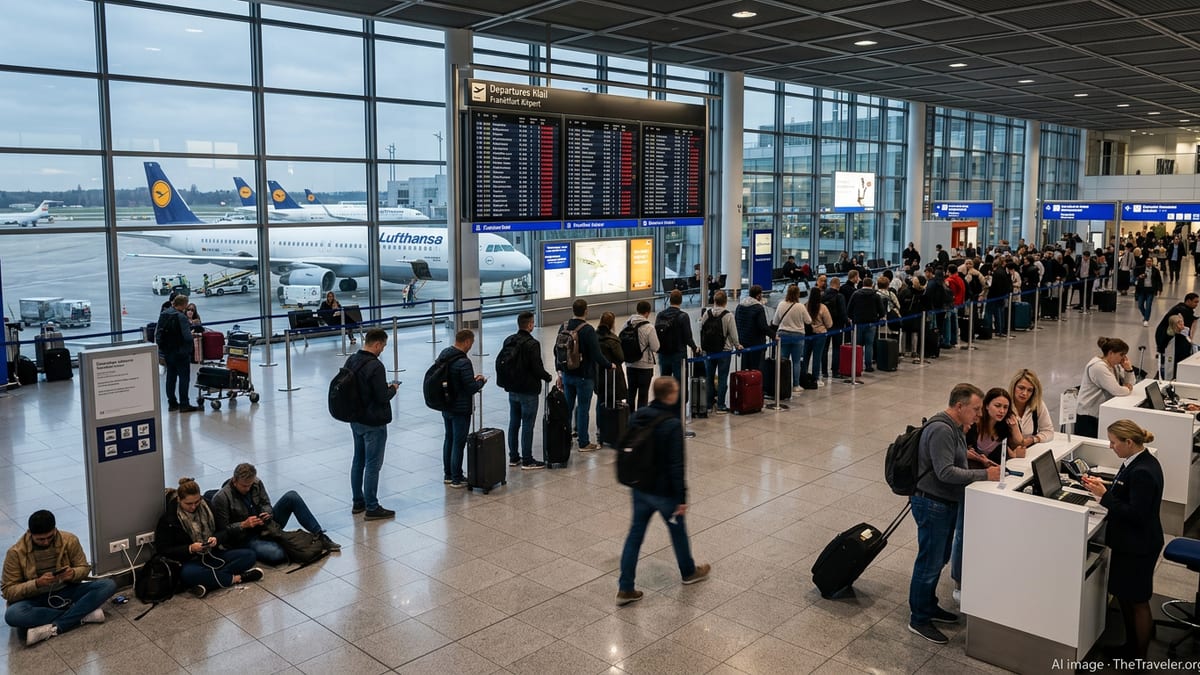
Thousands of passengers were left sleeping on terminal floors and queuing at service desks on Thursday as a Lufthansa pilots’ strike triggered 444 flight cancellations and at least 45 delays across Germany, crippling operations at Frankfurt, Munich and Hamburg and disrupting travel to key European cities including Warsaw, Budapest, Sofia, Geneva and Amsterdam.
Get the latest news straight to your inbox!
Major German Hubs Brought to a Standstill
The 48-hour walkout, called by the Vereinigung Cockpit pilots’ union, hit Lufthansa’s main hubs at Frankfurt and Munich hardest, with Hamburg also reporting widespread disruption. Early morning departure boards at all three airports showed long columns of cancelled and delayed flights, as ground staff struggled to rebook affected travelers and arrange scarce hotel rooms.
Lufthansa said it was forced to scrap 444 flights from its schedule for the first strike day alone, while another 45 services were delayed beyond two hours as aircraft and crews were repositioned. The cancellations represented a significant share of the airline’s planned operations at its German bases, although the carrier stressed that more than half of its overall schedule would still operate with the help of partner airlines and larger aircraft.
At Frankfurt, Germany’s busiest airport, long lines formed at transfer desks as passengers arriving on unaffected services discovered their onward connections had disappeared. In Munich, families returning from ski holidays and business travelers heading to key financial centers reported spending hours in queues, often receiving only last-minute information about whether they would be able to leave the country that day.
Hamburg, while smaller, saw knock-on chaos as regional links into Lufthansa’s hub system were cut. Flights to Frankfurt and Munich were among the first to be pulled, leaving travelers from northern Germany scrambling for alternative routes on rail and competing airlines.
European Network Ripple Effects
The strike’s impact was quickly felt far beyond Germany’s borders, as Lufthansa’s role as a key transfer carrier disrupted air corridors across Europe. Services to Warsaw, Budapest, Sofia, Geneva and Amsterdam were among the most heavily affected, with numerous rotations canceled or heavily delayed as aircraft failed to arrive from Germany.
In Warsaw and Budapest, airport information screens showed clusters of cancelled Lufthansa flights to and from Frankfurt and Munich, cutting off important links used by business travelers and tourists heading to long-haul destinations. Regional carriers that codeshare with Lufthansa began warning customers that even flights still listed as operating could suffer rolling delays depending on aircraft availability.
Geneva and Amsterdam, both major business and diplomatic hubs, reported congested departure halls as stranded passengers attempted to rebook on other European airlines. Ticket counters for alternative carriers saw a surge in demand, pushing last-minute fares sharply higher on routes that would normally be well served by Lufthansa and its Star Alliance partners.
In Sofia and other southeastern European capitals, the disruption highlighted the dependence many travelers have on single-stop connections through Germany. Several passengers reported being rerouted through less direct itineraries via Vienna, Zurich or Paris in order to reach their destinations, often adding many hours to journeys that would typically require a short change in Frankfurt or Munich.
Stranded Passengers Face Long Queues and Limited Options
For travelers caught in the middle of the disruption, the strike quickly turned into an exercise in patience. At Frankfurt, airport staff handed out water and snack vouchers as lines at the Lufthansa service counters snaked along the terminal. Some passengers reported waiting more than three hours to speak with an agent about rebooking or refunds.
With so many flights canceled at short notice, hotel rooms near major airports filled up rapidly. By late afternoon, many travelers were told that Lufthansa could guarantee rebooking but not immediate accommodation, forcing some to bed down in gate areas and baggage halls. Families with young children, in particular, struggled to find quiet spaces to rest as terminals remained busy well into the night.
Digital channels offered only partial relief. While the airline’s app and website allowed some passengers to rebook themselves, others said the systems repeatedly crashed or offered only limited options, typically on flights departing a day or more later. Social media channels filled with images of crowded departure halls in Frankfurt and Munich as frustrated passengers vented about the lack of clear information.
Rail services also came under pressure as travelers looked for alternatives. High-speed trains between Frankfurt, Munich, Hamburg and neighboring countries saw a surge in bookings, with some departures selling out entirely. For short-haul travelers headed to nearby hubs such as Amsterdam or Geneva, overland routes became a pragmatic, if slower, substitute for disrupted air links.
Union Demands and Lufthansa’s Response
The strike was called after talks between Lufthansa management and the Vereinigung Cockpit union broke down over pay scales, scheduling rules and long-term job security. Pilots argue that years of wage restraint and increasing roster pressure have left them carrying a heavier workload without adequate compensation or guarantees on future conditions, especially as the group restructures around new subsidiaries.
Union representatives said a 48-hour walkout was necessary to send a clear signal to management, accusing Lufthansa of failing to present a serious, inflation-adjusted pay offer and of pushing contract changes that would dilute protections on working hours. They stressed that safety remained paramount, but argued that sustainable working conditions were essential to maintaining high standards in the cockpit.
Lufthansa executives, for their part, condemned the timing and scope of the strike, pointing to the large number of passengers affected and the potential financial damage to the company. The airline said it had put forward what it described as a fair and competitive proposal, adding that the disruption would ultimately weaken its ability to invest in new aircraft, routes and jobs.
Management reiterated that it was willing to return to the negotiating table at any time, but warned that repeated industrial action would undermine confidence among both customers and corporate partners who rely on the airline’s extensive global network. Analysts noted that the strike comes at a delicate moment for European aviation, with carriers balancing high demand for travel against cost pressures and lingering operational constraints.
What Travelers Can Expect in the Coming Days
With the strike scheduled to run through Friday, operations across Lufthansa’s German network are expected to remain fragile even on flights that are still listed as operating. Aircraft and crew imbalances can take days to unwind, meaning that residual delays and sporadic cancellations are likely to continue into the weekend, particularly on busy hub routes through Frankfurt and Munich.
Travel experts advise passengers booked on Lufthansa or on codeshare tickets routed via German airports to monitor their flight status closely and to consider avoiding tight connections. Even when flights are not formally canceled, departure times may shift as the airline juggles aircraft and crew availability and gives priority to long-haul services where few alternative options exist.
Passengers whose flights are canceled are generally entitled to rerouting or refunds, and under European passenger rights rules may also qualify for compensation depending on the circumstances of the disruption and the notice provided. However, claiming such compensation often requires persistence and documentation, and payouts typically arrive weeks after the event.
For now, the thousands stranded in Frankfurt, Munich and Hamburg remain focused on a more immediate goal: simply getting home or reaching long-planned holidays and business meetings. Whether the current stand-off pushes both sides back to the bargaining table or marks the start of a longer period of labor unrest will determine how long Europe’s air travelers will have to live with the risk of more days spent on terminal floors instead of in the air.