

More news on this day
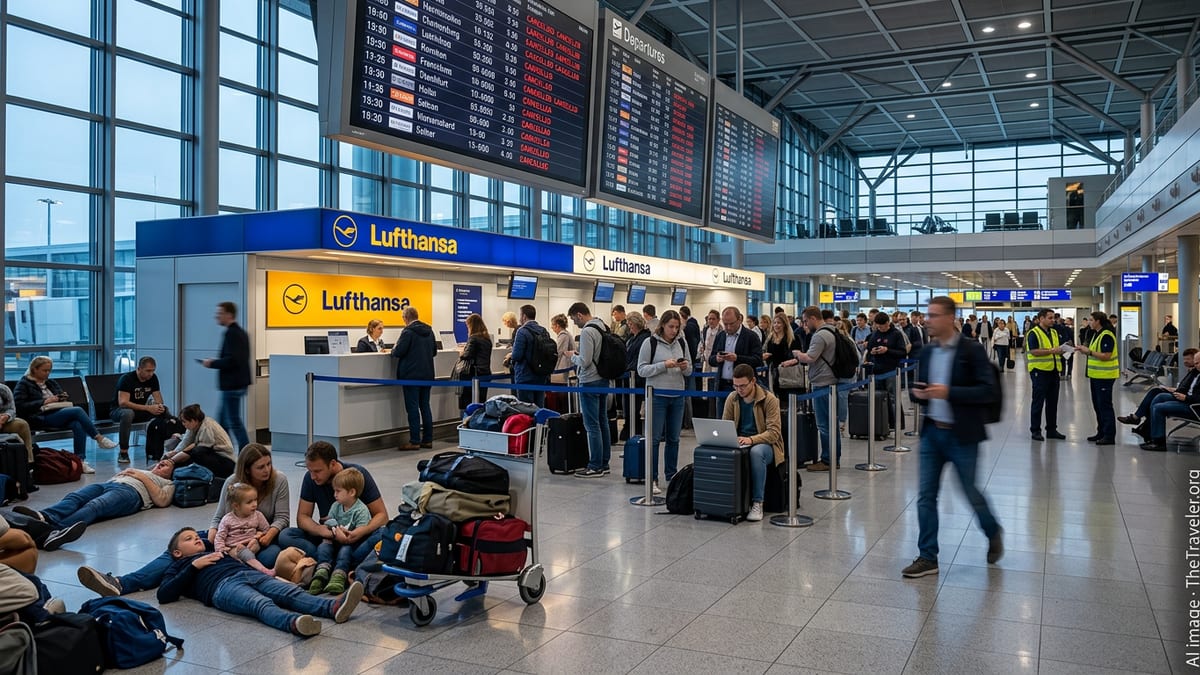
Thousands of passengers were left sleeping on terminal floors and queuing at service desks on Thursday as a Lufthansa pilot strike forced 444 flight cancellations and at least 45 delays across Germany, severely disrupting operations at Frankfurt, Munich, and Hamburg airports and cutting key links to cities including Warsaw, Budapest, Sofia, Geneva, and Amsterdam.
Get the latest news straight to your inbox!
Major German Hubs Face Wave of Cancellations
The latest industrial action by Lufthansa pilots, called by the Vereinigung Cockpit union, hit the airline’s largest bases just as the busy spring travel period gathers pace. Frankfurt and Munich, Lufthansa’s primary intercontinental hubs, saw large portions of their short- and medium-haul schedules wiped from departure boards, while regional operations at Hamburg were also sharply curtailed.
By mid-afternoon, airport and airline officials reported 444 Lufthansa flights canceled across the network, with an additional 45 services operating with significant delays. The impact rippled through crowded departure halls, where long lines formed at rebooking counters and passengers clustered around information screens showing swathes of red “annuliert” notices.
Ground staff struggled to keep up with the volume of stranded travelers in Frankfurt and Munich, where connecting traffic is normally timed to tight schedules. With pilots walking off duty for a coordinated 48-hour period, aircraft and crews quickly fell out of position, forcing the airline to trim rotations and consolidate services even on routes that were not initially targeted.
Hamburg, typically a secondary hub for Lufthansa’s regional flying, also saw numerous CityLine and European departures canceled. The disruption there was particularly acute for passengers relying on short hops to Frankfurt or Munich for onward long-haul connections.
Travel to Key European Cities Severely Disrupted
The cancellations and delays had an immediate knock-on effect across Europe, with popular business and leisure routes among the hardest hit. Travelers bound for Warsaw, Budapest, Sofia, Geneva, and Amsterdam reported sudden cancellations, last-minute gate changes, and rebookings that stretched into the following days.
Because many of these destinations are served primarily via Lufthansa’s German hubs, a blocked leg out of Frankfurt, Munich, or Hamburg often meant entire itineraries collapsed. Passengers heading to Warsaw and Budapest, in particular, faced limited same-day alternatives, with remaining seats on rival carriers selling out quickly or priced far above normal levels.
At Geneva and Amsterdam, airport authorities reported clusters of inbound and outbound gaps in schedules where Lufthansa services would normally operate throughout the day. Airlines in the wider Star Alliance network attempted to absorb some displaced travelers, but capacity constraints meant many were re-routed on complex, multi-stop journeys or asked to delay their trips.
For passengers heading toward or transiting through Sofia, options were even more restricted. Several travelers reported being advised to rebook days later or to accept routings via entirely different hubs, such as Vienna or Zurich, as Lufthansa and its partners tried to patch together what capacity remained.
Passengers Face Long Queues, Hotel Shortages, and Rebooking Chaos
Inside Germany’s major airports, the human cost of the strike was immediately visible. Families with young children sat on suitcases or improvised beds from jackets and blankets, while business travelers worked on laptops perched atop trolleys in crowded gate areas. Many passengers described waiting hours in line to speak with a Lufthansa agent about rebooking or refunds.
As evening approached, demand for last-minute hotel rooms in the Frankfurt and Munich airport areas surged. Some travelers reported being handed hotel vouchers only to discover that properties near the terminals were already fully booked, forcing them to seek accommodation further afield or spend the night in the terminal.
Digital channels were also strained. The Lufthansa app and website intermittently struggled under heavy traffic as thousands tried to rebook or check updated departure times at once. Social media feeds were filled with images of packed departure halls and confusion at gate areas, along with complaints from travelers about inconsistent information regarding their rights and options.
Despite the chaos, some passengers managed to salvage their travel plans by switching to Germany’s long-distance rail network or booking last-minute seats on other airlines. However, those alternative routes were quickly overwhelmed, and rail operators warned that they, too, were facing capacity pressures as air travelers shifted onto trains.
Lufthansa and Union Trade Blame as Talks Stall
The Vereinigung Cockpit union says the strike is a response to stalled negotiations over pay scales, retirement benefits, and long-term job security. Union representatives argue that pilots accepted concessions during the pandemic to help stabilize the airline and are now seeking improved conditions as Lufthansa returns to profitability and demand recovers.
Lufthansa, for its part, has repeatedly highlighted the cost burden of union demands, warning that substantial across-the-board increases in pilot compensation and pension contributions would undermine efforts to keep fares competitive in a market still grappling with high fuel costs and lingering post-pandemic disruptions. The airline insists it has put forward what it describes as a fair and forward-looking package.
Both sides accuse the other of intransigence. Union leaders say management has not meaningfully adjusted its position in several negotiation rounds, leaving pilots with few options other than industrial action. Lufthansa officials counter that repeated strikes erode customer trust and damage Germany’s reputation as a reliable aviation hub at a time when rival carriers are vying for transfer traffic.
Government officials have urged both parties to return to the bargaining table quickly, warning that prolonged disruptions could hurt business travel, tourism revenue, and the broader European air transport network. However, no breakthrough was reported as passengers queued for rebookings at affected airports.
What Travelers Can Expect in the Coming Days
With aircraft and crews out of sequence after hundreds of cancellations, passengers have been warned that irregular operations could persist even after the official strike period ends. Airlines generally require at least a full day to reposition planes and restore schedules once a large-scale disruption has occurred, and Lufthansa is no exception.
Travelers with upcoming bookings on Lufthansa or its regional affiliates are being urged to monitor their flight status closely and to allow extra time for connections, particularly when transiting through Frankfurt, Munich, or Hamburg. Industry experts say that even flights showing as “on time” can be vulnerable to late changes as the airline adjusts aircraft rotations and crew assignments.
Alternative arrangements are likely to remain tight on routes to and from Warsaw, Budapest, Sofia, Geneva, and Amsterdam, where seat availability has already been squeezed by the initial wave of cancellations. Passengers able to postpone non-essential travel or accept routings via other European hubs may have a better chance of avoiding extended airport waits.
While Lufthansa has promised to work “around the clock” to re-accommodate affected travelers, the scale of the disruption means many will reach their destinations hours or even days later than planned. For thousands stranded in Germany’s key hubs, the strike has turned routine journeys into extended, uncertain odysseys through some of Europe’s busiest airports.