

More news on this day
Germany’s Lufthansa is preparing to receive its first Boeing 777-9 by 2027, a milestone that will anchor one of the most ambitious long-haul fleet overhauls currently underway in the global aviation industry.
Boeing’s 777-9 Nears Entry Into Service After Years of Delay
Boeing’s 777X program, of which the 777-9 is the launch variant, has endured repeated certification and production delays, but 2027 is now emerging as the key delivery year for launch customers. Boeing has indicated that the first production 777X is expected to fly in 2026, with Lufthansa slated as the initial operator, positioning the German carrier at the forefront of the type’s commercial debut.
The 777-9 is designed as Boeing’s new flagship twin-aisle jet, offering a stretched fuselage, new composite wings with folding wingtips, and the latest-generation General Electric GE9X engines. Compared with older 777-300ER models, Boeing is promising notable fuel-burn and emissions reductions per seat, a critical selling point as regulators and investors intensify scrutiny of airline climate strategies.
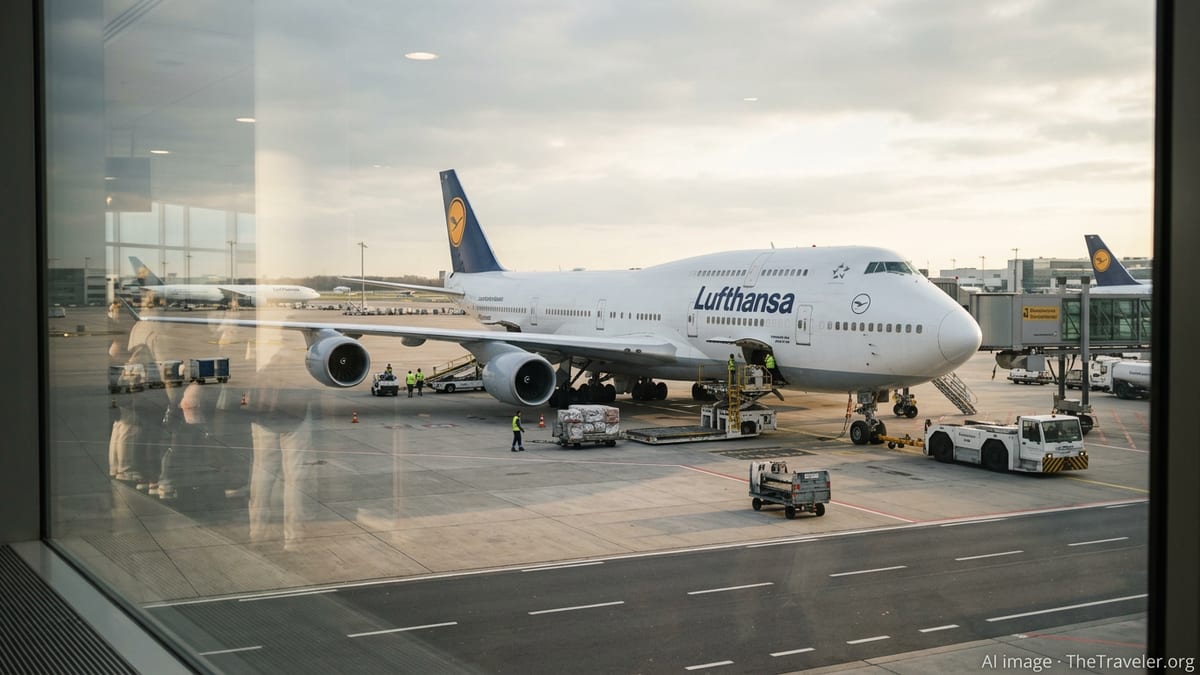
For Lufthansa, the aircraft arrives later than originally planned. Earlier timelines had suggested introduction around 2020, with the type earmarked to replace older four-engine Boeing 747-400s and Airbus A340s. Instead, the entry into service has slid to “not before 2027,” reflecting wider certification challenges for Boeing and forcing Lufthansa to extract more life from its legacy long-haul fleet while accelerating interim orders of Airbus A350s and Boeing 787-9s.
Lufthansa Pivots to a Leaner, More Efficient Long-Haul Fleet
The 777-9 is one pillar of a sweeping modernization strategy that Lufthansa Group has been detailing to investors in recent years. Corporate presentations and sustainability reports outline plans to add more than 280 new aircraft across the group by 2030, including Airbus A320neo-family jets for European operations and a slate of new long-haul types such as the A350-900, 787-9 and 777-9.
Management has highlighted a clear goal: simplify a historically complex widebody mix while cutting fuel burn and maintenance costs. At its peak, Lufthansa operated a patchwork of A340-300s, A340-600s, 747-400s and older 747-8s alongside more modern twins. The next decade is expected to be defined by a smaller family of high-efficiency widebodies centered on the A350, 787 and 777X, supported by a reduced number of legacy 747-8s on marquee routes.
This transition is already visible in the carrier’s schedule. New A350-900s and 787-9s equipped with the airline’s Allegris long-haul cabin are progressively taking over premium routes from Munich and Frankfurt, and older four-engine aircraft are steadily being retired or redeployed. The arrival of the 777-9 will allow Lufthansa to accelerate that process on high-demand trunk routes where very large aircraft remain economically viable.
Cabin Product and Passenger Experience Enter a New Phase
For travelers, the first Lufthansa 777-9s will be closely watched as potential flagships for the airline’s next-generation onboard product. Lufthansa has already rolled out its Allegris cabin concept on select A350 and 787-9 aircraft, introducing a redesigned long-haul business class with more privacy, direct aisle access, and multiple seating options, along with refreshed premium economy and economy cabins.
Industry observers expect the 777-9 to be configured in line with, or even as an evolution of, this Allegris standard. The aircraft’s wider cabin and high-capacity layout lend themselves to a large, high-revenue premium cabin while maintaining dense economy seating for major intercontinental routes. The combination of a modern interior and significantly lower fuel consumption per seat is central to Lufthansa’s pitch to both corporate clients and leisure travelers.
Although the airline has not yet disclosed final 777-9 seating plans, executives have consistently signaled that new aircraft types will be equipped with the most up-to-date hard product as part of a broader effort to boost yields and improve its competitive position on transatlantic and Asia–Europe markets.
Global Airlines Align Around the 777X for Next-Generation Capacity
Lufthansa is not alone in banking on the 777-9 as a workhorse for high-density long-haul flying. Gulf carrier Emirates, which operates the world’s largest Boeing 777 fleet, has also shifted its delivery expectations for the 777X toward 2027, underscoring how the program’s revised schedule is now converging around the latter half of the decade.
Other carriers in Europe and the Middle East have positioned the 777-9 as a successor to aging large widebodies, particularly the Airbus A380 and earlier 777 variants. Once certified, the 777-9 is expected to offer a combination of range, payload and unit economics that few existing aircraft can match, giving airlines the ability to concentrate capacity on constrained hubs while trimming operating costs.
In this context, Lufthansa’s role as launch operator carries weight far beyond Germany. A smooth entry into service will be closely monitored by regulators, lessors and rival airlines, many of whom are recalibrating their own long-haul strategies as they await firm certification milestones from Boeing. Successful early operations in Lufthansa colors could restore confidence in the 777X program after years of delay and cost overruns.
Sustainability Pressures Drive Fleet Renewal Decisions
The timing of Lufthansa’s first 777-9 also intersects with intensifying environmental and regulatory pressures in Europe. The airline has publicly committed to significant reductions in CO2 emissions intensity, and fleet renewal is consistently cited as one of the most powerful levers to achieve those goals alongside sustainable aviation fuel and operational efficiencies.
New-generation long-haul aircraft such as the 777-9, A350-900 and 787-9 typically deliver double-digit percentage gains in fuel efficiency compared with older four-engine models. For routes where passenger demand justifies very large aircraft, the 777-9’s size and efficiency profile make it a pivotal tool in shrinking emissions per passenger while preserving key hub connections.
As Lufthansa prepares for a late-decade debut of the 777-9, the airline’s broader long-haul renewal strategy is already reshaping its global network. By the time the first 777-9 enters service, travelers on many of Lufthansa’s flagship intercontinental routes are likely to find a markedly different fleet taking them across the Atlantic and beyond, reflecting a structural shift in how major airlines balance capacity, efficiency and sustainability in the post-pandemic era.