

More news on this day
Lufthansa is facing major disruption at the close of the Easter travel period as a 24-hour cabin crew strike grounds around 500 flights, leaving tens of thousands of passengers stranded or scrambling for alternative routes across Europe.
Get the latest news straight to your inbox!
Strike halts operations at key German hubs
Reports from German and European aviation outlets indicate that the industrial action, called by the Independent Flight Attendants’ Organization (UFO), has hit Lufthansa’s largest hubs in Frankfurt and Munich particularly hard. Hundreds of departures and arrivals have been canceled or severely delayed, with disruption spreading to several regional airports served by Lufthansa and its regional arm, Lufthansa CityLine.
The walkout, which began at midnight on Friday, focuses on cabin crew employed by Lufthansa and CityLine. Publicly available data from airport departure boards and airline schedules show that roughly three out of four Lufthansa flights scheduled from Frankfurt during the strike window have been canceled, while Munich has seen a similarly reduced schedule. The result is a partial shutdown of one of Europe’s largest airline networks during a peak travel period.
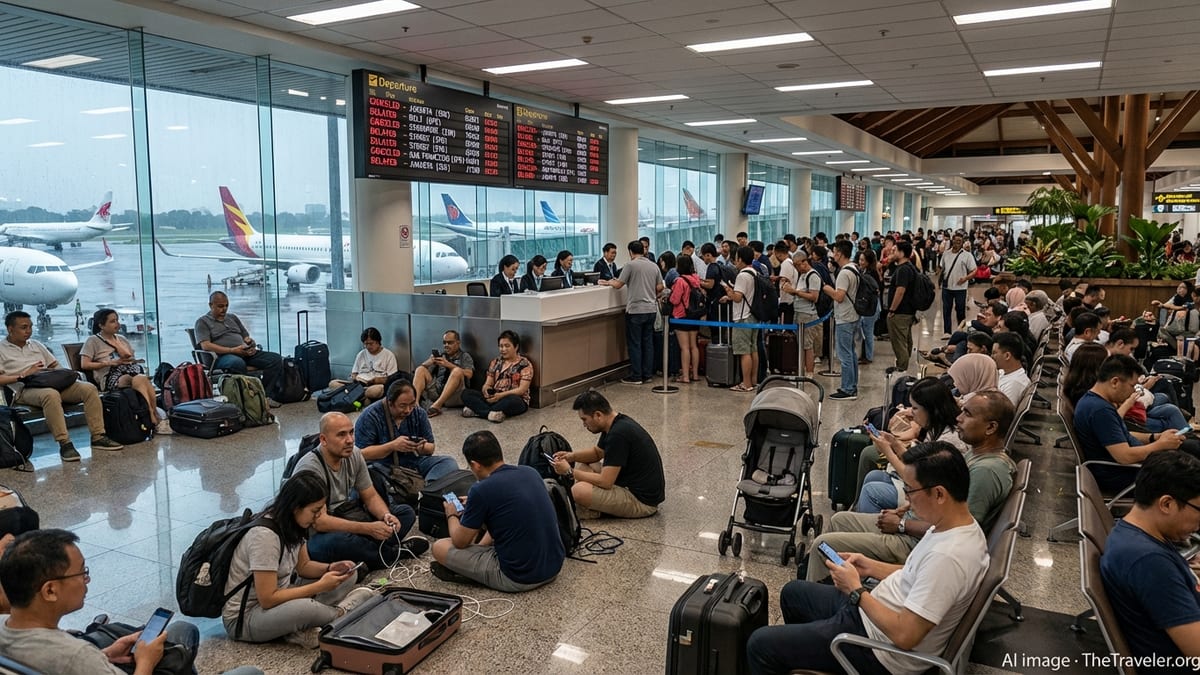
Airports have reported crowded terminals as passengers face long queues at service desks and self-service kiosks while seeking new itineraries. Many travelers who started their journeys outside Germany are finding themselves stranded at intermediate hubs after onward Lufthansa connections were removed from the timetable at short notice.
The airline is attempting to stabilize its skeleton operation with a reduced timetable, rerouting some travelers via subsidiaries within the Lufthansa Group and select partner airlines where spare capacity exists. However, the scale of the cancellations means that many passengers are facing overnight stays, lengthy detours, or trips postponed by several days.
Passenger impact stretches across Europe
The impact of the strike is radiating well beyond Germany’s borders. Local media and airport statements in neighboring countries describe a growing list of canceled Lufthansa services, particularly on short- and medium-haul routes that rely on Frankfurt and Munich as transfer points.
Reports from Austria, Switzerland, Hungary, Lithuania, and Romania highlight canceled or heavily disrupted Lufthansa connections to their main airports. In Vienna, Zurich, Budapest, and Vilnius, airport operators have recorded clusters of flight cancellations, as well as late-arriving aircraft that push knock-on delays into the evening schedule. Some business travelers returning from the Easter holidays have been rebooked on alternative carriers, while others have had to complete legs of their journey by rail or long-distance coach.
Travel forums and customer advisories indicate that the disruption is especially severe for passengers booked on multi-stop itineraries, where one canceled leg can invalidate the entire ticket. Travelers on codeshare flights operated by Lufthansa for partner airlines are also affected, even when their booking was made with another carrier. Many are now relying on alliance partners or consumer-rights guidance to understand their rebooking and compensation options.
Long-haul operations appear to be somewhat more resilient, with a portion of intercontinental flights still operating. However, those that do depart are frequently missing connecting passengers who were unable to reach the hub airports in time, and arriving aircraft are often out of position for their scheduled return services.
Union dispute centers on pay and working conditions
The latest strike is part of an escalating labor dispute between UFO and Lufthansa over wages and working conditions for cabin crew. According to published coverage in German business media, the union is seeking significant pay increases and improvements in rostering rules, arguing that crew have faced rising living costs and operational pressures as traffic has rebounded.
Lufthansa, in statements shared through its public information channels, has described recent strike calls as an unnecessary escalation at a time when the carrier is already managing geopolitical challenges and a complex restructuring of its regional operations. Management has pointed to recently concluded agreements at other subsidiaries as evidence that compromise is possible, while maintaining that some of the union demands would substantially raise costs.
The dispute comes on top of separate tensions with pilots represented by the Vereinigung Cockpit (VC) union. Pilots have already staged walkouts in recent weeks over pensions and pay scales, and VC has called further strike days affecting Lufthansa, Lufthansa Cargo, and Lufthansa CityLine. The overlapping waves of industrial action by cabin crew and pilots are putting sustained pressure on the airline’s network and testing its resilience during one of the busiest periods of the year.
Analysts observing the situation note that the strikes are unfolding as the Lufthansa Group pushes ahead with a reorganization of its short- and medium-haul brands, including the planned wind-down of CityLine and the expansion of newer units. Union representatives have warned that these moves risk driving a wedge between employee groups under different contracts and conditions, a concern that is feeding into current negotiations.
Travelers face rebooking scramble and compensation questions
For passengers, the immediate challenge is navigating rebooking in a crowded market. Publicly available guidance from Lufthansa and several partner airlines encourages travelers to check their flight status online before heading to the airport and to use digital self-service tools where possible. However, anecdotal accounts from affected travelers describe overloaded call centers, error messages on booking platforms, and long lines at ticket counters in Frankfurt and Munich.
With so many flights canceled, alternative options within the Lufthansa Group are limited, particularly on popular routes where remaining services are quickly selling out. Some travelers are turning to rail services between major European cities, or to low-cost competitors at secondary airports, often at their own expense. Others report that they have been rebooked onto flights days later than originally planned, stretching short breaks into unexpected extended stays.
The disruption is also raising renewed questions about passenger rights under European Union rules on air travel. Consumer organizations point out that EU261 regulations generally provide compensation for cancellations and long delays when they are caused by internal labor disputes at an airline. Travelers are being advised to keep detailed records of boarding passes, booking confirmations, and receipts for meals and accommodation, in case they choose to pursue claims once their journeys are completed.
Legal experts quoted in European consumer media note that large-scale strikes can generate a substantial volume of compensation requests, which may take months to process. Some passengers from earlier rounds of Lufthansa labor action in March are reportedly still awaiting decisions on their claims, suggesting that those affected by the latest cancellations may face a lengthy wait for resolution.
Further disruption likely as new strikes loom
While the current cabin crew strike is scheduled as a 24-hour action, aviation industry reporting suggests that travelers could face several more days of irregular operations. Aircraft and crews are out of position across the network, which typically leads to follow-on cancellations and delays as schedules are gradually rebuilt.
Adding to the uncertainty, pilots represented by Vereinigung Cockpit have announced new walkouts for early in the coming week, covering Lufthansa, Lufthansa Cargo, and Lufthansa CityLine. Notices from the union and subsequent coverage in international news outlets indicate that the upcoming pilot strike is expected to affect hundreds more flights on Monday and Tuesday, potentially compounding the backlog created by the cabin crew stoppage.
For Lufthansa, the overlapping actions by cabin crew and pilots come at a challenging moment for European aviation, with demand rebounding strongly and competition intensifying from low-cost carriers and Gulf-based airlines. Prolonged disruption risks undermining customer confidence at the start of the busy summer booking period, when many travelers finalize plans for long-haul and holiday travel.
Travel industry observers note that both sides still have incentives to reach a negotiated settlement. The airline is keen to protect its position as a leading European network carrier, while unions are under pressure from members who want improved contracts but also rely on consistent flying schedules for income. Until an agreement is reached, however, passengers planning to travel with Lufthansa in the coming days are being urged by travel advisers to monitor their bookings closely and prepare for potential last-minute changes.