

More news on this day
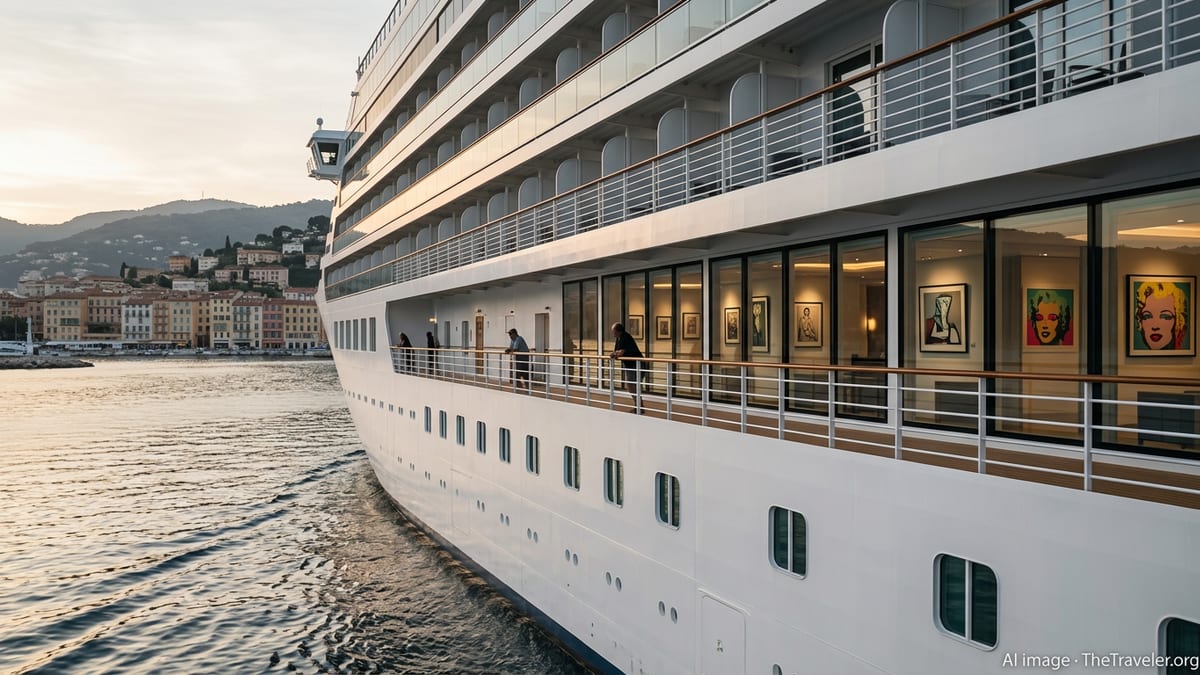
Luxury cruise lines in the United States, France and beyond are rapidly transforming their newest ships into floating art museums, showcasing works linked to Picasso, Warhol and Fabergé as they compete for culturally minded travelers who expect gallery-level experiences at sea.
Get the latest news straight to your inbox!
Fabergé Egg Becomes a Star Attraction in U.S. Waters
Publicly available information shows that Regent Seven Seas Cruises has placed fine art at the center of its newest ship, Seven Seas Grandeur, which entered service for the North American market in late 2023. The vessel carries a 1,600 piece curated collection estimated in the multi million dollar range, positioned as a differentiator in the crowded luxury cruise sector.
The centerpiece is a bespoke Fabergé egg titled Journey in Jewels, created in partnership with the historic jewelry house. According to published coverage and Fabergé’s own announcements, it is described as the first Fabergé egg to permanently reside at sea, installed in a dedicated glass case where guests can view its gemstone details and maritime inspired design while sailing itineraries from Miami and other U.S. ports.
Reports on the ship’s art program indicate that the Fabergé collaboration extends beyond the egg itself, with the commission acting as the crown of a broader collection that includes contemporary sculpture, large scale tapestries and gallery style corridors. Digital tools and self guided tours are being used to help guests navigate the pieces, reflecting a shift from decorative art to an interpretive, museum like experience on board.
The strategy appears aimed at a growing segment of travelers who weigh cultural content as heavily as cuisine or suite design when selecting a high end cruise. Industry observers note that by securing a one of a kind Fabergé object, Regent has staked an early claim in the race to turn ships into serious art destinations that begin and end in key U.S. homeports.
Picasso and Warhol Bring Blue Chip Names to the High Seas
While the Fabergé egg delivers jewelry heritage, other cruise brands are using fine art and modern masters to anchor their own cultural narratives. Travel trade reports highlight that Seven Seas Grandeur’s wider collection includes original works by Pablo Picasso, with lithographs and ceramics integrated into public spaces and private areas. These pieces are presented as part of a curated storyline that links early twentieth century modernism to contemporary design at sea.
Beyond Regent, new luxury line Explora Journeys, backed by the Switzerland based MSC Group and sailing itineraries that connect U.S. ports with Europe and the Caribbean, has promoted its ships as floating art galleries. Coverage of Explora I’s interiors notes museum grade works and limited edition prints, including screenprints by Andy Warhol and Roy Lichtenstein in key lobby spaces. The program mixes pop art with abstract sculpture and bespoke installations, creating a visual identity that is more reminiscent of a boutique hotel than a traditional cruise ship.
The presence of names such as Picasso and Warhol on cruise vessels reflects a broader confidence that guests recognize and value blue chip art. It also allows lines to speak directly to collectors and museum goers who might otherwise consider a land based city break in New York, Paris or London. On board, the artworks are framed by contemporary architecture, expansive windows and controlled lighting, giving passengers extended, informal access that differs from the time limited experience of a conventional gallery visit.
These collections remain relatively small compared with major institutions, but their visibility in lounges, stairwells and specialty restaurants gives them an outsized impact on the feel of each voyage. The result is that a transatlantic crossing or Caribbean itinerary can now double as an immersion in twentieth century art history, with Picasso’s lines and Warhol’s bold color fields becoming part of the daily visual backdrop.
French Lines Lean Into Riviera Art Heritage
France based operator Ponant is also using fine art and art themed itineraries to attract culturally focused passengers, particularly in the Mediterranean. Itineraries for 2026 published by the line include A Celebration of Art: The French and Italian Rivieras and Corsica, a themed cruise departing from Nice that highlights the region’s deep connections with artists including Renoir and Picasso.
According to Ponant’s promotional material, guests on this route can opt for shore excursions that revolve around dedicated museums and foundations. Program descriptions reference visits to museums devoted to Renoir and Picasso early in the sailing, as well as time at the Fondation Maeght near the end of the itinerary, known for its holdings of mid and late twentieth century art. The ship effectively serves as a base for a curated circuit of Riviera art sites, blurring the line between cruise and land based cultural tour.
Although Ponant’s vessels, many of them small expedition style ships flying the French flag, do not focus on a single marquee artwork at sea in the same way as Regent’s Fabergé egg, the company’s positioning emphasizes intellectual enrichment and partnerships with cultural institutions. Lectures, expert led talks and small group visits are used to contextualize what passengers encounter ashore, from coastal light that inspired painters to the architecture of modernist museum buildings along the Mediterranean.
This French approach underscores how art themed cruising can extend beyond what is hanging on the ship’s walls. By treating cities such as Nice, Cannes and Antibes as extensions of the floating experience, Ponant and similar lines encourage guests to see the cruise itself as a moving chapter in a wider European art itinerary spanning museums, studios and coastal landscapes.
From Decoration to Curated Cultural Programming
For decades, cruise ship art was often associated with commercial auctions and decorative prints that played a secondary role to casinos and production shows. Recent developments on lines with ties to the United States and France suggest a marked change in priorities, with art now framed as a core pillar of the onboard product rather than an add on.
Published coverage of Regent, Explora Journeys and other high end operators indicates that new vessels are being designed with specific works in mind, including custom niches, multi story walls and lighting schemes created to showcase sculptures, large canvases or monumental tapestries. In some cases, digital apps and interactive guides allow guests to follow curated trails through hundreds of pieces, mirroring practices used by major museums to help visitors navigate complex collections.
This evolution is also visible in how shore excursions are curated. In the Mediterranean, Baltic and North America, more itineraries now highlight museum openings, temporary exhibitions and private collection visits, sometimes tied to renowned artists such as Picasso or Fabergé. Travelers can move from viewing a commissioned object on board to standing in front of related works ashore, creating a continuous narrative across sea and land.
Industry analysts point out that these offerings align with a broader shift toward experiential luxury, where access, learning and storytelling carry as much weight as physical amenities. For cruise lines, investing in art and cultural partnerships can build brand distinction that is difficult to replicate, especially as ships themselves grow more similar in size and layout.
Cultural Travel at Sea Targets a New Generation
The embrace of fine art and design on luxury ships in U.S., French and global markets also reflects changing demographics. A younger cohort of affluent travelers, many of whom split time between major cities and remote work locations, is seeking travel options that merge relaxation with meaningful engagement. Cruises that feature works linked to Picasso, Warhol and Fabergé provide an accessible way to experience culture without navigating crowded city centers or multiple hotel stays.
At the same time, traditional cruise guests are being introduced to new artistic movements and stories in ways that feel informal and approachable. A Fabergé egg placed near a central staircase or a Warhol print in a lobby becomes part of the everyday environment rather than an object behind a velvet rope, lowering barriers that some travelers might feel in more formal cultural settings.
As more ships launch in the coming years, observers expect competition around onboard art to intensify, with lines exploring additional collaborations, artist residencies and themed sailings that connect itineraries in the United States, France and farther afield. The trajectory suggests that the phrase art at sea is evolving from a marketing slogan into a substantive promise, with luxury cruise vessels positioning themselves as moving cultural spaces that rival boutique museums on shore.
For travelers planning future voyages, that means choices will increasingly be shaped not only by destinations and dining, but by which ship offers the most compelling blend of ocean views and gallery worthy works. In this emerging landscape, Fabergé creations, Picasso pieces and Warhol prints are becoming as central to the travel story as any sunset over the open water.