

France’s air network is one of Europe’s busiest, anchored by Paris but supported by a constellation of regional airports that connect coastlines, wine regions, and tech hubs with the rest of the world. For travelers, knowing how the major French airports work in practice can make the difference between a stressful layover and a smooth start to a vacation or business trip. This guide walks you through the key airports, what they are best for, and how to move through them with confidence.
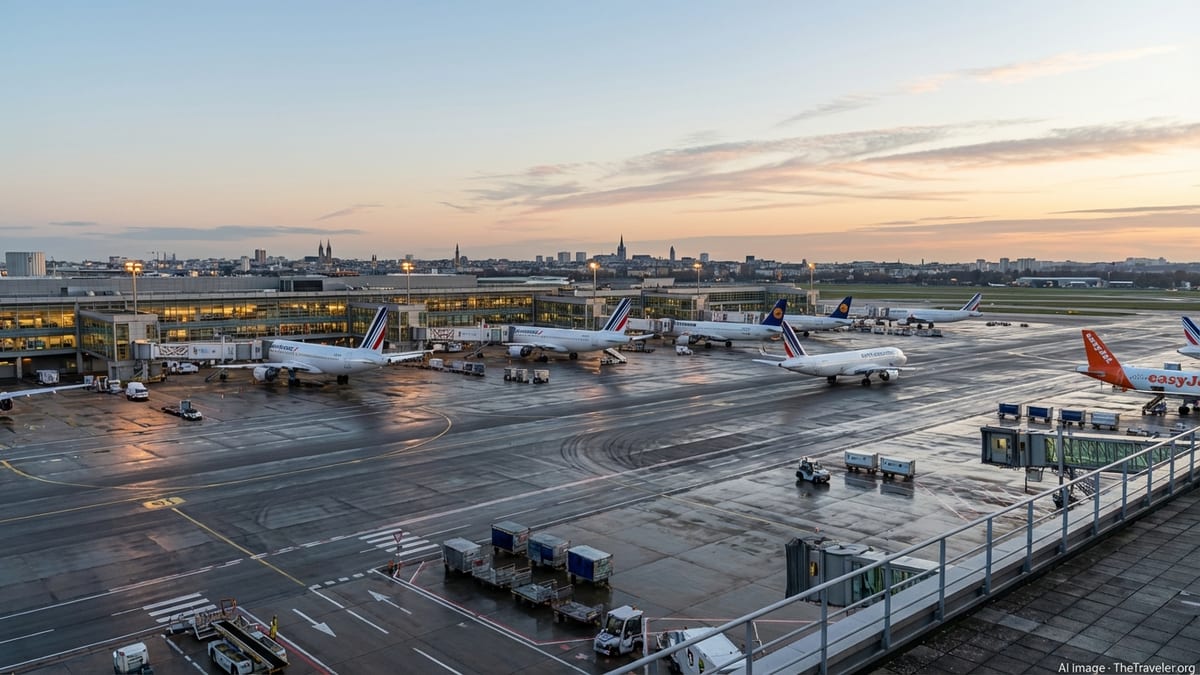
How France’s Airport Network Is Organized
France’s airport system is dominated by Paris Charles de Gaulle and Paris Orly, which together handle a significant share of the country’s international and domestic traffic. Charles de Gaulle serves as the primary intercontinental hub and one of Europe’s main connection points between North America, Europe, Africa, and Asia. Orly, historically the capital’s main airport, now focuses more on domestic flights, European routes, and services to the French overseas territories, but still offers a growing mix of international links.
Beyond Paris, a second tier of regional airports plays an important role for both tourism and business. Facilities in Nice, Marseille, Toulouse, Bordeaux, Nantes, and others connect directly to major European cities and, in some cases, to North Africa and the Middle East. These airports are especially important in peak summer months, when leisure traffic to the Mediterranean and Atlantic coasts surges and point to point flights reduce the need to connect via Paris.
In recent years, overall passenger numbers in France have rebounded strongly, with Charles de Gaulle again ranking among Europe’s busiest hubs and Orly handling more than thirty million passengers annually. While precise figures fluctuate year by year, the broader trend is clear: major French airports have largely recovered to, or in some cases surpassed, pre pandemic levels, which translates into crowded terminals at peak times and a strong emphasis on efficient ground transport links into city centers.
For travelers, this structure means you will likely arrive through Paris for long haul trips, but you may depart from or connect through a regional airport for specific destinations such as the Riviera, Provence, or the southwest. Understanding each airport’s layout, transport options, and quirks will help you choose flights wisely and plan realistic connection times.
Paris Charles de Gaulle: France’s Global Hub
Paris Charles de Gaulle Airport, often abbreviated as CDG, is France’s largest airport and the main hub for flag carrier Air France. Located roughly 23 kilometers northeast of central Paris, it typically handles more than seventy million passengers in a busy year and ranks among Europe’s top three airports by traffic. The airport is spread over several terminals that are grouped into distinct zones, with a mix of long haul, European, and low cost operations sharing the complex.
The layout can appear confusing at first glance. Terminals 2E, 2F, and 2G serve many long haul and European flights for Air France and its SkyTeam partners, while other sections of Terminal 2 host independent and low cost carriers. Terminal 1, a circular structure that has undergone modernization, caters mainly to international airlines from outside the main alliances. Traveling between terminals may require dedicated shuttle buses or an automated people mover, and connecting passengers should allow generous time for transfers, especially if they need to pass through passport control or security again.
Ground transportation links between Charles de Gaulle and Paris are extensive but can vary widely in speed and comfort. The RER B commuter train connects the airport directly to central stations such as Gare du Nord and Saint Michel, making it a popular option for travelers who want to avoid traffic on the highways. Dedicated express coach services, conventional buses, and licensed taxis are also available, along with app based ride services that operate under French regulations. Journey times can range from around thirty minutes on a fast train to over an hour by road during rush hour, so factoring in daytime congestion is critical when planning arrivals or departures.
As a major international hub, Charles de Gaulle offers a wide range of services, from business lounges and in terminal hotels to expanded passport control facilities and biometric gates for eligible travelers. Security and border queues can still be lengthy at peak times, particularly early morning and late afternoon bank periods. For long haul flights, arriving at the airport at least three hours in advance is strongly recommended, and more time may be wise during busy summer travel periods or on days affected by air traffic control disruptions in Europe.
Paris Orly: A Busy Second Gateway to the Capital
Paris Orly Airport, located to the south of the city, is the capital’s second major passenger hub and particularly important for domestic and short to medium haul flights. In a typical recent year it has handled more than thirty million passengers, roughly half the throughput of Charles de Gaulle. Many flights from Orly serve regional French cities, the French overseas departments in the Caribbean and Indian Ocean, and popular leisure destinations around the Mediterranean, alongside services run by low cost and hybrid airlines.
The airport’s terminals have been gradually modernized and are now grouped into a more unified complex known as Orly 1 2 3 and Orly 4, simplifying what was once a confusing split between west and south terminals. Facilities are generally easier to navigate than at Charles de Gaulle, with shorter walking distances and a more compact footprint. That makes Orly particularly attractive for travelers who value simplicity, as well as for those staying in southern or southeastern parts of the Paris region where road access to Orly can be quicker than to the larger northern hub.
Public transport connections to Orly have improved significantly, especially with the extension of Paris Metro Line 14 to the airport in 2024. This driverless metro line now links Orly directly to central hubs such as Chatelet Les Halles in about twenty five minutes, offering a predictable alternative to highway traffic. In addition, the Orlyval people mover connects the terminals to Antony station on the RER B line, while tramway line T7 serves Orly 4 and links to the Paris Metro at Villejuif, providing further lower cost options for budget minded travelers.
Travelers should keep in mind that Orly, while smaller than Charles de Gaulle, still experiences very busy peaks, particularly during school holidays and around major travel weekends. On such days, security lines and check in areas can feel as crowded as those at a much larger hub. Arriving early, using online check in, and understanding which part of the terminal your airline uses will help reduce stress. Occasional disruptions, such as air traffic control issues, can also have a pronounced effect because Orly’s capacity is limited by regulatory caps and runway configuration, leaving less flexibility to absorb delays.
Nice Côte d’Azur: Gateway to the French Riviera
Nice Côte d’Azur Airport serves as the main air gateway to the French Riviera and is the third busiest airport in France by passenger numbers. Located west of Nice along the Mediterranean coast, the airport handles more than fourteen million passengers in recent years and welcomes a mix of year round services and intense seasonal traffic during the summer. It is particularly important for links to luxury destinations such as Cannes, Antibes, and Monaco, as well as to the broader Provence Alpes Côte d’Azur region.
The airport has two main passenger terminals situated close to each other, with both domestic and international flights operating from each. Easy connections between Terminal 1 and Terminal 2 are provided by a free shuttle and by the city tramway, making it straightforward to transfer if your inbound and outbound flights use different buildings. Facilities inside the terminals reflect the airport’s strong leisure focus, with large windows overlooking the sea, a selection of boutiques and cafes, and lounges that cater to frequent flyers during busy summer periods.
One of Nice’s biggest advantages is fast and affordable public transport into the city center. Tram line 2 runs directly from both terminals to central Nice, including stops near the main shopping district on Avenue Jean Médecin and onward to the port area. Services typically run every eight to ten minutes during the day, and the journey to downtown usually takes less than half an hour, offering a convenient alternative to taxis. Tickets can be purchased at machines by the platforms or via the regional transit app, though special airport fares and ticket types mean visitors should read the machine options carefully before buying.
For destinations beyond Nice, onward travel options are plentiful. Regional trains from Nice Ville station connect along the coast to Cannes, Antibes, and Menton, while buses and private transfers serve hillside villages and resort towns. In peak season, roads along the Promenade des Anglais and the A8 motorway can become heavily congested, so allowing extra time for road transfers is wise, particularly on Saturdays when many rentals and holiday stays change over. Given the airport’s scenic location and compact size, however, many travelers find arrival and departure in Nice noticeably more relaxed than at the Paris hubs.
Marseille, Toulouse, Bordeaux and the Rise of Regional Hubs
While Paris and Nice capture the headlines, France’s regional airports in cities such as Marseille, Toulouse, and Bordeaux have become increasingly important for both domestic and international networks. Marseille Provence Airport, located northwest of the city, serves Provence, the Luberon, and the Mediterranean coast west of the Riviera. It handles around ten million passengers in a strong year and has invested in modern terminals that host a blend of full service and low cost airlines, including routes to North Africa, southern Europe, and seasonal long haul destinations.
Toulouse Blagnac Airport, set close to the city’s aerospace industry, functions partly as a business gateway for the aviation sector and tech firms. It handles several million passengers each year and offers flights to key European hubs and holiday destinations. The airport is compact and relatively easy to navigate, which appeals to travelers who value short walking distances and quick exits. Modern tram and bus links connect the airport to central Toulouse, while its role as a test and delivery center for aircraft manufacturers means aviation enthusiasts often spot newly built aircraft on the aprons.
Bordeaux Mérignac Airport serves one of France’s leading wine regions as well as the rapidly growing city of Bordeaux itself. Traffic has increased in recent years as airlines add point to point links to other European cities and as tourism to the Atlantic coast continues to grow. The airport commonly supports flights from low cost carriers alongside traditional airlines, and its terminals are designed to handle seasonal surges in visitors heading to wine châteaux, surf beaches, and heritage towns.
These regional airports help decentralize French air travel by reducing the need to transit through Paris for many journeys. For travelers, that can translate into more direct flights, shorter connection times, and airports that are easier to navigate. However, they generally offer fewer long haul options than Paris and may have more limited late night or early morning ground transport choices, so it is important to check first and last tram or bus times when booking flights at the edges of the operating day.
Secondary and Low Cost Airports Serving Paris and Beyond
In addition to the main Paris airports, several secondary airports serve the broader Paris catchment area and support the growth of low cost carriers. Paris Beauvais, located well to the north of the capital, is a notable example. Although its name suggests proximity to Paris, it is in fact situated around one and a half hours away by bus under normal traffic conditions, and is commonly used by budget airlines offering flights to destinations across Europe. Passenger numbers there have grown markedly over the past few decades, leading to ongoing debate about expansion and environmental impact.
Other medium sized airports, such as those in Nantes, Montpellier, and Lille, also play a role in the low cost and regional aviation network. These airports tend to focus on point to point routes that connect their local regions to key European cities and holiday hotspots, often with a strong seasonal skew. For travelers, using such airports can mean lower airfares and smaller terminals, but it may also mean fewer amenities, less frequent public transport, and more time spent on regional trains or buses before or after flying.
When booking flights marketed as serving Paris or another major city, it is important to check the airport code closely. CDG and ORY are the primary Paris airports, while BVA refers to Beauvais and can imply significantly longer ground transfer times. Similarly, some tickets may bundle together several airports under a single city name, even though their locations and transport options vary considerably. Taking a moment to verify the exact airport can avoid surprises such as long bus rides or expensive last minute taxi trips.
Low cost oriented airports can also be subject to more pronounced schedule changes, as carriers adjust capacity to demand. While this is not unique to France, travelers using such airports should monitor their bookings for timetable changes and consider flexible ground travel plans, particularly in winter and during periods of industrial action or air traffic control constraints in Europe.
Practical Tips for Navigating Major French Airports
Although each French airport has its own character, a few practical principles apply across the board. First, allow extra time for check in and security during peak travel seasons, weekends, and early morning or evening bank periods when many flights depart within a short window. At larger hubs like Charles de Gaulle and Orly, three hours in advance for long haul and at least two hours for short haul is a reasonable baseline, with more time advisable if you are unfamiliar with the airport or traveling in a group.
Second, take advantage of public transport links where they are strong, especially in Paris and Nice. The RER and metro in Paris and tramlines in Nice and several regional cities offer predictable travel times that are less exposed to highway congestion. They also tend to be more budget friendly than taxis, especially if you are comfortable managing luggage on trains and trams. That said, late at night or very early in the morning, services may be less frequent or undergoing maintenance, so it is sensible to check operating hours in advance.
Third, be prepared for language and signage that prioritize French but increasingly incorporate English and other languages, particularly in international terminals. Most major French airports feature bilingual signs and announcements, and airline staff commonly speak English, especially at check in and boarding gates. Still, learning a few basic French terms related to travel can be helpful, particularly at smaller regional airports where signage and staff may be less oriented to international visitors.
Finally, keep an eye on broader factors that can affect air travel in France, such as industrial action by air traffic controllers or ground staff, or technical issues in the wider European network. These can lead to delays and cancellations even if your departure airport appears to be functioning normally. Building some flexibility into your schedule, avoiding the tightest possible connections between flights and trains, and ensuring that your airline and contact details are up to date will help you respond more smoothly to any disruption.
The Takeaway
France’s major airports form a layered network that ranges from the global hub of Paris Charles de Gaulle to compact regional gateways serving wine regions, Riviera resorts, and tech centers. For many travelers, the experience will begin or end in Paris, where Charles de Gaulle and Orly offer extensive connectivity but also demand careful planning and generous time margins for transfers, security, and ground transport. Understanding the differences between these two airports, including their transport links and airline mixes, is essential for making smart itinerary choices.
At the same time, regional airports in Nice, Marseille, Toulouse, Bordeaux, and other cities provide increasingly robust alternatives for travelers who prefer to fly closer to their final destination. These airports can offer easier navigation, shorter queues, and direct connections that bypass the capital altogether, though they may come with more limited schedules and ground transport in off peak hours. Secondary and low cost oriented airports widen options further but require extra attention to location and transfer times.
By taking a few minutes to understand how France’s airports are organized, checking the exact airport codes on your ticket, and planning realistic ground transport and connection times, you can significantly reduce stress and uncertainty. Whether you are arriving for a short city break, a summer holiday on the coast, or a cross country rail and air itinerary, treating the airport as a key part of the journey rather than an afterthought will help ensure that your time in France starts and ends on the right note.
FAQ
Q1. Which airport in France is the best choice for first time visitors to Paris?
For most first time visitors, flying into either Charles de Gaulle or Orly works well, but Charles de Gaulle usually offers more long haul options and connections. Orly can be easier to navigate and now has a fast metro link, which some travelers find more convenient.
Q2. How early should I arrive at French airports before my flight?
As a general guideline, plan to arrive about three hours before long haul departures and at least two hours before short haul flights. At busy times such as school holidays or early morning peaks, adding an extra thirty to sixty minutes provides a useful buffer.
Q3. Is it worth paying extra to fly into Nice instead of connecting via Paris?
If your final destination is along the French Riviera or nearby in Provence, flying directly to Nice can save several hours of onward travel and avoid a domestic connection. When fares are comparable, many travelers consider the convenience and shorter overall journey well worth it.
Q4. Are public transport links from French airports reliable?
Main airports such as Charles de Gaulle, Orly, and Nice have generally reliable train, metro, or tram connections, though occasional disruptions and maintenance works can occur. Checking schedules close to your travel date and allowing for some contingency is advisable.
Q5. What is the main difference between Paris Charles de Gaulle and Orly for travelers?
Charles de Gaulle is larger, with more long haul and connecting flights, but it can feel complex and crowded. Orly is smaller and more compact, focusing on domestic, European, and leisure routes, and may be more convenient if you are staying in southern parts of the Paris region.
Q6. How can I avoid confusion with secondary airports like Paris Beauvais?
Always double check the airport code on your booking and look up its approximate distance from your destination city. For Paris, CDG and ORY are the main airports, while BVA is further away and typically requires a longer bus transfer that you should factor into your plans.
Q7. Do French airports have good facilities for families and travelers with reduced mobility?
Major French airports provide dedicated assistance services, accessible routes, and family facilities such as baby changing areas and play corners. Requesting mobility assistance through your airline in advance helps ensure that staff and equipment are ready when you arrive.
Q8. Is it easy to connect between flights at Charles de Gaulle?
Connections at Charles de Gaulle are manageable but can involve long walks, shuttle transfers between terminals, and repeated security or passport checks. Allowing ample connection time and following the color coded connection signage carefully are key to making tight transfers.
Q9. Are regional airports like Marseille or Bordeaux open late at night?
Most regional airports operate primarily during daytime and evening hours, with fewer late night services than major hubs. Shops and cafes may close earlier, and public transport options can be limited late at night, so arranging taxis or private transfers in advance may be necessary.
Q10. How concerned should I be about strikes or disruptions at French airports?
Industrial action and occasional technical issues do occur and can lead to delays or cancellations. Staying informed through your airline’s alerts, leaving some flexibility in your schedule, and avoiding the tightest possible same day transfers between flights and trains will help you cope better if disruption arises.