


More news on this day
Hundreds of travelers connecting through Hartsfield–Jackson Atlanta International Airport on April 13 are facing extended waits after a fresh wave of delays and cancellations disrupted flights operated by Delta Air Lines, SkyWest, Endeavor Air, Air Canada and several other carriers, snarling key routes across the United States, the Caribbean and Mexico.
Get the latest news straight to your inbox!
Atlanta Hub Sees New Round of Delays and Cancellations
Publicly available flight-status data for Monday, April 13, indicate that operations at Atlanta have again come under strain, with more than 120 departures and arrivals delayed and over 20 flights canceled, affecting domestic and international links built around Delta Air Lines and its regional partners. Industry trackers show that the pattern follows a weekend in which Atlanta ranked among the hardest-hit U.S. hubs for schedule disruptions.
Reports compiled from aviation analytics platforms describe a disruption profile at Atlanta characterized by a relatively modest number of outright cancellations compared with a far higher tally of delays. For passengers, however, that imbalance often translates into missed connections, overnight misconnects and long customer-service lines, particularly at a hub as heavily banked and connection-focused as Atlanta.
Coverage in specialist travel outlets notes that connecting banks through Atlanta have been compressed after earlier weather and network issues, creating a cascade effect as late-arriving aircraft and crews ripple through the schedule. As departure waves tighten, aircraft that depart only slightly behind schedule can arrive late into their next station, amplifying downstream delays over the course of the day.
By midday, travel-industry summaries were describing Atlanta as one of the most disrupted airports in the country, with Delta-branded operations, including regional affiliates, shouldering a significant share of the impact. The latest figures cited for the Atlanta hub sit within a wider national picture of more than 1,900 delays and over 100 cancellations across the United States over the same 24-hour period.
Delta, SkyWest, Endeavor Air and Air Canada Among Most Affected
Network-wide statistics released on April 13 show Delta Air Lines among the carriers reporting the largest number of disrupted flights, with dozens of delays and nearly 20 cancellations linked to its system. Endeavor Air, a Delta Connection affiliate, has also logged a high delay count and isolated cancellations, underscoring how regional partners can magnify the effect of hub congestion when aircraft cycle in and out of Atlanta on short-haul routes.
SkyWest, another major U.S. regional operator that provides feed for several large airlines, appears prominently in disruption tallies as well, with weather and airspace constraints contributing to slower-than-normal operations across its network. Public summaries of the day’s performance show SkyWest among the carriers experiencing notable delays, particularly on routes connecting secondary and mid-sized cities into major hubs such as Atlanta, Chicago and Minneapolis.
Air Canada flights into and out of the United States are also feeling the strain. Travel-industry reporting highlights the carrier’s services to and from major U.S. hubs, including Atlanta and New York, as experiencing a mix of delays and selective cancellations. Because many of these services connect onward to transborder and transatlantic flights, disruption on a single leg can displace passengers across multiple countries and time zones.
Regional airlines, which often operate under the branding of larger mainline carriers, are particularly susceptible during volatile operating days. Their schedules tend to feature high aircraft utilization and tight turn times, meaning that a short disruption at one airport can cause a chain reaction across multiple rotations before conditions normalize.
Knock-on Impacts for Fort Lauderdale, Aspen, Puerto Rico and Mexico
The difficulties at Atlanta are sending ripples across the broader network, touching popular leisure and business destinations. Flight-tracking maps and media coverage on April 13 highlight Fort Lauderdale as one of the Florida airports grappling with a heavy delay burden, with more than 300 delayed operations and over 20 cancellations recorded across all carriers. Several of those flights are linked to connections through Atlanta on Delta and its partners, creating additional pressure on already busy South Florida terminals.
Mountain and resort destinations are also feeling secondary effects. Services to airports serving Colorado’s high-country resorts, including gateways used for Aspen-bound traffic, show holding patterns and late arrivals as aircraft and crews work through earlier congestion in Atlanta and other hubs. While the number of flights to these smaller airports is lower, each cancellation or multi-hour delay can leave travelers with limited same-day alternatives.
In the Caribbean and Latin America, publicly available schedules and delay logs suggest that routes from Atlanta to Puerto Rico and to Mexican markets such as Querétaro are experiencing patchy reliability as well. Some flights are operating close to schedule, while others depart significantly late as inbound aircraft arrive behind timetable or as crew duty-time limits require substitutions and re-crewing.
Travel-focused news outlets note that the mix of affected destinations extends beyond the most high-profile hubs. Cities such as Lexington in Kentucky, regional centers throughout the Southeast and Midwest, and connecting points in Canada are experiencing a combination of short pushback delays and extended holds, particularly on flights tied into the Atlanta bank structure.
Stormy Weekend and Tight Crews Behind Latest Disruptions
Aviation analysts link the latest Atlanta troubles to a confluence of factors rather than a single incident. Nationally, a series of spring storm systems that swept through major hubs over the weekend of April 11 and 12 triggered more than 2,000 delays and cancellations, according to air-travel compensation platforms that aggregate FlightAware and similar data. Those disruptions left aircraft and crews out of position as the new week began, with Atlanta featuring prominently among the airports working through a backlog.
When storms roll through core hub regions, airlines often trim schedules in advance, but convective weather can still force ground stops, reroutes and diversions that ripple across an entire day’s operations. Once aircraft and crews miss their intended rotations, it can take several days to restore normal sequencing, particularly in networks where regional affiliates operate dense schedules into a limited number of connection peaks.
Crew duty-time limits and maintenance checks add further constraints. If a flight that was already rescheduled due to weather then encounters a further delay, the operating crew may reach legal duty limits and require replacement, forcing another schedule adjustment. Travel-industry reports around the current episode describe scattered instances of such knock-on effects, especially on evening departures from Atlanta that rely on aircraft turning from earlier, delayed flights.
Airport congestion also plays a role. At large hubs like Atlanta, even a slight increase in taxi times or spacing between arrivals can reduce hourly throughput, leading to holding patterns in the air and queues on the ground. Once taxiways and gates fill up, ground handling slows and turn times extend, deepening delays for subsequent departures.
What Stranded Travelers Are Facing and How Airlines Are Responding
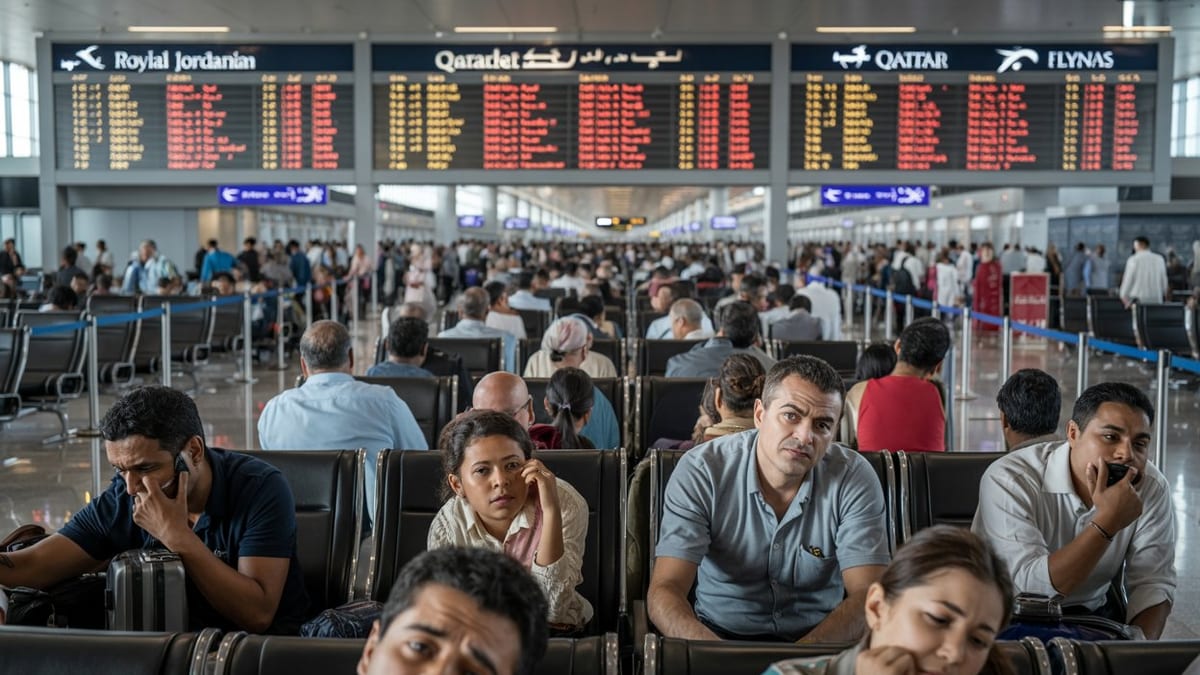
For passengers, the operational complexities translate into long lines at customer-service desks, crowded gate areas and, in some cases, unexpected overnight stays. Visuals shared across social platforms from Atlanta on April 13 depict large queues forming in terminal concourses as travelers attempt to rebook missed connections or secure accommodation while they wait for new flight assignments.
Travel publications summarizing the day’s events report that affected airlines are responding with a mix of rebooking on later services, rerouting through alternative hubs and, where possible, using larger aircraft to consolidate disrupted flights. In cases involving long delays or overnight stays, carriers are providing food vouchers, hotel rooms or travel credits, depending on fare rules, loyalty status and the specific circumstances of the disruption.
Consumer-rights guidance emphasizes that, for U.S. domestic itineraries, passengers whose flights are canceled are typically entitled to a refund if they choose not to travel, even when disruption stems from weather rather than a technical issue. For those who opt to continue their journey, airlines generally attempt to place them on the next available flight, although seat availability can be constrained during widespread disruption events.
As Monday progresses, operational data indicate that airlines are working to stabilize schedules into the evening bank, but observers caution that residual delays may persist into the following day on certain routes. Travelers booked through Atlanta and other affected hubs are being advised by travel media to monitor airline apps closely, enable notifications and arrive at the airport earlier than usual while the system recovers from the latest wave of interruptions.