

More news on this day
Paris Charles de Gaulle Airport, one of Europe’s busiest international hubs, is experiencing a major operational disruption that is rippling through global flight networks and putting countless travel plans at risk just as the busy spring season gathers pace.
Get the latest news straight to your inbox!
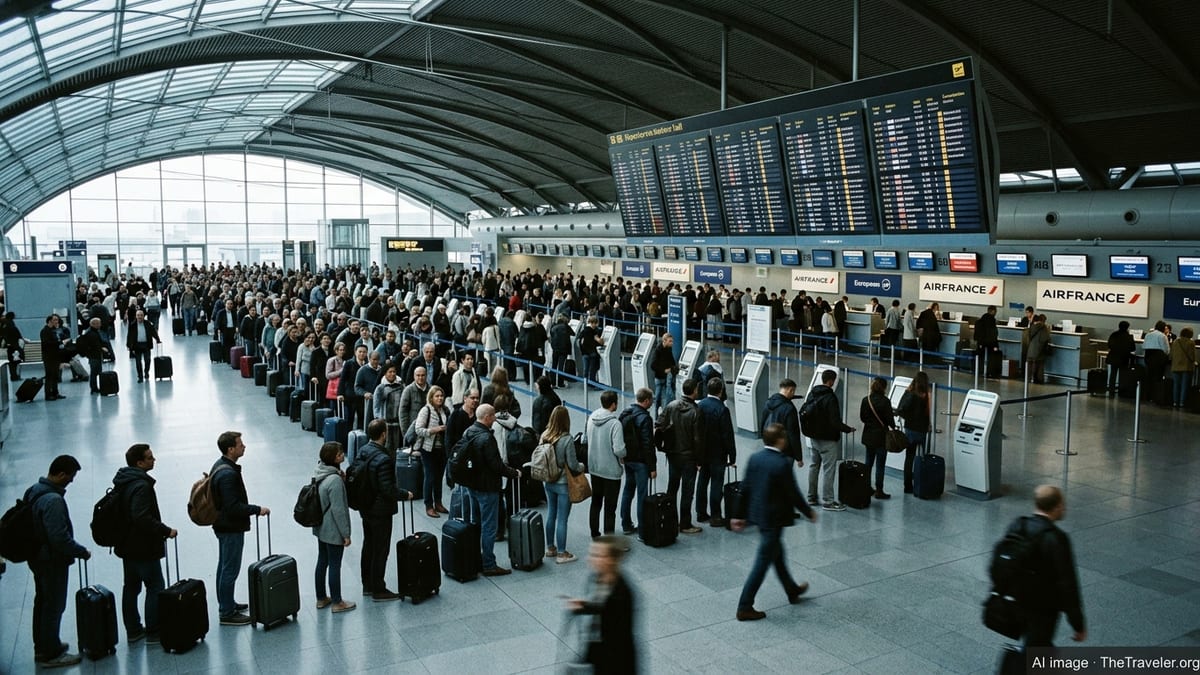
What Is Happening at Charles de Gaulle Today
Publicly available flight and passenger data on March 28 indicate an unusual wave of delays, cancellations and diversions affecting departures and arrivals at Paris Charles de Gaulle Airport. While large airports routinely manage pockets of disruption, the current scale at CDG has tipped into what observers are describing as a serious travel breakdown, impacting both long-haul and short-haul services.
Reports from airline status boards, flight-tracking services and passenger accounts show aircraft held on the ground, arrivals rescheduled multiple times and flights diverted to other European hubs. Several carriers serving the Paris hub have activated flexible rebooking policies that were initially introduced for wider regional tensions, and these are now being used by passengers struggling to reach or depart CDG.
The disruption is unfolding at a critical moment for European aviation. Airlines had been counting on a relatively smooth late March period ahead of the Easter holidays and the broader spring travel rush. Instead, many travelers connecting through Paris are facing missed onward flights, last-minute hotel searches and uncertainty about when they will reach their final destinations.
As operations continue to fluctuate throughout the day, the picture at CDG remains fluid. Flight schedules are being updated frequently, and travelers are being urged through public channels to check status repeatedly rather than relying on information received at time of booking.
How the Breakdown Is Affecting Flights and Passengers
The immediate impact of the disruption is most visible on departure and arrival boards, where long strings of red and amber notices show delays stretching beyond two hours and a rising number of cancellations. Long-haul services to North America, the Middle East and Asia appear particularly sensitive to knock-on effects when incoming aircraft arrive late or are rerouted, forcing airlines to reshuffle aircraft and crew at short notice.
Short- and medium-haul flights within Europe are also feeling the strain, with multiple services consolidated or scrapped outright when turnaround times become unmanageable. Passengers who had planned straightforward connections through CDG are instead being rebooked via alternative hubs such as Amsterdam, Frankfurt, London or Madrid, adding extra segments and lengthening overall journey times.
According to published coverage and industry data, operational pressure at CDG has been building over recent months as airlines ramp up capacity, infrastructure works continue in parts of the airport complex, and Europe’s wider air traffic network contends with weather events and geopolitical tensions. The current disruption has intensified these existing challenges, overwhelming normal buffers that help an airport of this size absorb delays.
For travelers already in the terminals, the experience is one of crowded gate areas, busy transfer desks and long lines at customer service counters. Social media posts and forum discussions reference passengers being advised to prepare for extended waits, with some overnighting in Paris unexpectedly or seeking ground transport alternatives for regional connections.
Ground Transport to and from CDG Under Strain
The disruption is not confined to the air. Surface access to Charles de Gaulle is under added pressure as travelers attempt to reconfigure itineraries on the fly. In recent weeks, publicly available transport notices and traveler reports have pointed to recurring closures and maintenance on the RER B suburban rail line that links central Paris with the airport, forcing the use of replacement buses during certain weekends and late-evening periods.
Those background rail issues are now compounding the current aviation turmoil. With flight schedules unreliable, many passengers are arriving at CDG much earlier than usual or leaving the airport in search of hotels or alternative departure points, leading to heavier-than-normal demand on buses, coaches and regional trains.
Taxi and ride-hailing services around the Roissy area are also described as being in high demand, particularly when clusters of arriving flights are delayed at once. Travelers report that prices for last-minute car services and intercity trains can rise sharply when disruption peaks, leaving budget-conscious passengers with few easy choices.
On the horizon, longer-term projects such as the dedicated CDG Express rail link, scheduled to connect the airport with Gare de l’Est in central Paris later this decade, are intended to offer more resilient access. For now, however, visitors must navigate a patchwork of existing rail, bus and road options at a time when reliability is a central concern.
Why Charles de Gaulle Is So Vulnerable to Shock Events
Charles de Gaulle’s role as a major global hub means that any large disruption there quickly echoes far beyond the Paris region. The airport handles tens of millions of passengers each year and supports dense banks of connecting flights, particularly for transatlantic and Africa-bound traffic. When part of that system falters, downstream effects can appear hours later in cities on other continents.
Air travel analysts note that this vulnerability is not unique to CDG, but is a feature of highly concentrated hub operations. However, various recent factors have increased the sensitivity of the Paris platform. Airlines based there are still fine-tuning post-pandemic networks, while airport managers balance investments in environmental upgrades, terminal refurbishments and new infrastructure with ongoing day-to-day operations.
Weather events across northern France during the winter, including strong winds and snow that affected rail and air traffic, have also highlighted the limits of redundancy in the system. When combined with airspace constraints related to conflicts and tensions in neighboring regions, there is less flexibility to reroute traffic around bottlenecks.
Industry reports further suggest that staffing and resource planning at large European hubs remains tight. Even modest absenteeism or localized technical failures can have outsized effects when airport teams are stretched and turnaround times are scheduled aggressively to maximize capacity.
What Travelers Can Do if They Are Booked Through Paris
For passengers with imminent itineraries involving Charles de Gaulle, the current disruption underlines the importance of preparation and flexibility. Public information from airlines and consumer groups consistently emphasizes the need to monitor flight status closely, ideally through both airline apps and independent flight-tracking platforms that can flag delays, aircraft changes or gate swaps.
Travelers are also encouraged by widely available guidance to keep essential items, medication and a change of clothes in carry-on bags in case checked luggage is delayed when flights are rerouted. With hotels near the airport and in central Paris likely to see increased demand during severe disruption, those facing overnight delays may benefit from searching accommodation options as soon as significant irregularities become apparent.
Passengers transiting through CDG should build in longer minimum connection times where possible and be prepared to request rerouting via alternative hubs if a tight connection looks unrealistic. Many airlines have been applying flexible rebooking policies in recent weeks for journeys affected by regional instability, and similar measures may be extended or adapted when major operational breakdowns occur at a single airport.
For those yet to book spring or early summer trips, travel experts commonly recommend itineraries that allow for some resilience, such as avoiding the last flight of the day for critical segments and choosing fares that permit changes at reasonable cost. As Charles de Gaulle’s latest disruption shows, even world-class hubs can face sudden breakdowns that ripple worldwide, turning a routine connection into a complex logistical challenge.